
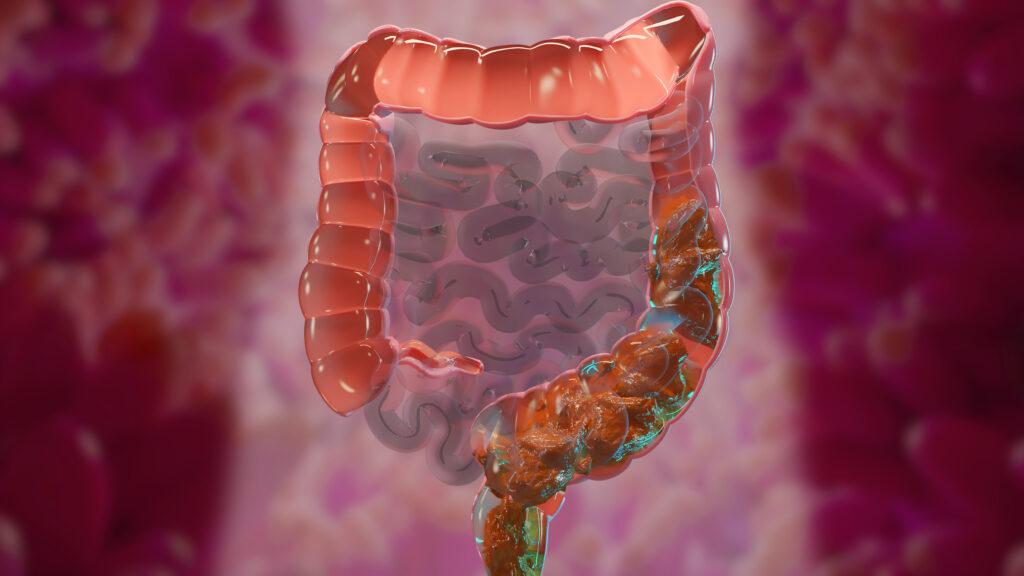
Chronic Constipation: When Should a Surgeon Be Involved? (Causes, Diagnosis, and Surgical Treatment)
Introduction: Understanding Chronic Functional Constipation (FC)
Chronic functional constipation (CFC) is a common and complex disorder of the gastrointestinal tract that requires thorough investigation and a tailored treatment plan.
For us as surgeons, it is crucial to understand the underlying physiological dysfunctions. Before considering surgical intervention, all conservative treatment options must be exhausted. This blog post provides you with a detailed guide to understanding, diagnosing, and treating this complex condition.
Part I: What is Chronic Constipation? The Two Main Types
Chronic constipation is defined as persistent difficulty with bowel movements lasting more than three months, where structural causes (e.g., tumor or narrowing) have been ruled out.
FC can primarily be divided into two main physiological types. Surgical examination is essential to differentiate between these:
1. Slow Transit Constipation (STC)
This is a delay in the transit of stool through the colon. The reduced motility causes too much water to be absorbed, resulting in:
- Hard, lumpy stool (Bristol scale type 1-2).
- Difficult passage.
- Treatment: Often primarily medical, focusing on laxatives, and in rare cases surgical.
2. Defecation disorder (pelvic floor dyssynergy)
Here, transit time is normal, but emptying of the rectum is mechanically impeded. The causes are often related to the pelvic floor or anatomical defects:
| Problem | Description |
| Anism | Inappropriate contraction of the pelvic floor muscles (instead of relaxation) during emptying. |
| Rectal Prolapse/Rectocele | Difficulty emptying due to an anatomical defect, where: * The rectal wall bulges toward the vagina (rectocele), or * The lower part of the intestine bulges out through the rectal opening (rectal prolapse). |
Part II: Specialist Assessment – From Medical History to Functional Tests
The examination always begins with a thorough medical history (anamnesis) and a clinical examination. In order to make the correct diagnosis, this is supplemented with specialized tests:
Necessary Diagnostic Tests
- Colonoscopy: Performed to rule out serious structural causes such as colorectal cancer or inflammatory bowel disease (IBD), especially if there are warning signs (see below).
- Passage time study (Sitz Marker Study): Measures intestinal transit time by having the patient ingest radiopaque markers. Images taken after 5-7 days show how many markers remain in the colon.
- Anorectal Manometry: Standard test for diagnosing defecation disorders. Examines pressure conditions and pelvic floor muscle function during emptying.
- Defecography (MRI or X-ray): Shows the emptying mechanism in real time and can identify anatomical problems that require surgical intervention, such as large rectocele or rectal prolapse.
Alarming symptoms that require immediate investigation:
Blood in the stool, unexplained weight loss, iron deficiency anemia, or a sudden, persistent change in bowel habits (especially in patients >40 years of age). These symptoms should be immediately investigated for malignancy or IBD.
Part III: The Important Distinction: FC vs. IBS-C
It is clinically important to distinguish between chronic constipation (CC) and irritable bowel syndrome with constipation (IBS-C), as the treatment strategies are different. CC is a motility disorder (movement), while IBS-C is a pain disorder.
| Feature | Chronic Constipation (CC) | IBS-C (Irritable Bowel Syndrome, C-type) |
| Defining Symptom | Bowel movement frequency / Consistency / Difficulty emptying. | Recurring stomach pain and discomfort (≥ 1 day/week). |
| Pain relief | Pain is secondary to distension. Rarely relieved after emptying. | Pain is a key criterion. Typically relieved significantly after a bowel movement. |
| Treatment goals | Normalization of bowel transit and frequency. | Normalization of bowel movements AND control of pain (visceral hypersensitivity). |
Part IV: Treatment Strategy – From Lifestyle to Surgery
The treatment of FC follows a well-defined ladder, starting with the least invasive methods.
1. Conservative Treatment (First Line)
- Lifestyle: Increased fiber intake (25-35g/day), adequate hydration, and physical activity.
- Laxatives (Laksantia): The basis for treating STC.
- Bulking agents: Psyllium (Husk), for example, increases stool volume.
- Osmotic: For example, macrogols (Movicol), lactulose, or magnesia draw water into the intestine and soften the stool.
2. Functional Treatment
- Biofeedback: The most effective treatment for defecation disorders (pelvic floor dyssynergia). The training restores coordination between the pelvic floor muscles and the rectum.
- Secretagogues: Specific drugs (e.g., prucalopride or linaclotide) that stimulate fluid secretion in the intestine. Used in severe STC where osmotic laxatives are ineffective.
3. Surgical Treatment (Third Line – Only for Severe Cases)
Surgical intervention is only indicated when medical and functional treatment has failed and physiological examination has clearly identified a cause that can be resolved surgically.
- Surgery for Anatomical Defects (Defecation Disorder):
- Surgical repair is necessary if a large rectocele or rectal prolapse is the primary cause of the emptying difficulty.
- Surgery for Severe Slow Transit Constipation (STC):
- Subtotal colectomy (removal of almost the entire colon) followed by ileorectal anastomosis (connection of the small intestine and rectum) is the most radical solution. This procedure is reserved for patients with documented, pronounced, and treatment-resistant STC and is not suitable if the patient also has pronounced IBS-C pain.
- Sacral Neuromodulation (SNS): Can be used to modulate bowel function, but is often more effective for fecal incontinence than for constipation.
Conclusion
If your chronic constipation does not improve despite intensified conservative treatment, it is time for a specialist assessment. A thorough investigation of chronic constipation is necessary to identify the precise functional cause and make the right decision about the next steps in treatment—whether that be biofeedback, medication adjustment, or ultimately surgical treatment of constipation at kirurgen.dk.
Reference list: Chronic Constipation
1. Definition, Classification, and Diagnosis (FC vs. IBS-C)
-
Clinical Criteria (ROM IV) for Functional Constipation (FC) and IBS-C:
-
Source: Drossman, D. A. (2016). Functional Gastrointestinal Disorders: History, Pathophysiology, Clinical Features and Rome IV. Gastroenterology, 150(6), 1262–1281.
-
Link: https://pubmed.ncbi.nlm.nih.gov/27144617/
-
Supports: The definition of chronic constipation, the differentiation between FC (motility disorder) and IBS-C (pain disorder), and the necessary criteria for making the diagnosis.
-
-
Diagnosis of Types (STC vs. Defecation Disorder) and Use of Tests:
-
Source: Rao, S. S. C., & Patcharatrakul, T. (2020). Diagnosis and Treatment of Chronic Constipation in Adults. Advances in Therapy, 37(1), 1–17.
-
Link: https://pubmed.ncbi.nlm.nih.gov/31696417/
-
Supports: The division into STC and defecation disorder, as well as the use of anorectal manometry and transit time testing (Sitz Marker) as standard diagnostic tools.
-
2. Treatment strategies
-
Conservative Treatment and Laxatives (First Line):
-
Source: Bharucha, A. E., Dorn, S. P., Lembo, A. J., & Pressman, A. (2013). American Gastroenterological Association Medical Position Statement on Constipation. Gastroenterology, 144(1), 211–217.
-
Link: https://pubmed.ncbi.nlm.nih.gov/23265356/
-
Supports: Treatment principles focusing on lifestyle and the use of laxatives (including bulk-forming and osmotic agents) as the foundation of treatment.
-
-
Biofeedback as Treatment for Defecation Disorder (Pelvic Floor Dyssynergy):
-
Source: Chiarioni, G., Kim, S. M., Vohra, S., & Eusebi, L. H. (2020). Biofeedback for refractory chronic constipation. Cochrane Database of Systematic Reviews, 2020(9).
-
Link: https://pubmed.ncbi.nlm.nih.gov/32959881/
-
Supports: The claim that biofeedback is the preferred and most effective treatment for defecation disorder.
-
-
Role and Indications for Surgical Treatment (Subtotal Colectomy):
-
Source: Pemberton, J. H., & Rath, D. M. (2018). Surgical treatment of constipation. Seminars in Colon and Rectal Surgery, 29(1), 21–25.
-
Link: https://pubmed.ncbi.nlm.nih.gov/29576751/
-
Supports: Surgical intervention, including subtotal colectomy, as a last resort exclusively for patients with documented, treatment-resistant slow transit constipation (STC).
-
-
Diagnosis and Surgical Treatment of Rectal Prolapse and Rectocele:
-
Source: Madbouly, K., & Abbas, H. A. (2021). Surgical Management of Obstructed Defecation Syndrome: Rectocele and Rectal Prolapse. Clinics in Colon and Rectal Surgery, 34(3), 199–205.
-
Link: https://pubmed.ncbi.nlm.nih.gov/34295325/
-
Supports: The treatment of anatomical defects such as rectocele and rectal prolapse, which cause difficulty emptying and require surgical repair.
-