
When your gut bacteria move in: Understanding SIBO
SmallIntestinal Bacterial Overgrowth (SIBO) is a condition that is increasingly recognized as a root cause of chronic digestive discomfort. If you have been struggling with persistent bloating, gas, or stomach pain that just won't go away, SIBO may be the missing piece of your health puzzle.
Although the term sounds complex, the concept is quite straightforward. Let's take a closer look at what SIBO is, why it occurs, and what you can do about it.
What exactly is SIBO?
Your digestive tract is home to trillions of bacteria, a healthy community known as your microbiome. The majority of this microbial population should reside in your large intestine (colon). Your small intestine is designed to have only a very small, sparse population of microorganisms—this is primarily where your body digests and absorbs nutrients.
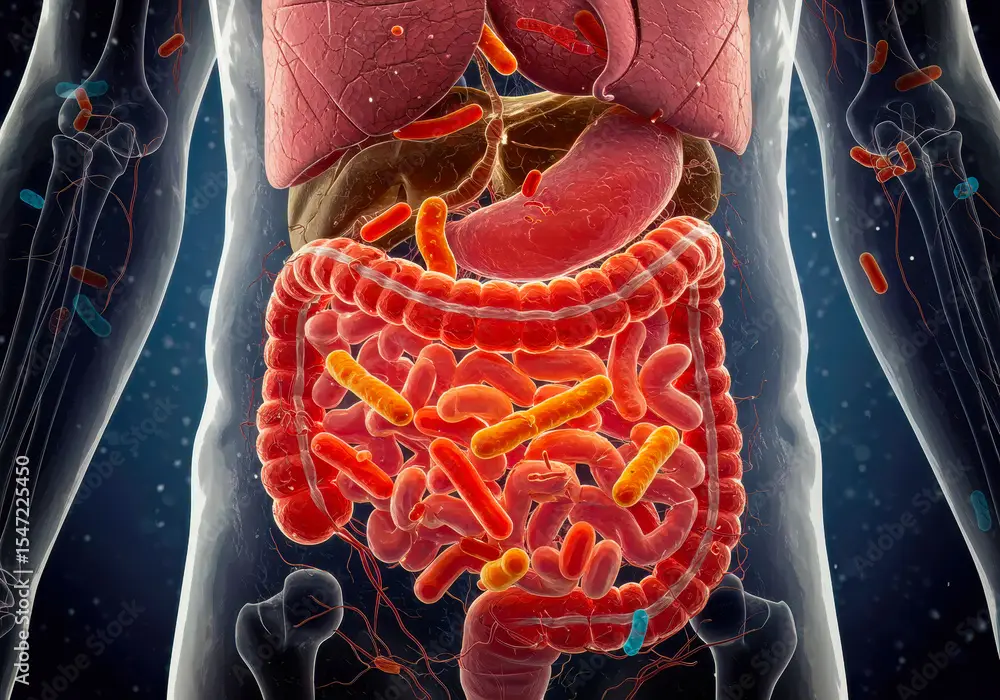
SIBO occurs when bacteria from the large intestine begin to grow excessively in the small intestine. It's like having an overcrowded, noisy mutt in the middle of a quiet highway—it creates traffic jams and a lot of unwanted byproducts!
These excess bacteria attach themselves to undigested food (especially carbohydrates) passing through the small intestine, leading to a fermentation process that produces large amounts of gas—mainly hydrogen and/or methane.
Important Symptoms: Is it SIBO or just IBS?
The symptoms of SIBO often overlap with other gastrointestinal disorders, particularly Irritable Bowel Syndrome (IBS). In fact, research suggests that a significant percentage of people diagnosed with IBS may actually have SIBO.
|
Common SIBO symptoms |
Potential Complications |
|
Severe bloating and distended stomach: Often worsens during the day, especially after meals. |
Nutrient deficiency: Bacteria consume essential nutrients such as vitamin B12 and iron, which can lead to anemia or neurological symptoms. |
|
Excessive air in the stomach: Belching or flatulence. |
Malabsorption: Reduced absorption of fat and vitamins, sometimes resulting in fatty stools (steatorrhea). |
|
Stomach pain or cramps |
Unintentional weight loss |
|
Changed bowel habits: Chronic diarrhea, chronic constipation, or alternating between the two. (Methane-producing SIBO, now sometimes called IMO —Intestinal Methanogen Overgrowth—is strongly associated with constipation.) |
Fatigue and brain fog |
If you have been diagnosed with IBS but treatments have not helped, it is worth discussing SIBO with your healthcare provider.
What causes bacteria to move? The root cause
SIBO is not a primary disease; it is a symptom of an underlying problem that has compromised the small intestine's natural "cleaning" mechanisms. The body has several ingenious ways of keeping the small intestine clean, and SIBO occurs when one or more of these fail:
- Reduced intestinal motility ("cleansing wave"): The Migrating Motor Complex (MMC) is a wave of electrical activity that sweeps the small intestine clean of food debris and bacteria between meals. If this process is sluggish (often due to food poisoning, stress, or certain conditions), bacteria can stagnate and multiply. This is considered one of the most common underlying causes.
- Low stomach acid: Stomach acid is a natural barrier that kills incoming bacteria. Medications that reduce stomach acid (such as PPIs) or low natural production can increase the risk of bacterial survival in the small intestine.
- Structural or anatomical problems: Surgery (such as certain bariatric procedures) or conditions such as Crohn's disease or adhesions in the stomach can create physical "pockets" or areas where flow is restricted, allowing bacteria to establish themselves.
- Underlying medical conditions: Diabetes, celiac disease, and hypothyroidism can all affect intestinal motility and nerve function, creating an environment that predisposes to SIBO.
Diagnosis and Treatment: Back on Track
Diagnosis
The most common and non-invasive test for SIBO is the Hydrogen/Methane Breath Test. You drink a specific sugar solution (usually lactulose or glucose), and your exhaled air is tested at regular intervals. A significant, early increase in hydrogen or methane gas indicates that bacteria in your small intestine are fermenting the sugar, confirming the overgrowth.
Treatment: A two-step approach
Successful SIBO treatment involves two main steps:
- Elimination of Overgrowth:
- Antibiotics: A short course of targeted antibiotics (such as Rifaximin) is the standard medical treatment for killing the excess bacteria.
- Herbal remedies: Some practitioners use specific herbal protocols as an alternative to or in conjunction with prescription antibiotics.
- Addressing the Root Cause and Preventing Relapse:
- Dietary support: A short-term, symptom-relieving diet, such as the low-FODMAP diet or Specific Carbohydrate Diet (SCD), can starve the overgrown bacteria. A qualified nutritionist or dietitian is essential to navigate this.
- Prokinetics: Medications or natural supplements used to help restore and strengthen the Migratory Motor Complex (MMC) to prevent bacteria from building up again.
- Lifestyle changes: Stress management, good sleep, and mindful eating habits (such as keeping a 4-5 hour break between meals and avoiding late-night snacks) are essential to allow MMC to work.
A Final Note
If SIBO is suspected, it is crucial to work with a skilled physician or gastroenterologist who can correctly diagnose the condition and identify the underlying cause. Although you can manage symptoms with diet, only by addressing the root problem can you hope for long-term relief and prevent the common problem of relapse.
Reference list: Small Intestinal Bacterial Overgrowth (SIBO)
1. Definition, Overlap with IBS, and Pathophysiology
-
Definition, Etiology, and Overlap of SIBO with Irritable Bowel Syndrome (IBS):
-
Source: Rezaie, A., Pimentel, M., & Rao, S. S. C. (2017). How to Test and Treat Small Intestinal Bacterial Overgrowth: An Evidence-Based Approach. Current Gastroenterology Reports, 19(4), 18.
-
Link: https://pubmed.ncbi.nlm.nih.gov/28364186/
-
Supports: The definition of SIBO as an overgrowth in the small intestine and that a significant percentage of IBS patients may have SIBO.
-
-
Role of the Migratory Motor Complex (MMC) as a Preventive Mechanism:
-
Source: Pimentel, M., Lin, H. C., & Rezaie, A. (2020). The role of the migrating motor complex in small intestinal bacterial overgrowth. Neurogastroenterology and Motility, 32(11), e13953.
-
Link: https://pubmed.ncbi.nlm.nih.gov/32770857/
-
Supports: The claim that reduced intestinal motility, especially dysfunction of the MMC ("cleansing wave"), is a major cause of SIBO.
-
-
Methane-producing Overgrowth (MPO) and the Link to Constipation:
-
Source: Triantafyllou, K., & Chang, C. (2021). Is Intestinal Methanogen Overgrowth Associated With Constipation, Diarrhea, or Both?. American Journal of Gastroenterology, 116(9), 1797–1799.
-
Link: https://pubmed.ncbi.nlm.nih.gov/34460596/
-
Supports: The new understanding that methane-producing microorganisms (now often referred to as IMO) are strongly associated with constipation, as opposed to hydrogen-producing SIBO, which often causes diarrhea.
-
2. Diagnosis and Treatment
-
Hydrogen/Methane Breath Test as a Standard Diagnostic Tool:
-
Source: Ghoshal, U. C., & Riaz, A. (2020). Hydrogen breath tests in the diagnosis of small intestinal bacterial overgrowth. Journal of Gastroenterology and Hepatology, 35(3), 392–399.
-
Link: https://pubmed.ncbi.nlm.nih.gov/31889422/
-
Supports: The use of hydrogen/methane breath testing with sugar solution (lactulose/glucose) as the primary non-invasive test for diagnosing SIBO.
-
-
Rifaximin (Antibiotic) as First Choice in the Treatment of SIBO:
-
Source: Shah, S. C., & Ringel, Y. (2018). Small Intestinal Bacterial Overgrowth (SIBO): Clinical Features and Therapeutic Management. Clinical and Translational Gastroenterology, 9(5), 159.
-
Link: https://pubmed.ncbi.nlm.nih.gov/29720516/
-
Supports: The use of Rifaximin as the targeted antibiotic treatment to eradicate bacterial overgrowth.
-
-
The Role of the Low-FODMAP Diet in Symptom Relief and SIBO Management:
-
Source: Rao, S. S., & Bhagatwala, T. (2019). Small Intestinal Bacterial Overgrowth: Clinical Features and Therapeutic Management. Clinical and Translational Gastroenterology, 10(9), e00078.
-
Link: https://pubmed.ncbi.nlm.nih.gov/31518349/
-
Supports: Dietary strategies, including the Low-FODMAP diet, as a symptom-relieving element in the overall SIBO treatment plan.
-