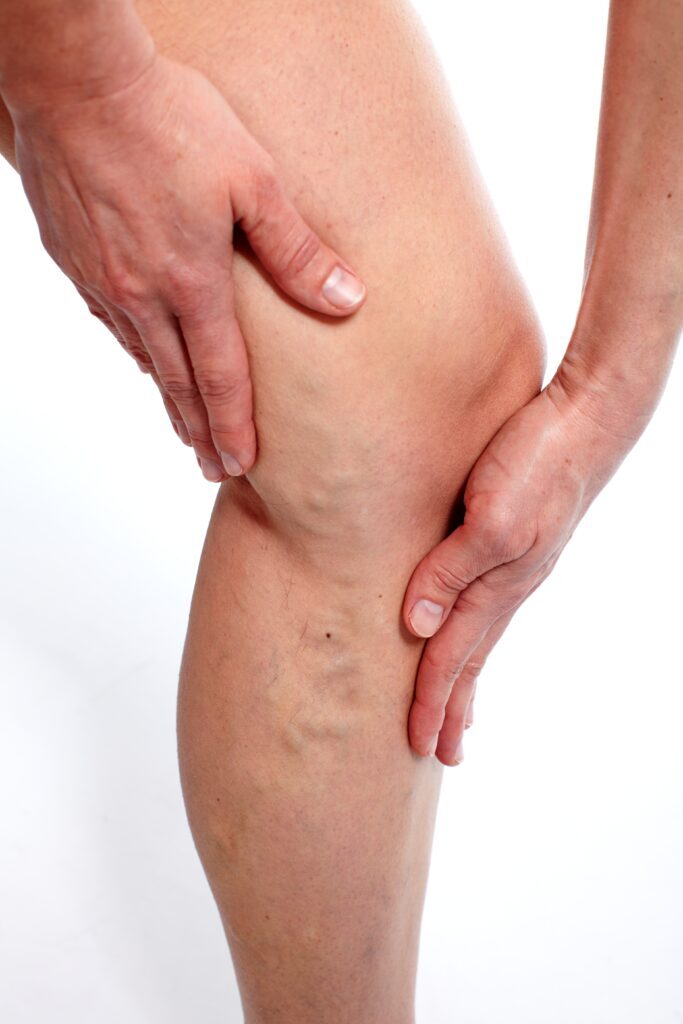
Varicose veins
Varicose veins (Varices) – The comprehensive guide to causes, diagnosis, and all forms of treatment Varicose veins: Why do they occur, what are the risks, […]


Do you suffer from heavy, swollen legs, or are you bothered by visible, twisted varicose veins? Varicose veins (also called varices) are not just a cosmetic problem; they are often a sign that the venous valves in the legs are not functioning optimally.
Fortunately, the days of major surgery and long periods of sick leave are over. Today, endovenous laser treatment is the gold standard for gentle and rapid removal of varicose veins.
The term "endovenous" means "inside the vein." In this treatment, the diseased vein is closed from the inside using laser energy (heat), instead of removing the vein surgically (the old "stripping" method).
Local anesthesia: The area around the vein is numbed so you're awake but don't feel any pain.
Insertion of laser fiber: Using ultrasound, the doctor inserts a very thin laser fiber into the diseased vein.
Closure of the vein: The laser is activated and heats the vein from the inside, causing it to collapse and close.
Result: The blood automatically finds its way through other, healthy veins in the leg, and the swollen legs regain their lightness.
Many people choose laser treatment because of its proven benefits:
Minimal recovery time: You can leave the clinic immediately after treatment and return to work the next day.
Less pain: Since no large incisions are made, there is less pain and less risk of discoloration and scarring.
High success rate: The results are long-lasting, and the risk of varicose veins returning in the same area is minimal.
Many people wait too long to seek help. You should consider treatment if you experience:
Pain and heaviness: A constant feeling of tiredness in the legs.
Swollen legs: Especially around the ankles at the end of the day.
Skin changes: If your skin becomes dark, hard, or you develop eczema (signs of chronic venous insufficiency).
Scientific source: A comprehensive meta-analysis on PubMed shows that endovenous laser treatment is just as effective as surgery, but with a significantly shorter recovery time and fewer complications (Source: Pan Y. et al., 2014, PubMed).
Before treatment, you will always undergo an ultrasound scan (Duplex). This allows the specialist to map out exactly where your varicose veins originate, so that the laser treatment can be targeted precisely at the area where the pressure is greatest.
Comparison of methods: Pan Y, et al. Comparison of endovenous laser ablation and surgery for varicose veins: a meta-analysis. Phlebology. 2014.
Long-term effects: Rasmussen LH, et al. Randomized clinical trial comparing endovenous laser ablation with stripping of the great saphenous vein: 5-year results. Br J Surg. 2013.
Treatment of swollen legs (CVI): Gloviczki P, et al. The care of patients with varicose veins and associated chronic venous diseases: Clinical practice guidelines. J Vasc Surg. 2011.
Varicose veins (Varices) – The comprehensive guide to causes, diagnosis, and all forms of treatment Varicose veins: Why do they occur, what are the risks, […]