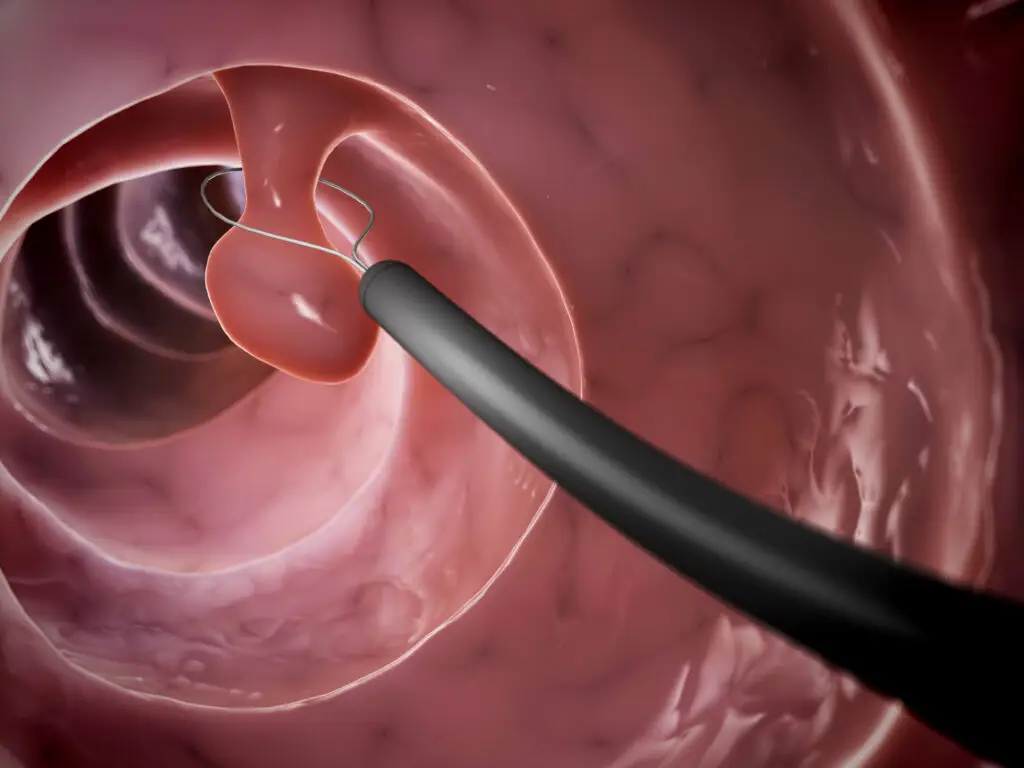
Intestinal polyps
Colon Polyps: A Surgical Guide to Types, Risks, and Detection via Colonoscopy What are colon polyps? Colon polyps are small growths or nodules, […]

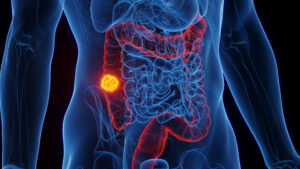
Colorectal cancer, also known as colon cancer, is one of the most common types of cancer in Denmark. It is a disease that often develops secretly over many years, but which has a very good prognosis if detected early.
The key to survival lies in paying attention to your body's signals and participating in screening via colonoscopy. Here, we go through everything you need to know about the disease, from the first signs of bleeding from the intestine to modern diagnostics.
Most cases of colon cancer start as small polyps (adenomas) in the lining of the colon. Although most polyps are harmless, some can develop into cancer over time. Factors such as diet, lifestyle, and the composition of your gut bacteria play a role, but age and genetics are also important.
In certain cases, chronic inflammation, as seen in ulcerative colitis or Crohn's disease, can increase the risk of cell changes in the colon.
Early stages of colon cancer rarely cause pain. Therefore, you should respond to even minor changes in your body's routines:
Bleeding from the intestine: This may be visible fresh blood, but the blood may also be "hidden" and make the stool very dark or black.
Changed bowel habits: If you experience alternating diarrhea and constipation for more than 4 weeks without explanation.
Unexplained fatigue: Cancerous tumors may bleed a little bit constantly, leading to iron deficiency and anemia.
Abdominal pain: Persistent discomfort or cramps, which can be mistaken for irritable bowel syndrome (IBS).
The most effective way to detect and prevent colon cancer is through a colonoscopy.
During a colonoscopy, the doctor inserts a telescope through the colon. The advantage of this method is twofold:
Detection: The doctor can see even small changes and lumps in the mucous membrane.
Prevention: If the doctor finds polyps, they are removed immediately during the examination. This removes the source of a potential future cancerous tumor.
Scientific source: A comprehensive study published on PubMed documents that screening for colorectal cancer significantly reduces mortality. Removal of polyps (polypectomy) is the most effective method of stopping the development from benign polyp to malignant cancer (Source: Hewitson P. et al., 2008, PubMed).
| Myth | Facts |
| “I’m too young for bowel cancer” | Although the risk increases with age, there has been an increase in cases among younger adults. |
| “Blood is always caused by hemorrhoids” | Bleeding from the intestine may be caused by hemorrhoids, but it may also indicate a tumor. It should always be checked. |
| “A colonoscopy hurts” | Most people are given sedatives, and the examination is often described as uncomfortable rather than painful. |
Although you can't be 100% sure, a lot of research suggests that healthy gut flora with the right gut bacteria can protect against inflammation. A fiber-rich diet with lots of vegetables and minimally processed red meat is the best investment in your colon's health.
The effect of screening: Hewitson P, et al. Screening for colorectal cancer using the fecal occult blood test, Hemoccult. Cochrane Database Syst Rev. 2008.
Lifestyle and colon cancer: Song M, et al. Lifestyle factors and risk of colorectal cancer patterns by molecular subtypes. J Natl Cancer Inst. 2016.
Symptom recognition: Astin M, et al. Risk of colorectal cancer in primary care patients with rectal bleeding: a systematic review. Br J Gen Pract. 2011.
Colon Polyps: A Surgical Guide to Types, Risks, and Detection via Colonoscopy What are colon polyps? Colon polyps are small growths or nodules, […]