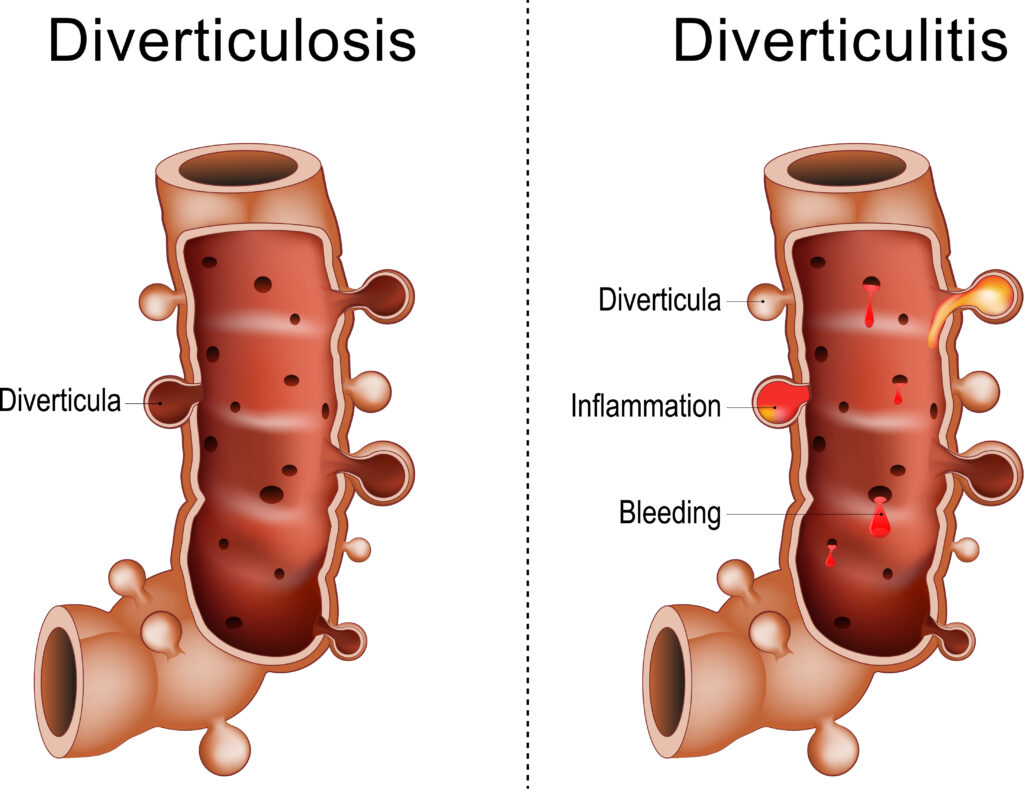
Diverticulosis (colon diverticula)
Diverticulitis: From harmless bulges to painful inflammation Do you experience recurring stomach pain, or are you concerned about your intestines? […]

The large intestine, also known as the colon, is one of the body's most vital organs for both digestion and the immune system. But it is also an organ that can be affected by serious diseases. Every year, thousands of Danes are diagnosed with colon cancer, which makes knowledge of symptoms and prevention vital.
In this post, we look at the connection between gut bacteria, lifestyle diseases such as irritable bowel syndrome and colitis, and why a colonoscopy is your best defense against cancer.
Colorectal cancer usually occurs in the lining of the colon. The disease often starts as small, benign growths called polyps. Over a number of years, some of these polyps can develop into cancerous tumors.
The dangerous thing about colon cancer is that it often does not cause pain in the early stages. Therefore, it is crucial to respond to the early warning signs.
Bleeding from the intestine: Fresh blood or dark stools should always be investigated.
Changed bowel habits: Persistent diarrhea or constipation for more than 4 weeks.
Unexplained pain: Persistent discomfort in the stomach, similar to colitis or irritable bowel syndrome.
Fatigue and weight loss: May be caused by anemia due to a bleeding nodule in the intestine.
When it comes to detecting colon cancer in time, a colonoscopy is indispensable. It is an examination using a telescope, where the doctor can see the entire colon from the inside.
Prevention: If the doctor finds polyps during the examination, they can be removed immediately so that they never have time to develop into cancer.
Accurate diagnosis: If chronic intestinal inflammation (colitis) or cancer is suspected, tissue samples (biopsies) may be taken.
Reassurance: For those suffering from irritable bowel syndrome, a colonoscopy can rule out serious disease and provide peace of mind.
Scientific source: Research published on PubMed shows that removing polyps during colonoscopy can reduce the risk of dying from colon cancer by up to 50% (Source: Zauber A.G. et al., 2012, PubMed).
Recent research suggests that the composition of your gut bacteria (microbiome) plays a role in preventing inflammation and cancer. A diet rich in fiber from plants and whole grains acts as "food" for the good bacteria, strengthening the intestinal wall and reducing the risk of harmful processes starting.
[Table: Differences in symptoms] | Symptom | Irritable bowel (IBS) | Colitis / Cancer | | :— | :— | :— | | Blood in stool | No (very rare) | Yes, often | | Weight loss | No | Yes, unexplained | | Nighttime pain | Rare | Often | | Mucus in stool | May occur | Yes, frequently |
Bleeding from the intestine should never be ignored, even if you have a history of hemorrhoids. By undergoing screening or a targeted colonoscopy, most cases of colon cancer can either be prevented or successfully treated if detected early.
Colonoscopy and cancer reduction: Zauber AG, et al. Colonoscopic polypectomy and long-term prevention of colorectal-cancer deaths. N Engl J Med. 2012.
Epidemiology of colon cancer: Kuipers EJ, et al. Colorectal cancer. Nat Rev Dis Primers. 2015.
Gut microbiome and cancer: Wang W, et al. The role of gut microbiota in colorectal cancer. Cancer Lett. 2014.
Diverticulitis: From harmless bulges to painful inflammation Do you experience recurring stomach pain, or are you concerned about your intestines? […]