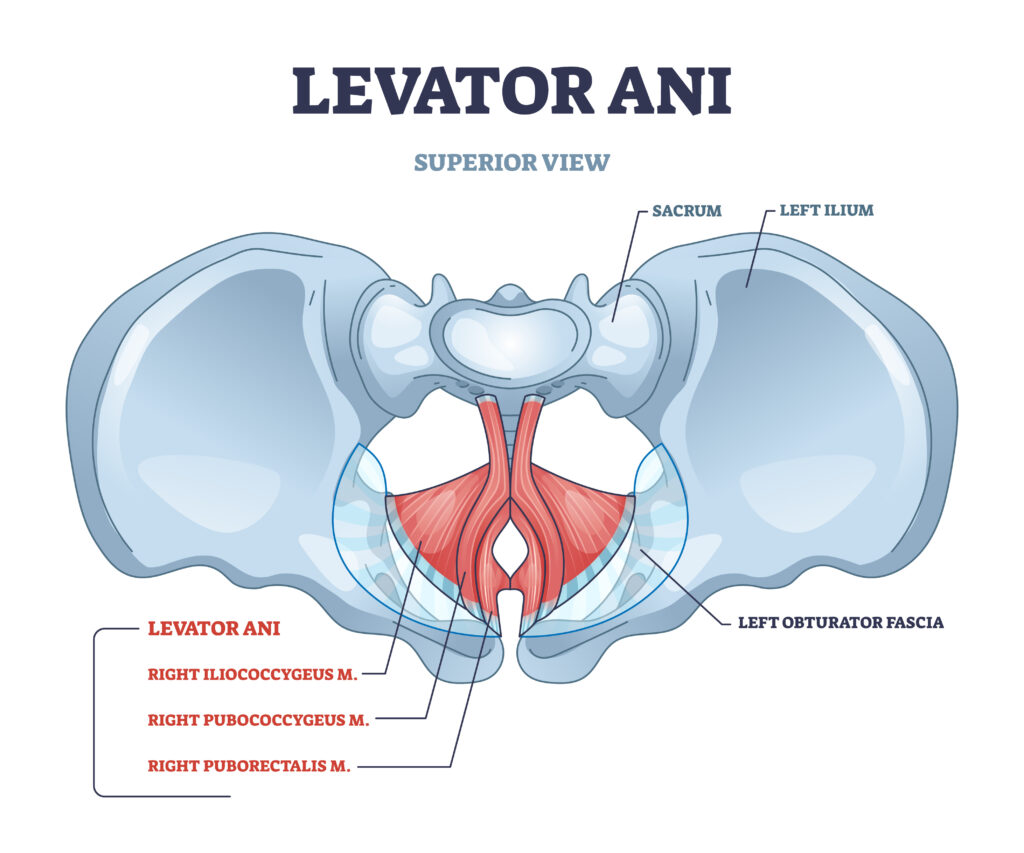
Levator ani syndrome
Levator Ani Syndrome: When the pelvic floor muscles cause pain Do you experience a constant feeling of heaviness or a dull, aching pain in your pelvic floor? […]

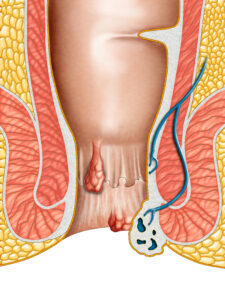
Hemorrhoids are one of the most common conditions in Denmark, and it is estimated that up to half of all adults will experience them at some point. Although they are often harmless and easy to treat, the main symptom— bleeding from the intestine —can be a cause for concern.
When is it a simple hemorrhoid, and when could the blood actually be a sign of colon or rectal cancer? Here we go through what you should look out for and why a colonoscopy may be necessary.
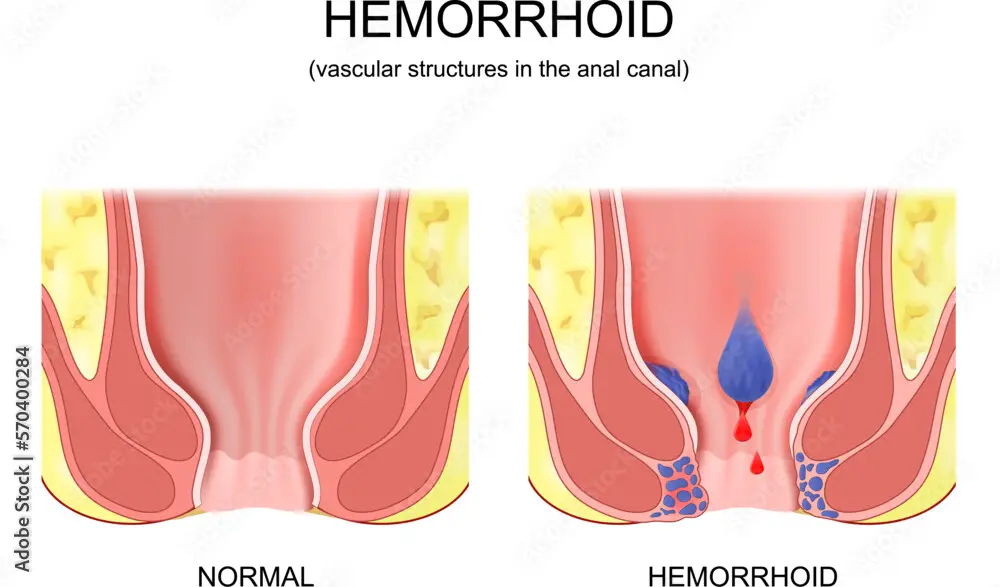
A hemorrhoid is a dilated blood vessel (a type of varicose vein) in or around the anus. They can be either internal or external:
Internal hemorrhoids: Located inside the rectum and often painless, but they bleed easily.
External hemorrhoids: Located at the opening itself and can be very painful, itchy, and difficult to keep clean.
The most typical signs include:
Fresh, red blood: Often seen as blood on toilet paper or as splatters in the toilet bowl.
Itching and burning: An irritating sensation around the anus.
A "lump": The feeling of something bulging out at the opening of the rectum.
The biggest challenge with hemorrhoids is that their primary symptom— bleeding from the intestine —is the same as the main warning sign of rectal cancer and colon cancer.
Even if you have had hemorrhoids before, you should never diagnose yourself if the bleeding pattern changes.
Seek medical attention if:
The bleeding is accompanied by changes in bowel habits (e.g., persistent diarrhea or constipation).
The blood is dark or mixed with stool (hemorrhoid blood is typically very light and fresh).
You feel tired, have unexplained weight loss, or stomach pain.
Scientific source: Research on PubMed emphasizes that although hemorrhoids are the most common cause of rectal bleeding, patients over 50 (or younger with risk factors) should always be offered an endoscopic examination to rule out colorectal cancer (Source: Lohsiriwat V., 2012, PubMed).
When you go to the doctor with bleeding, they will often start with a physical examination and an anoscopy (a small telescope for the lower part of the intestine).
If there is the slightest doubt, or if you are at an age where the risk of cancer increases, a colonoscopy will be recommended.
Colonoscopy: This examines the entire colon. It is the only way to rule out with 100% certainty polyps or colon cancer further up in the system, which can cause similar bleeding.
Most hemorrhoids can be prevented by keeping your stools soft through a high-fiber diet and plenty of fluids. If the damage has already been done, there are effective creams or minor procedures such as rubber band ligation.
Managing hemorrhoids: Lohsiriwat V. Hemorrhoids: from basic pathophysiology to clinical management. World J Gastroenterol. 2012.
Differential diagnosis of bleeding: Almadi MA, et al. Evaluation of lower gastrointestinal bleeding. World J Gastroenterol. 2014.
Screening for colorectal cancer: Lin JS, et al. Screening for Colorectal Cancer: Updated Evidence Report and Systematic Review for the US Preventive Services Task Force. JAMA. 2021.
Levator Ani Syndrome: When the pelvic floor muscles cause pain Do you experience a constant feeling of heaviness or a dull, aching pain in your pelvic floor? […]
Proctalgia fugax: Sudden pain in the rectum – What is the cause? Do you experience sudden, intense cramps in the rectum that disappear
Causes of anorectal pain There are many different causes of pain in the rectal region. It is important to distinguish between them.

Perianal Lichen Sclerosus (LS) Lichen Sclerosus (LS) is a chronic inflammatory skin disease that primarily affects the anogenital areas. The disease causes
Blog: Hemorrhoids (Hemorrhoids) By: Dr. Bahir Hadi, Specialist in Surgery, Kirurgen.dk Date: 30 October 2025 Category: Anal Surgery & Hemorrhoids