Intestinal polyps
Colon Polyps: A Surgical Guide to Types, Risks, and Detection via Colonoscopy What are colon polyps? Colon polyps are small growths or nodules, […]

Intestinal polyps are small growths in the lining of the colon. Although most polyps are benign (harmless), they are central to understanding colon cancer, as almost all cases of cancer start as a small polyp.
Detecting and removing polyps in time is the most effective way to prevent serious illness. In this post, we look at why they occur, what symptoms you should be aware of, and why a colonoscopy is your best insurance.
A polyp is a collection of cells that grows out of the intestinal wall in the colon. They can vary in size from a few millimeters to several centimeters. There are two main types:
Hyperplastic polyps: Usually harmless and with a very low risk of developing into cancer.
Adenomas: These are potential precursors to cancer. If an adenoma is allowed to grow over many years (often 5-10 years), the cells can mutate and turn into colon cancer.
The challenging thing about polyps is that they rarely cause symptoms until they have become very large. Many people only discover them during a screening. However, large polyps can cause:
Bleeding from the intestine: Small amounts of fresh blood in or on the stool.
Changes in bowel habits: Diarrhea or constipation lasting more than a week.
Pain: In rare cases, a large polyp can partially block the intestine and cause cramps.
As the symptoms resemble both irritable bowel syndrome (IBS) and colitis, it is important to seek professional advice.
The absolute gold standard for both diagnosis and treatment is a colonoscopy.
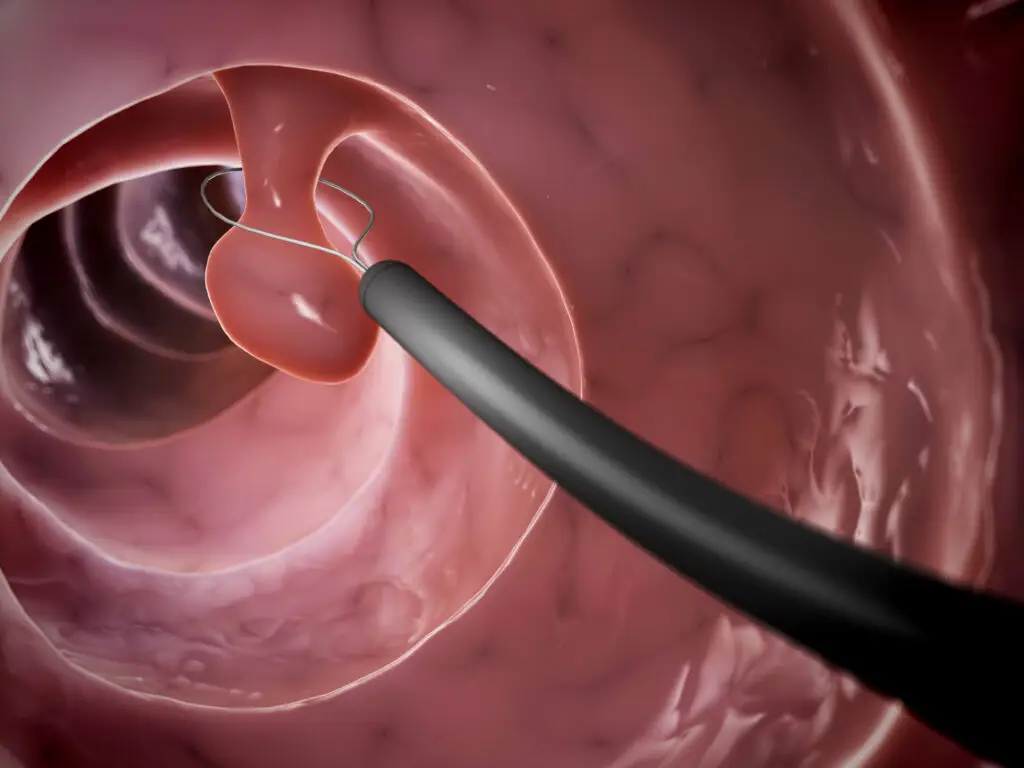
One of the most ingenious aspects of a colonoscopy is that the doctor can not only see the polyps, but also remove them immediately (polypectomy). This is done by inserting a small snare through the scope and burning off the polyp. It is painless, as there are no sensory nerves in the intestinal mucosa.
Scientific source: Studies published on PubMed confirm that systematic removal of adenomas (polyps) significantly reduces the incidence of colorectal cancer. By removing the "weeds" before they spread, you break the cancer curve (Source: Winawer S.J. et al., 1993, PubMed).
The risk of developing intestinal polyps increases with age, especially after the age of 50. But lifestyle also plays a major role. An imbalance in your intestinal bacteria and a diet high in processed meat increase the risk, while a fiber-rich diet has a protective effect.
National Polyp Study: Winawer SJ, et al. Prevention of colorectal cancer by colonoscopic polypectomy. N Engl J Med. 1993.
Adenomas and cancer risk: Strum WB. Colorectal Adenomas. N Engl J Med. 2016.
Lifestyle impact: Haggar FA, Boushey RP. Colorectal cancer epidemiology: incidence, mortality, survival, and risk factors. Clin Colon Rectal Surg. 2009.
Colon Polyps: A Surgical Guide to Types, Risks, and Detection via Colonoscopy What are colon polyps? Colon polyps are small growths or nodules, […]