
Constipation
Constipation is one of the most common GI complaints. Usually harmless, but new or persistent symptoms should be investigated.
Written and medically reviewed by Bahir Hadi, specialist in surgery, PhD
Short answer
What helps against chronic constipation?
Regular movement and toilet habits where you respond to the urge are a reasonable starting point. More fluid is relevant if your intake is inadequate or you are dehydrated. Fibre does not suit every type of constipation and should be avoided where bowel obstruction is suspected. Osmotic agents such as macrogol are used according to the product information and an individual assessment, and the need is reviewed along the way. Blood in the stool, weight loss or a sudden change in bowel habit should prompt medical assessment, where a colonoscopy may be relevant.
Constipation - symptoms and treatment
This page covers the symptoms, work-up and treatment of constipation. The different types and the underlying mechanisms are described in the article Chronic constipation: causes and types.
What is constipation?
Constipation is symptomatic, sluggish, hard, or infrequent bowel movements. It is common and is seen more often with increasing age. Bowel habits are individual. Some people have bowel movements several times a day, others three or four times a week. There is no sharp line between normal and abnormal, and even if several days pass between each emptying, it does not necessarily mean it is abnormal. The crucial factor is whether you experience discomfort or distress due to sluggish, hard, or infrequent bowel movements.
Why do people get constipation?
The defecation process depends on two factors: intestinal transit and a "cooperative" sphincter muscle.
Intestinal transit depends on bowel activity (peristalsis) and on whether anything physically blocks the passage. The role of the sphincter muscle is just as important as bowel function. Pain in the rectum (for example, from fissures or painful haemorrhoids) can lead to spasms in the sphincter muscle and obstructed passage.
Diet, fluid intake and physical activity can play a part, but the effect varies from person to person. Extra fluid mainly helps if you are drinking too little already, and more fibre helps some people while it can worsen bloating in slow transit constipation or pelvic floor dysfunction (AGA/ACG clinical practice guideline on chronic idiopathic constipation, Gastroenterology 2023;164:1086-1106).
Of course, there are several other causes of constipation, such as various types of medications, problems with metabolism, problems with the pelvic floor muscles, depression, and some neurological diseases.
A very long large intestine and/or a very slow bowel can be a cause of constipation.
What symptoms of constipation should you pay special attention to?
- Feeling dizzy, tired, or pale.
- Having lost weight.
- Bleeding from the bowel (either as red blood or as black stool).
- Alternating between diarrhea and constipation.
- Having had constipation for over a month.
How is constipation diagnosed?
The diagnosis rests on the history, a medication review and clinical examination, including a rectal examination. Colonoscopy is not a routine test for constipation alone, but is used when there are alarm features such as blood in the stool, weight loss, anaemia, a sudden change in bowel habit, or when age and risk profile call for it. If the difficulty lies in emptying itself, anorectal function testing can reveal a defecatory disorder, which is treated with pelvic floor training (biofeedback) rather than more laxatives.
How is constipation treated?
Management is arranged individually and depends on factors such as the cause, the symptom pattern, any suspicion of obstruction, kidney and fluid status, pregnancy, age, and other medication. In their joint 2023 guideline, the AGA and ACG recommend polyethylene glycol (PEG/macrogol) in adults with chronic idiopathic constipation compared with no PEG (strong recommendation, moderate certainty of evidence). That recommendation applies to exactly that population and is not a universal sequence for every type of constipation or every patient. The drug and dose are agreed with the treating doctor. Also review your other medication with your doctor, as several drugs can cause constipation. Never stop or change prescribed medication without a specific agreement with the treating doctor.
Contact a doctor rather than continuing to treat on your own if you have alarm features such as blood in the stool, unintended weight loss, anaemia, or a sudden change in bowel habit. If the difficulty lies mainly in emptying itself, a defecatory or pelvic floor disorder may be involved; that is not resolved by more laxatives, but assessed with anorectal function testing.
Bowel habits
Regular bowel habits are part of management for many people. Go to the toilet when you feel the urge, and do not put it off. A fixed time after a meal can make emptying more predictable for some. The effect varies from person to person.
Diet and fibre
A fibre-rich diet increases the amount of indigestible material reaching the large bowel and can make stool softer for some people. In slow transit constipation or pelvic floor dysfunction, more fibre can instead increase bloating. Dietary changes are therefore tailored to the individual.
Fluids
Extra fluid mainly helps if you are drinking too little already. There is no fixed amount that suits everyone, and with heart or kidney disease fluid intake may be limited for other reasons.
Physical activity
Physical activity is part of general advice on bowel function. Its effect on constipation varies from person to person, and daily exercise is not in itself a treatment.
Laxatives
There are several groups of laxatives:
- Bulk-forming fibre agents, which increase stool volume.
- Osmotic agents, which retain fluid in the bowel.
- Stimulant agents, which act on muscles and nerves in the bowel wall.
- Rectal agents, which act locally in the rectum.
Choosing between them is a medical assessment. When the effect sets in varies between products and between people, and there is no fixed onset time that applies generally. Bulk-forming agents must be taken with enough fluid and are less suitable where obstruction is suspected or fluid intake is restricted. Rectal agents are typically used when stool has accumulated in the rectum, or before a bowel examination or surgery, and are not intended for fixed, regular use. With stimulant agents, longer-term use should be agreed with your doctor so that an underlying cause is not overlooked. The safety of long-term use depends on the product, dose, age, and other illnesses, and cannot be stated categorically.
Course
Constipation is often a long-lasting condition, but it is rarely dangerous in itself. Some people improve with habit changes and laxatives, while others need assessment for pelvic floor or defecatory dysfunction, newer medicines or, quite exceptionally, surgery.
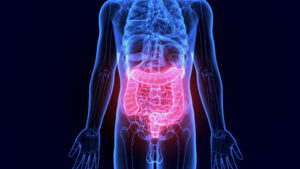
constipation
If symptoms persist
With persistent symptoms the cause may be slow bowel transit, a defecatory disorder or another underlying condition. If you have blood in the stool, unintended weight loss, anaemia or a sudden change in your bowel pattern, see a doctor rather than continuing to treat it on your own.
Chronic constipation: causes and types · Blood in stool · Irritable bowel syndrome (IBS)
Contact and appointments
Online booking is not available. Please call the clinic or ask your GP for a referral, so we can find the right appointment.
If you are in health insurance group 1 and have a valid referral from your GP, the examinations and treatments covered by the clinic's public health agreement are covered by the Danish public health insurance, so you pay nothing for them yourself. If you are in health insurance group 2, there is usually a small co-payment under the health insurance rules. If you are paying yourself, contact the clinic for a price.
Call the clinic
+45 39 64 01 25
Phone hours
Phone hours: Mon–Thu 09:00–12:00
Address
Hans Edvard Teglers Vej 9, 1st floor · 2920 Charlottenlund
Related
Share this page
Contact information
- Hans Edvard Teglers Vej 9, 1st floor · 2920 Charlottenlund
- +45 39 64 01 25
- mail@kirurgen.dk
- Phone hours: Mon–Thu 09:00–12:00
For referring physicians
Provider number: 215430