
Sigmoidoscopy
Sigmoidoscopy uses a flexible scope to examine the rectum and the lower part of the colon (sigmoid).
Written and medically reviewed by Bahir Hadi, specialist in surgery, PhD
Short answer
What is a sigmoidoscopy?
A sigmoidoscopy is an endoscopic examination of the rectum and the lower part of the large bowel. The duration varies, and it can often be done without sedation, though the need is assessed individually. Preparation is usually more limited than before a colonoscopy, and the product, doses and times are stated in the instructions you are given. It is used for rectal bleeding and changes in bowel habit, among other things.
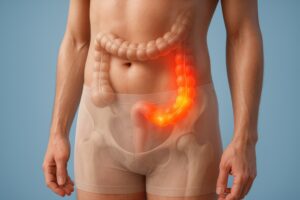
Endoscopic examination of the colon (Sigmoidoscopy)
Sigmoidoscopy is an endoscopic examination where a flexible, finger-thick tube with a TV camera is inserted into the rectum and the left side of the colon. The sigmoidoscopy examination can determine the cause of, for example, blood in the stool, pain, or difficulty with defecation. However, its purpose is just as often to rule out illness - especially colon cancer.
The sigmoidoscopy examination provides a precise image of the inside of the intestine and reveals why there is, for example, blood in the stool. It is also possible to take tissue samples for microscopic examination. The biopsy itself is often not felt, but the examination as a whole can cause bloating, pressure or cramping, and the experience varies from person to person. The examination typically lasts 5-10 minutes. This also applies when it is performed at Kirurgen.dk in Charlottenlund. The use of pain relief or sedation is therefore rarely necessary, but it can be arranged individually.
Preparation for sigmoidoscopy
To achieve a good result from the sigmoidoscopy examination, it is important that the bowel is thoroughly cleansed.
Diet
On the day before the sigmoidoscopy examination you may eat normally until 2:00 PM. Thereafter, only thin liquids such as cordial, soda, apple juice, Faxe Kondi, Cola, tea, coffee, sparkling water, sorbet (water ice) without berries, broth. Alcohol must not be used as a clear fluid. No dairy products. No creamed or "thick" soups (like tomato soup and asparagus soup). Drink plenty of fluids. Preferably sugary.
On the day of the examination, only a cup of tea/coffee for breakfast and water until the sigmoidoscopy examination is over. After the sigmoidoscopy examination, you may eat and drink normally.
Bowel preparation
Follow the personal bowel-preparation instructions provided by the clinic. They specify the product, number of doses and timing in relation to your examination. Do not use another person's plan or change the dose or timing yourself. If your instructions include a rectal enema, use it as follows:
- Lie on your left side.
- Remove the red cap from the container.
- Squeeze the contents into the intestine. There is more in the container than necessary, so do not worry if it is not completely emptied.
- Hold it in for as long as possible. Most people can only hold it for a few minutes.
- Do not take any other laxatives.
Your usual medication
There is no general rule about pausing or continuing regular medication before a sigmoidoscopy. Anticoagulants and antiplatelet drugs, diabetes medication and GLP-1 agonists are assessed individually, so contact the clinic in good time. Never stop or change prescribed medication without a specific agreement with the doctor treating you.
After the sigmoidoscopy examination
After your sigmoidoscopy examination, Kirurgen.dk offers a cup of coffee and a piece of bread.
Is the sigmoidoscopy examination dangerous?
Sigmoidoscopy is usually completed without a serious complication. Risk depends in part on whether biopsies are taken or treatment is performed during the examination and on your other conditions and medication.
Contact the acute helpline (1813 in the Capital Region of Denmark, otherwise your local out-of-hours service) the same day after sigmoidoscopy if you have:
- heavy or persistent bleeding from the rectum
- severe or increasing abdominal pain
- fever, chills or feeling generally unwell
Call 112 for collapse, impaired consciousness, severe breathlessness or another life-threatening condition. A scheduled appointment at Kirurgen.dk cannot replace urgent assessment.
Contact and appointments
Online booking is not available. Please call the clinic or ask your GP for a referral, so we can find the right appointment.
If you are in health insurance group 1 and have a valid referral from your GP, the examinations and treatments covered by the clinic's public health agreement are covered by the Danish public health insurance, so you pay nothing for them yourself. If you are in health insurance group 2, there is usually a small co-payment under the health insurance rules. If you are paying yourself, contact the clinic for a price.
Call the clinic
+45 39 64 01 25
Phone hours
Phone hours: Mon–Thu 09:00–12:00
Address
Hans Edvard Teglers Vej 9, 1st floor · 2920 Charlottenlund
Related
Share this page
Contact information
- Hans Edvard Teglers Vej 9, 1st floor · 2920 Charlottenlund
- +45 39 64 01 25
- mail@kirurgen.dk
- Phone hours: Mon–Thu 09:00–12:00
For referring physicians
Provider number: 215430