
Gastroscopy
Gastroscopy (also known as oral gastroscopy or upper GI endoscopy) is an examination in which the specialist inspects the oesophagus, stomach and the first part of the duodenum through the mouth. We also offer the gentler nasal variant via the nose.
Written and medically reviewed by Bahir Hadi, specialist in surgery, PhD
Short answer
How is a gastroscopy performed?
During a gastroscopy a thin camera is passed through the mouth into the oesophagus, stomach and duodenum. The duration varies, and the choice between a local anaesthetic throat spray and sedation is made with the clinician based on your situation. You need to fast beforehand, and the time windows are stated in the instructions you receive. Small tissue samples are often taken; the time to a result depends on the analysis and is stated to you specifically.
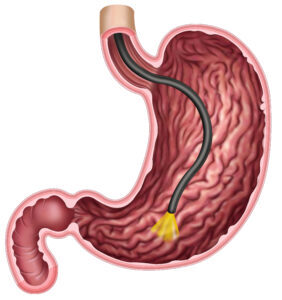
Gastroscopy is an endoscopic examination of the esophagus, stomach, and duodenum. At Kirurgen.dk both nasal and oral gastroscopy are performed. The route is chosen with you, based on the clinical question, your anatomy and your preference.
Why choose oral gastroscopy?
In most cases, the nasal method (via the nose) is preferable, as it allows the patient to speak and breathe freely through the mouth. However, there are specific situations where the oral method is necessary or desirable:
- Need for larger biopsies: If the specialist assesses that larger tissue samples are required than the nasal scope allows.
- Anatomical conditions: If there is insufficient space in the nostrils to pass the scope through.
- Patient's preference: If you, as the patient, prefer the traditional method via the mouth.
How do you prepare for a gastroscopy?
To ensure a precise view of the stomach, it must be completely empty during the examination.
- Fasting: You must not eat for 10 hours before your examination.
- Liquids: You must not drink for 3 hours before the examination (especially avoid dairy products). However, necessary medication may be taken with a small glass of water.
How is the examination performed?
We always offer sedation for oral gastroscopy. This optimises patient comfort and reduces discomfort associated with the procedure. Whether you accept the offer is agreed with you, based on your situation and the procedure itself.
During the examination, you lie comfortably on your left side. To make insertion as comfortable as possible, your throat will be locally anesthetized with an anesthetic spray (Xylocaine). This removes sensation in the throat and suppresses the gag reflex.
You will be given a small bite block between your teeth to protect both your teeth and the endoscope itself. The thin, flexible gastroscope is then guided down into the esophagus. The duration of the examination itself varies and depends among other things on the findings and on whether biopsies are taken. To clearly see the mucous membrane, a small amount of air is blown into the stomach. This may cause a feeling of bloating or a need to burp, which is completely normal.
At Kirurgen.dk the examination is performed with a video endoscope. Whether you can follow it on a screen depends on how the examination goes and is agreed at the time.
What happens after the gastroscopy?
Since the throat is locally anesthetized, there is a small risk of food or drink going "down the wrong pipe." Therefore, you must wait approximately 20-30 minutes before eating and drinking, until sensation in your throat has completely returned. Always start with a small sip of water.
Is a gastroscopy safe?
Oral gastroscopy is a well-established and widely used examination. Possible complications include bleeding and perforation; the risk depends among other things on your own health and on whether a procedure is carried out during the examination.
What side effects can occur, and when should you contact us?
Most patients have no problems or only very mild ones after a gastroscopy. A slightly sore throat, mild bloating or the urge to burp for the rest of the day are normal because of the small amount of air introduced during the examination. These symptoms settle on their own within 1–2 hours.
Call 112 immediately if you vomit blood, pass black tarry stools, or have difficulty breathing or chest pain. These can be signs of bleeding or perforation that need emergency hospital treatment (occur extremely rarely).
What does a gastroscopy cost, and do you need a referral?
If you are in health insurance group 1 and have a valid referral from your GP, the examinations and treatments covered by the clinic's public health agreement are covered by the Danish public health insurance, so you pay nothing for them yourself. If you are in health insurance group 2, there is usually a small co-payment under the health insurance rules. If you are paying yourself, contact the clinic for a price. The current waiting time for non-urgent patients with no suspicion of cancer is approximately 6-8 weeks. Waiting times can vary. Where cancer is suspected on reasonable grounds, the pathway follows the Danish Health Authority standard fast-track timeframes.
As a self-payer a referral is not required. Contact the clinic to arrange an appointment and for a quote. The price depends on whether you choose sedation and whether biopsies are taken.
Read more about prices and self-payment.
Gastroscopy in Charlottenlund, north of Copenhagen
The clinic is at Hans Edvard Teglers Vej 9, 1st floor, 2920 Charlottenlund, within walking distance of Charlottenlund Station on the Coastal Line. The clinic is on the first floor and has lift access. Check your current travel time on Rejseplanen before you set off.
If you drive, parking conditions on Hans Edvard Teglers Vej and the surrounding streets vary. Follow the local signage and allow time to find a space. If you have received intravenous sedation, then for 24 hours you must not drive, cycle, operate machinery, drink alcohol, sign legally binding documents or make important decisions. An adult should accompany you home. Please plan for a companion or public transport.
FAQ: Oral Gastroscopy (Examination through the mouth)
Why choose oral gastroscopy? Classic oral gastroscopy is a well-established method that allows the doctor to use various advanced instruments. This is particularly important if precise tissue samples are needed or polyps need to be removed in the esophagus and stomach during the same procedure.
References:
(Source: Hosokawa O, Shirasaki S, Kaneko C, et al. Standardized gastroscopy: a quality issue. Digestive Endoscopy. 2007;19:S102-S106. (Related to methodology and diagnostic yield). PMID:
How long does a normal oral gastroscopy last? The examination itself typically lasts between 5 and 10 minutes. It is a quick procedure where a thorough inspection of the mucous membrane is crucial to detect early signs of disease or changes in the stomach.
References:
(Source: Park JM, Huo SM, Lee HH, et al. Longer observation time during gastroscopy increases the detection rate of gastric neoplasms. Gastrointestinal Endoscopy. 2018;88(2):281-289. PMID:
Read more about the examination
The examination can be carried out by different routes, and the preparation differs from other endoscopic examinations.
Nasal gastroscopy · Difference between gastroscopy and colonoscopy · Proton pump inhibitors (PPI)
Contact and appointments
Online booking is not available. Please call the clinic or ask your GP for a referral, so we can find the right appointment.
If you are in health insurance group 1 and have a valid referral from your GP, the examinations and treatments covered by the clinic's public health agreement are covered by the Danish public health insurance, so you pay nothing for them yourself. If you are in health insurance group 2, there is usually a small co-payment under the health insurance rules. If you are paying yourself, contact the clinic for a price.
Call the clinic
+45 39 64 01 25
Phone hours
Phone hours: Mon–Thu 09:00–12:00
Address
Hans Edvard Teglers Vej 9, 1st floor · 2920 Charlottenlund
Frequently asked questions
What is oral gastroscopy?+
Oral gastroscopy is an endoscopic examination of the oesophagus, stomach and duodenum, in which a thin, flexible scope is passed through the mouth by a specialist.
When is gastroscopy necessary?+
Gastroscopy is used for persistent heartburn, swallowing difficulty, recurrent abdominal pain, vomiting, blood in vomit or stools, iron deficiency and suspicion of ulcer or stomach cancer.
Is gastroscopy painful?+
The experience varies. Many describe discomfort and gagging rather than pain, but this is individual. The throat is anaesthetised locally, and the need for sedation is assessed together with the clinician.
Can I work after a gastroscopy?+
If you have not had sedation, work and driving depend on your symptoms and on the specific instructions you are given; there is no automatic clearance to drive. If you have had intravenous sedation, then for 24 hours you must not drive, cycle, operate machinery, drink alcohol, sign legally binding documents or make important decisions, and an adult must accompany you home.
What can be seen during a gastroscopy?+
The specialist can identify ulcers, inflammation, polyps, a hiatal hernia, helicobacter infection and early signs of stomach cancer. Tissue samples can be taken during the examination.
Related
Share this page
Contact information
- Hans Edvard Teglers Vej 9, 1st floor · 2920 Charlottenlund
- +45 39 64 01 25
- mail@kirurgen.dkPlease do not send your civil registration (CPR) number or sensitive health information by email. How to email the clinic
- Opening hours: Mon–Thu 07:00–15:30Phone hours: Mon–Thu 09:00–12:00
For referring physicians
Provider number: 215430