Skin and subcutaneous
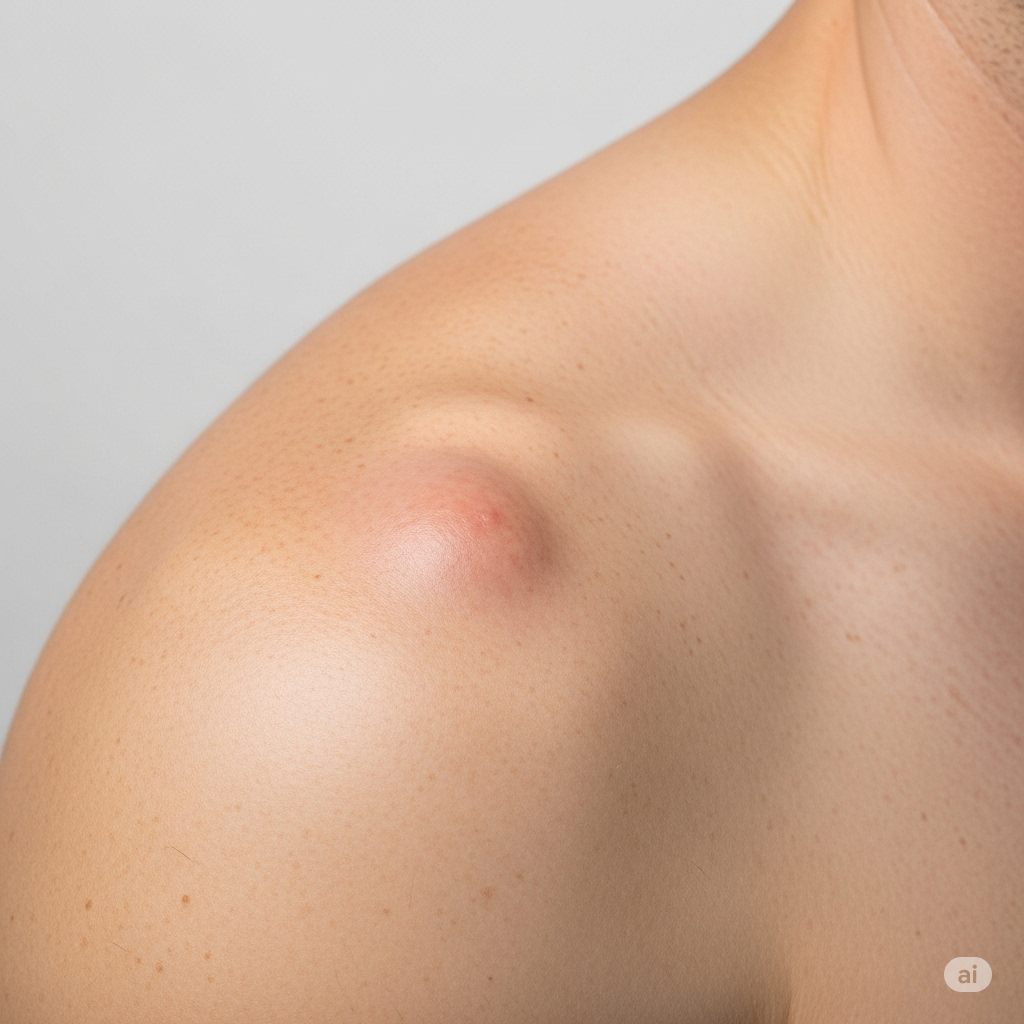
We offer surgical removal of skin and subcutaneous lesions – from moles and sebaceous cysts to lipomas and other benign lumps.
Written and medically reviewed by Bahir Hadi, specialist in surgery, PhD
Skin and subcutaneous tissue at a glance
- What we remove: moles, lipomas, sebaceous cysts and other benign lumps
- Anaesthetic: local anaesthetic, you stay awake throughout
- Duration: usually 15 to 30 minutes from anaesthetic to final stitch
- Histology: removed tissue is normally sent for microscopy, result in about two weeks The clinic holds a provider number under the Danish public health insurance and receives referred patients for services covered by the current agreement; whether a specific service is covered is clarified before the course of treatment.
- Where: Charlottenlund, close to the coastal railway line
What can be removed at the clinic?
We remove changes in the skin and subcutaneous tissue under local anaesthetic, including:
- Moles (naevi) that have changed colour, shape or size, itch, bleed or sit somewhere inconvenient
- Lipomas, soft slow-growing lumps in the subcutaneous tissue
- Epidermoid cysts (often called sebaceous cysts) that may become tender or inflamed
- Benign breast lumps after a completed work-up at a breast surgery department
- Skin tags and warts that are cosmetically bothersome or catch on clothes and jewellery
Some lumps need a fine-needle biopsy first so we know the diagnosis before the procedure.
When should a lump be looked at?
See a doctor if a mole changes colour, shape or size, develops an irregular border, itches, bleeds or ulcerates. The same goes for a lump that grows quickly, feels tethered to the underlying tissue, hurts, or turns red and warm.
Most skin lumps are benign. But precisely because a mole can develop into melanoma, it is better to have it checked once too often than once too rarely.
How the procedure works
- Consultation. The specialist looks at the lesion, goes through your history and explains what can be done and what the scar will typically look like.
- Anaesthetic. The area is numbed locally. The injection stings for a few seconds, after that you only feel pressure and movement.
- Removal. The lump or mole is excised with a narrow margin of healthy skin. For lipomas the surgeon aims to remove the lump complete with its capsule, and for epidermoid cysts to remove the whole cyst wall, when that is safe and relevant. The lump can still come back.
- Closure. The wound is closed with sutures. We tell you when they come out, usually after 7 to 14 days depending on the site.
- Microscopy. The tissue is sent for pathology. You hear from us, typically within two weeks.
Whether you can drive yourself home, and when you can work again, depends on the procedure, the anaesthetic, where the wound is and what your work involves. You are given specific instructions to take home.
After treatment
- Keep the dressing dry for the first 24 hours
- Avoid hard training, sauna and swimming pools until the sutures are out
- Some tenderness and bruising in the first few days is normal
- The scar is red at first and fades over 6 to 12 months
- Protect the scar from the sun for the first year, it reduces discolouration
Contact the clinic if you get increasing redness, swelling, pus or fever. Infection is not common, but it needs assessment. Call 112 for breathing problems, severe chest pain or chest pain with breathlessness, fainting or reduced consciousness, major bleeding or rapidly worsening general condition. Outside clinic opening hours, contact the out-of-hours service (1813 in the Capital Region, otherwise your local service) or the nearest emergency department. A planned clinic appointment does not replace urgent assessment.
When the procedure belongs elsewhere
Very large lumps are best handled under general anaesthetic, and you will be referred to a hospital. If larger areas of skin need removing, treatment by a plastic surgeon may be the right route. We say so directly if your case belongs there, and we help with the referral.
Contact and appointments
Online booking is not available. Please call the clinic or ask your GP for a referral, so we can find the right appointment.
If you are in health insurance group 1 and have a valid referral from your GP, the examinations and treatments covered by the clinic's public health agreement are covered by the Danish public health insurance, so you pay nothing for them yourself. If you are in health insurance group 2, there is usually a small co-payment under the health insurance rules. If you are paying yourself, contact the clinic for a price.
Call the clinic
+45 39 64 01 25
Phone hours
Phone hours: Mon–Thu 09:00–12:00
Address
Hans Edvard Teglers Vej 9, 1st floor · 2920 Charlottenlund
Related
Share this page
Contact information
- Hans Edvard Teglers Vej 9, 1st floor · 2920 Charlottenlund
- +45 39 64 01 25
- mail@kirurgen.dk
- Phone hours: Mon–Thu 09:00–12:00
For referring physicians
Provider number: 215430