
Spider veins
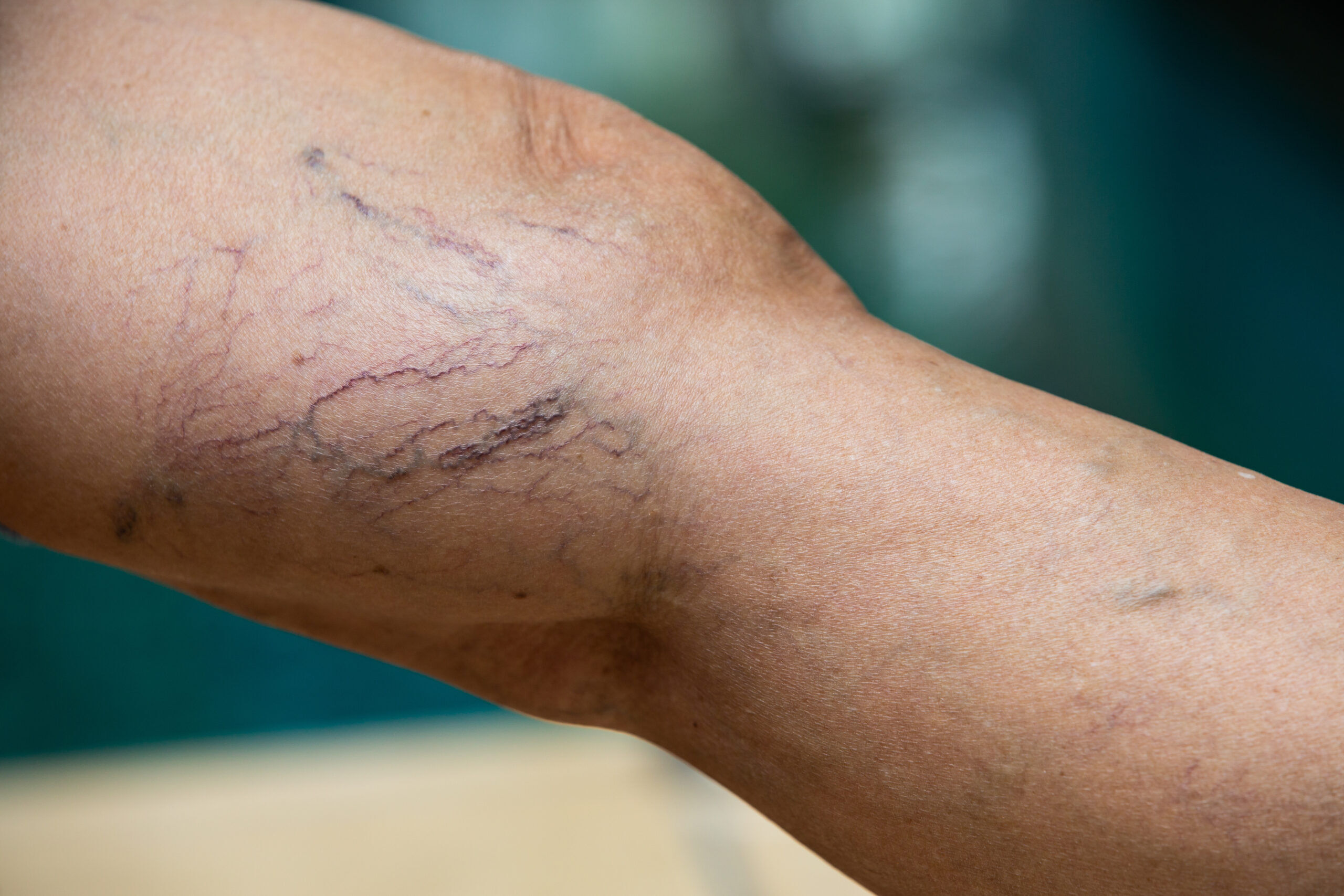
Spider veins – also called telangiectasias – are very small, fine vessels appearing as red or bluish lines on the skin, most often on the legs.
Written and medically reviewed by Bahir Hadi, specialist in surgery, PhD
Short answer
Can spider veins be removed?
Yes. Spider veins, the fine red and purple vessels in the skin, can be treated with laser or sclerotherapy. This is a cosmetic treatment and is not covered by public health insurance. If underlying venous disease is clinically suspected it is assessed, and treating it is only considered when there is an indication in its own right.
Spider Veins
Patient Information: Treatment of Spider Veins (Telangiectasias) with Sclerotherapy
What are Spider Veins?
(medical term: telangiectasias) are small, visible, red, blue, or purple blood vessels located just beneath the skin's surface, often on the legs. They typically have a branched, web-like appearance. They do not usually cause health problems but are often perceived as cosmetically bothersome.
The causes are often hereditary, but they can also be provoked by hormonal changes (e.g., pregnancy), prolonged standing, or underlying varicose veins. If you also have larger varicose veins, we decide the order together with you based on the findings, your symptoms and your goals.
What is Sclerotherapy?
Sclerotherapy is a simple and minimally invasive injection treatment used to close and eliminate spider veins and smaller varicose veins.
- Treatment: Using a very thin needle, a sclerosing agent (most often Polidocanol, known as Aethoxysklerol) is injected directly into the vessel.
- Mechanism of Action: The agent irritates the vessel wall, causing the vessel to contract, close (sclerose), and transform into a fibrous cord. The body then naturally breaks down and absorbs the vessel over time, similar to a bruise.
- Foam vs. Liquid Sclerotherapy:
- Liquid sclerotherapy (microsclerotherapy) is typically used for the finest, smallest spider veins.
- Foam sclerotherapy involves mixing the sclerosing agent with air or gas to form a foam. The agent, concentration, gas and technique are chosen by the treating doctor based on the type and size of the vessel and your circumstances. Foam is often used for slightly larger thread veins and reticular veins, while liquid agent is typically used for the finest vessels.
The results of the treatment are not immediately visible. Treated vessels often become darker immediately after treatment because of solidified blood. It takes time before the result can be assessed, and how long is individual. You will be given a specific follow-up plan at the clinic.
Choosing a treatment
The choice between sclerotherapy, cutaneous laser or no treatment depends on the type, size and location of the vessel, on skin type, symptoms, your goals and the clinical assessment. Thread veins are not covered by the guideline recommendation for endovenous thermal ablation, which applies to truncal reflux in the saphenous veins. Results vary from person to person, several sessions may be needed, and new vessels or recurrence can occur.
Before Treatment
To prepare for the treatment and reduce the risk of side effects, please consider the following:
- Medication: Inform your doctor about all medications you are taking. There is no general rule that blood-thinning or antiplatelet medication must be paused before treatment of thread veins. If a pause is relevant at all, it is agreed individually with the doctor. Never stop prescribed medication on your own.
- Skin: Do not use cream or body lotion on your legs on the day of treatment. Avoid sunbathing and tanning beds on the area ahead of treatment. Tanned skin makes it more difficult to see and treat the vessels and increases the risk of pigmentation changes. You will be given a specific time frame at the clinic.
- Compression Stocking: Whether you need a compression stocking after treatment, and which class, is assessed individually. You will be told at the clinic if you need to bring one.
- Pregnancy: Sclerotherapy is not performed during pregnancy.
- Breastfeeding: If you are breastfeeding, this is assessed specifically against the summary of product characteristics for the sclerosant used and your situation. Please tell us if you are breastfeeding.
After Treatment - The Subsequent Course
It is important to follow the post-treatment instructions. They support safety and healing, but they cannot guarantee a particular cosmetic result.
1. Compression (Compression Stocking)
- Wearing the stocking: Immediately after treatment, you must put on your compression stocking.
- Duration: Guidelines vary. How long you should wear the stocking, and whether it should be worn at night, is decided individually and stated in the instructions you are given.
2. Activity
- Walking: light walking is often possible shortly after treatment. Follow the specific advice you are given at the clinic.
- Physical activity: when you can resume strenuous, intensive exercise is agreed individually. Regular walking, cycling, and light activity are usually fine.
- Heat: Avoid hot tubs, saunas, steam baths, and very hot baths for the period you are told at the clinic.
3. Sun Protection
- UV radiation: Avoid direct sunlight and tanning beds on the treated area for the period you are told at the clinic.
- Sunscreen: Apply sunscreen with a high factor (SPF ≥ 30 or ≥ 50) several times daily if you are exposed to the sun. The sun increases the risk of lasting pigmentation changes (browning) in the treated areas.
4. Expected Reactions and Side Effects
It is normal to experience the following in the treated area:
Symptom
Description
Duration
Redness and Swelling
The skin may be slightly red and swollen at the injection sites.
The duration is individual. Contact the clinic if the symptoms increase or persist.
Itching and Stinging
A slight itch or sting may occur when the agent is injected.
Briefly during and after treatment.
Bruising (Hematomas)
Common around the injection sites.
Subsides within a couple of weeks.
Dark streaks/lumps
The treated vessels become dark, hard streaks/lumps due to solidified blood.
Gradually subsides over weeks to months.
Pigmentation Changes
Brownish discoloration (hyperpigmentation) of the skin is seen in some patients, especially if sunbathing too early.
May disappear over months, but in some people it can be permanent.
Matting (Neovascularization)
Formation of a very fine, branched network of new, small vessels around the treated area.
Seen in some, but is often temporary or can be treated at the next session.
5. Complications
- Superficial thrombophlebitis: Redness, tenderness, and swelling along the treated vessel. Contact the clinic in case of severe pain.
- Ulcers: Can occur, among other things if the agent leaks outside the vessel. Contact the clinic if an ulcer develops. Call 112 for breathing problems, severe chest pain or chest pain with breathlessness, fainting or reduced consciousness, major bleeding or rapidly worsening general condition. Outside clinic opening hours, contact the out-of-hours service (1813 in the Capital Region, otherwise your local service) or the nearest emergency department. A planned clinic appointment does not replace urgent assessment.
- Deep Vein Thrombosis (DVT): A serious complication. The risk is higher if larger veins are treated. Symptoms are sudden swelling, warmth, and pain throughout the leg. Seek immediate medical attention or emergency room if suspected.
- Allergic reaction: Possible to the sclerosing agent.
Expected Result and Follow-up
- Effectiveness: Sclerotherapy can reduce the visibility of spider veins, but the effect varies from person to person and some people need more than one treatment.
- Number of treatments: The number is individual, and the interval between them is set by the practitioner based on the response to the previous session.
- Durability: Treated and closed vessels can reopen, and new spider veins may develop over time, especially if you are genetically predisposed. Repeated treatments may be necessary every few years.
Contact and appointments
Online booking is not available. Please call the clinic or ask your GP for a referral, so we can find the right appointment.
If you are in health insurance group 1 and have a valid referral from your GP, the examinations and treatments covered by the clinic's public health agreement are covered by the Danish public health insurance, so you pay nothing for them yourself. If you are in health insurance group 2, there is usually a small co-payment under the health insurance rules. If you are paying yourself, contact the clinic for a price.
Call the clinic
+45 39 64 01 25
Phone hours
Phone hours: Mon–Thu 09:00–12:00
Address
Hans Edvard Teglers Vej 9, 1st floor · 2920 Charlottenlund
Related
Share this page
Contact information
- Hans Edvard Teglers Vej 9, 1st floor · 2920 Charlottenlund
- +45 39 64 01 25
- mail@kirurgen.dk
- Phone hours: Mon–Thu 09:00–12:00
For referring physicians
Provider number: 215430