Symptoms of varicose veins
Varicose veins are more than a cosmetic issue – they may be related to chronic venous insufficiency, where the venous valves in the legs no longer close tightly. Appearance alone does not make the diagnosis.
Written and medically reviewed by Bahir Hadi, specialist in surgery, PhD
Short answer
What are the signs of varicose veins?
Signs may include visible twisted blue veins, heavy tired legs late in the day, swollen ankles, itching along the vein and night cramps in the calf. The symptoms are non-specific and can have other causes. Symptoms worsen with standing work and heat, and ease when you elevate the leg or walk. Brownish discolouration near the ankle can be a sign of chronic venous disease and should be assessed by a doctor.
Varicose veins (also known as varices) are more than just a cosmetic problem with visible, twisted veins. They may be related to chronic venous insufficiency - a condition where the vein valves in the legs do not close properly. Appearance alone does not make the diagnosis; that requires a clinical assessment with duplex ultrasound.
Knowing the various symptoms of varicose veins can make it easier to seek assessment in time and to discuss treatment for varicose veins with us. This guide describes the early signs, common discomforts, and advanced symptoms that indicate the need for laser treatment for varicose veins.
1. Visible symptoms of varicose veins
The most recognizable symptoms of varicose veins are the visible changes that occur when the veins dilate due to increased pressure (venous reflux).
Varicose veins and spider veins
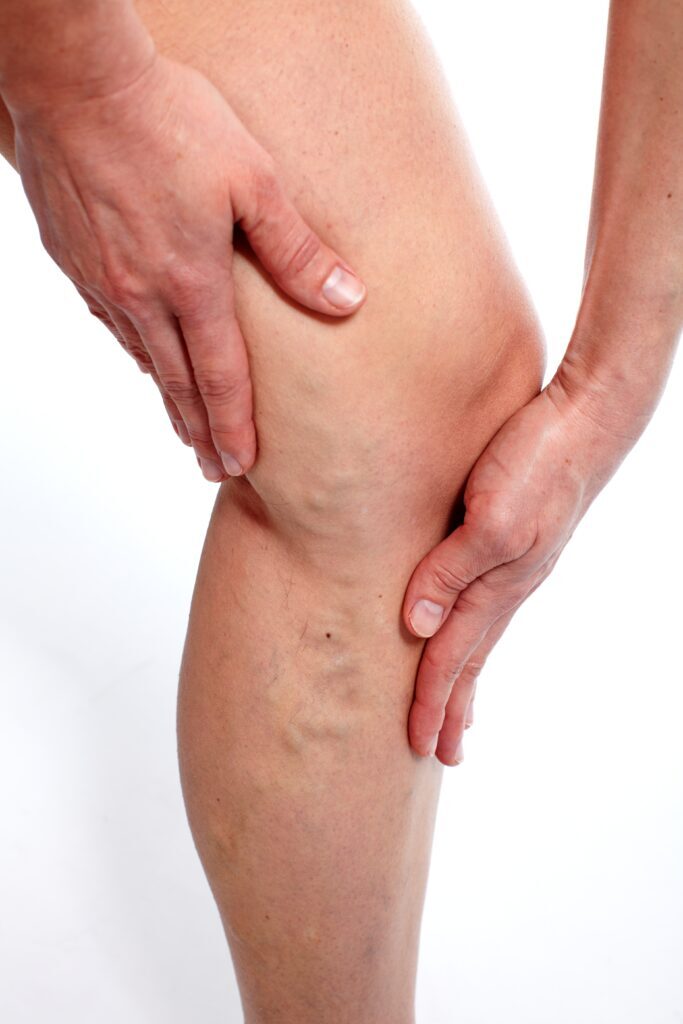
- Visible, Twisted Veins: The classic varicose veins appear as bluish or dark purple veins that bulge and twist under the skin. They most often occur on the calves and back of the thighs.
[Illustration of a severely bulging varicose vein]
- Spider Veins: These are very small, fine, reddish or bluish vessels in the skin. They are usually seen as a cosmetic problem. Whether there is also an underlying vein problem depends on your symptoms and the findings at examination.
Swelling and edema
Swelling is one of the most frequent symptoms of varices, especially late in the day.
- Cause: When the vein valves fail, pressure increases, and fluid is pushed out of the vein and into the surrounding tissue.
- Location: The swelling (edema) is typically seen around the ankles and feet. In advanced cases, the swelling can extend up the calf.
2. Palpable symptoms (subjective discomforts)
Before visible varicose veins develop, many patients experience vague but persistent subjective discomforts in their legs. These symptoms of varicose veins typically worsen after long periods of standing or sitting.
Fatigue, heaviness and pain
- Heavy Legs: A feeling that the legs are tired and heavy - often described as if weights are attached to the ankles. The symptom can occur in venous disease, but it is non-specific and can have other causes. It has to be assessed clinically as a whole, with duplex ultrasound when there is relevant suspicion.
- Tenderness and Pain: Many experience a dull, throbbing, or burning pain, especially along the affected veins. The pain is often relieved when the legs are elevated.
- Restless Legs: Discomfort and a feeling of restless legs are also common symptoms of varices.
Nighttime discomfort and cramps
- Night Cramps: Frequent, sudden, and painful cramps, especially in the calf muscles at night, can be a sign of poor blood circulation and venous reflux.
- Aching and Itching: Persistent itching (pruritus) over the affected veins is a symptom caused by irritation from accumulated waste products in the tissue.
3. Advanced symptoms (complications)
Chronic venous hypertension can be associated with skin changes and, in some people, venous leg ulcers. Timely individual assessment is therefore relevant if you notice such changes. Treatment of varicose veins can reduce symptoms and the risk of complications, but it does not guarantee that skin changes or ulcers are prevented or reversed.
Skin changes
- Discoloration (Hemosiderin Deposition): Blood leaking from the veins contains iron. This iron is deposited in the skin, causing a brownish or rust-colored discoloration (hyperpigmentation), especially around the ankles.
- Hard/Thicker Legs (Lipodermatosclerosis): The skin and underlying fat tissue become inflamed, hard, and leathery. This is a sign of advanced chronic venous insufficiency.
- Eczema and Itching: Persistent venous eczema can develop around the varicose veins.
Venous leg ulcers
The most severe symptom of advanced varices is the development of venous leg ulcers (ulcus cruris venosum).
- Cause: The constant high pressure damages the skin, and even a small trauma can develop into an ulcer that has great difficulty healing due to poor blood flow.
- Treatment: Ulcers often require aggressive treatment of varices and compression to create an environment where the ulcer can close.
[Illustration of skin discoloration and possibly a venous ulcer]
Are varicose veins dangerous?
Not acutely, in most cases. Varicose veins are a long-standing condition that develops over years. Over time, high venous pressure can gradually change the skin, and a small group of patients develop chronic complications:
- Superficial phlebitis: a hard, reddish, tender cord along a varicose vein. It is treated with compression and pain relief, but should be examined to rule out spread to the deep veins.
- Bleeding from a varicose vein: a thin-walled vein just under the skin can rupture after a minor knock. The bleeding looks dramatic but stops with pressure and the leg elevated. See a doctor for assessment.
- Skin changes: brownish discolouration, eczema and thickened skin around the ankles after many years of chronic venous insufficiency.
- Venous leg ulcers: the most serious complication. A small injury near the ankle can develop into an ulcer that heals poorly.
Sudden, painful swelling in one leg only must always be assessed urgently to rule out a deep-vein thrombosis. That is not a complication of varicose veins, but a separate condition that can look similar.
Do varicose veins hurt?
Many people find that varicose veins do hurt, but the pain is usually not described as sharp. The typical complaint is a dull, throbbing or burning sensation along the veins, often worst late in the day and after long periods of sitting or standing. It often eases when you elevate the legs, go for a walk or use compression stockings.
Other patients describe:
- Heaviness and fatigue in the legs, as if they are full.
- Itching and tingling over the affected veins.
- Night cramps in the calf, especially after demanding days.
- Restless legs, which worsen when you sit down.
Severe, sudden or acute pain is not typical of varicose veins and should always be assessed. It can be a sign of phlebitis or deep-vein thrombosis.
Early varicose veins: the first signs
Early varicose veins are not always visible. The first signs are functional and easily missed: heavy, tired legs at the end of the day, slight swelling around the ankles after a long day, fine thread veins behind the knee or on the inner thigh, and a faint bulging of the veins under the skin when you stand.
If you recognise these signs, especially if someone in your family has varicose veins, a duplex ultrasound scan is worth having. The scan can show reflux in the venous valves (backflow over 0.5 seconds) long before the varicose veins become obvious. What the findings mean for you, and what the options are, we go through at the preliminary examination.
Assessment and treatment
If you recognize one or more of these symptoms of varicose veins, it is important to have a professional assessment.
At Kirurgen.dk, we perform an ultrasound scan (Duplex scan) to precisely locate the defective vein valves, which are the primary cause of the varicose veins.
For symptomatic, duplex-documented reflux in the great or small saphenous vein where treatment is indicated, ESVS 2022 recommends endovenous thermal ablation such as laser treatment (EVLA) in preference to stripping and foam sclerotherapy (recommendations 28 and 43, class I A). This does not apply to side branches or thread veins. The choice of method depends on anatomy and patient factors, and recovery time varies.
Benefits of laser treatment for varicose veins
- Symptom relief: The treatment abolishes reflux in the treated vein, and many people find their pain, heaviness and swelling ease. The degree of relief varies.
- Minimally invasive: Performed under local anesthesia, allowing for quick return to normal activities.
- Skin changes and ulcers: Treating the underlying reflux is part of preventing and managing venous skin changes and ulcers, but it cannot guarantee that they will not occur.
Do you suspect varicose veins? Contact us to learn more about your options for laser treatment for varicose veins and treatment for varices.
Contact and appointments
Online booking is not available. Please call the clinic or ask your GP for a referral, so we can find the right appointment.
If you are in health insurance group 1 and have a valid referral from your GP, the examinations and treatments covered by the clinic's public health agreement are covered by the Danish public health insurance, so you pay nothing for them yourself. If you are in health insurance group 2, there is usually a small co-payment under the health insurance rules. If you are paying yourself, contact the clinic for a price.
Call the clinic
+45 39 64 01 25
Phone hours
Phone hours: Mon–Thu 09:00–12:00
Address
Hans Edvard Teglers Vej 9, 1st floor · 2920 Charlottenlund
Frequently asked questions
What are the first signs of varicose veins?+
Early symptoms are often non-specific: heavy, tired legs at the end of the day, a faint throbbing along the calf, mild ankle swelling and fine spider veins. In some people visible, twisted veins appear later, but the order varies and the symptoms can have other causes.
Are varicose veins dangerous?+
Varicose veins are a chronic condition and the course differs from person to person. In some people eczema, brown skin discolouration, thickened skin and, in more severe cases, venous leg ulcers develop over the years. Sudden painful swelling in only one leg should always be assessed urgently to rule out deep-vein thrombosis.
Do varicose veins hurt?+
Many patients experience a dull, throbbing or burning ache along the affected veins, often worst after a long day of standing or sitting. The pain typically eases when you elevate the legs or walk. Sharp, sudden pain is unusual and should be evaluated.
What are early varicose veins?+
Early varicose veins show as heavy legs, mild evening ankle swelling, fine spider veins and a slight bulging of the surface veins. A duplex ultrasound can detect valve reflux long before the veins become visible.
What does it mean when veins on the legs suddenly become visible?+
More visible veins on the legs can have several explanations, including changed valve function in the veins, skin thickness, weight change or hormonal factors. Appearance alone does not settle the cause. It should be assessed at the clinic with history, examination and, where relevant, duplex ultrasound, particularly if there is also swelling or heaviness. Sudden, painful swelling in only one leg must be assessed urgently.
Can you have varicose veins internally?+
Veins can be affected without anything being visible on the skin, for example in the deep veins or the perforating veins. Symptoms such as heavy legs, swelling and skin changes are non-specific and can have several causes. What lies behind them is clarified by an overall clinical assessment, which often includes duplex ultrasound.
When should I see a doctor about varicose veins?+
NICE CG168 recommends immediate referral to a vascular service for bleeding varicose veins, and referral for troublesome symptoms such as pain, aching, swelling, heaviness or itching, for lower-limb skin changes such as pigmentation or eczema, for superficial vein thrombosis with suspected venous incompetence, and for a venous leg ulcer or a healed one. Cosmetic concern can also be a reason to seek advice. Seek urgent care for sudden one-leg swelling, redness and pain (suspicion of blood clot).
Related
Share this page
Contact information
- Hans Edvard Teglers Vej 9, 1st floor · 2920 Charlottenlund
- +45 39 64 01 25
- mail@kirurgen.dk
- Phone hours: Mon–Thu 09:00–12:00
For referring physicians
Provider number: 215430