
Superficial thrombophlebitis
Written and medically reviewed by Bahir Hadi, specialist in surgery, PhD
Phlebitis (Thrombophlebitis): Symptoms, Treatment and Link to Varicose Veins
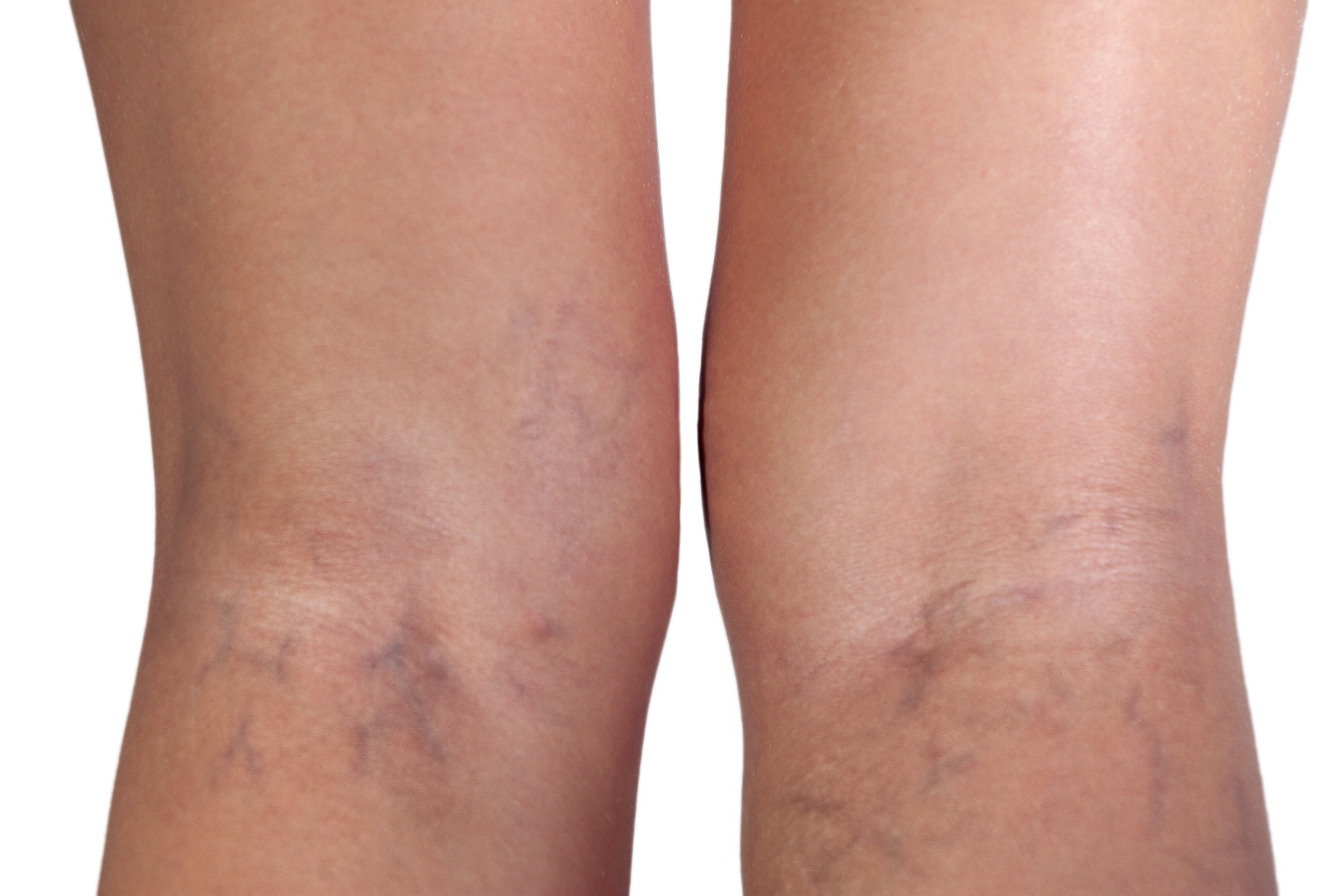
Phlebitis - medically known as superficial thrombophlebitis or superficial vein thrombosis (SVT) - is an inflammation and blood clot in a superficial vein, most often in the leg. In a French prospective specialist cohort (the POST study, 844 patients with symptomatic superficial vein thrombosis of at least 5 cm), about one quarter had a concurrent deep vein thrombosis or symptomatic pulmonary embolism at the first assessment [1]. That result cannot be transferred directly to all patients or used to calculate an individual risk. The condition is often seen in patients with varicose veins, but there is no well-documented figure for how large that proportion is.
What is phlebitis?
A tender, red, hard, and warm cord along a superficial vein - most often the great saphenous vein on the inside of the thigh or calf. A blood clot forms in the vein, irritating the vein wall and causing a local inflammatory reaction. Unlike erysipelas (cellulitis), the redness is narrow and linear, not map-like.
Symptoms
- A tender, hard vein that can be felt as a cord under the skin
- Redness along the vein, often 5-30 cm long
- Warm skin over the area
- Swelling locally around the vein
- Pain on touch and when walking
- Fever is rare (unlike with erysipelas)
- Often in a known varicose vein
Why is it important?
Previously, textbook wisdom was: "thrombophlebitis is benign - apply warm compresses and take NSAIDs". This is outdated.
The French POST study with 844 patients showed [1,2]:
- 24.9% (210 of 844) had a concurrent DVT or symptomatic pulmonary embolism at the first assessment
- Among the 600 patients who had isolated superficial vein thrombosis at the first assessment and entered the three-month follow-up, a composite thromboembolic endpoint was recorded in 10.2%. It included, among other things, DVT, symptomatic pulmonary embolism, and extension or recurrence of the superficial thrombosis. The result was observed under varying treatment, where most received anticoagulation, and therefore does not describe an untreated natural course or an individual patient's risk
- Both the extent of the thrombus and how close it lies to the junction with the deep vein system, in the groin or behind the knee, form part of the doctor's risk assessment. The 2021 guideline from the European Society for Vascular Surgery (ESVS) uses, among other markers, a thrombus length of at least 5 cm and a distance of less than 3 cm to the deep vein system when deciding on anticoagulation (ESVS 2021). You should not measure or judge this yourself. These are the clinician's reference points within an overall assessment of risk factors and symptoms
Superficial vein thrombosis is therefore regarded today as part of the venous thromboembolism spectrum. It should be assessed by a doctor rather than dismissed as harmless, but which treatment is right depends on the individual.
Investigation
If thrombophlebitis is suspected, the doctor decides whether a duplex ultrasound is needed. Ultrasound can be used to:
- Confirm the diagnosis
- Measure the length of the thrombus
- Assess the distance to the deep vein system (groin/back of the knee)
- Check whether there is a concurrent deep vein thrombosis
How close the thrombus lies to the deep vein system is part of the doctor's assessment of how intensively to treat. European guidelines use a distance of less than 3 cm from the junction with the deep veins as a situation where treatment approaches that for deep vein thrombosis. Distance alone does not decide, however: extent, risk factors, symptoms and previous clots all weigh in.
Treatment
1. Anticoagulation
This section describes what has been studied in trials. It is not a treatment instruction. Whether to anticoagulate at all, with which drug, at what dose and for how long, is decided by the treating doctor.
- Trial regimen, CALISTO: in the randomised CALISTO trial (n=3,002), patients with acute symptomatic superficial vein thrombosis of the leg, without deep vein thrombosis or symptomatic pulmonary embolism at inclusion, received subcutaneous fondaparinux once daily for 45 days or placebo. The composite primary endpoint (death from any cause, symptomatic pulmonary embolism, symptomatic deep vein thrombosis, and symptomatic extension to the saphenofemoral junction or recurrence of the superficial thrombosis) was assessed at day 47 and occurred in 0.9% on fondaparinux versus 5.9% on placebo, a relative risk reduction of about 85% [3]. The result cannot simply be generalised to everyone with superficial thrombosis: patients with active cancer, recent venous thromboembolism or a thrombus very close to the saphenofemoral junction were not represented in the same way in the trial. The trial also excluded, among others, pregnancy and breastfeeding, severely reduced kidney function, low body weight and high bleeding risk. Whether and how anticoagulation should be used in superficial vein thrombosis is a medical decision in the individual case, and drug, dose and duration cannot be read as general patient instructions
- Trial regimen, SURPRISE: rivaroxaban has been compared with fondaparinux in patients with superficial vein thrombosis and at least one additional risk factor [4]. The trial used a non-inferiority design, which is not the same as documented equivalence in every situation
2. Compression Compression can relieve pain and swelling in the acute phase. Evidence for an effect on the thrombosis itself is limited, so compression is used for symptom relief after individual assessment, not as fixed treatment for everyone.
3. Pain relief In a Cochrane review, NSAIDs reduced extension and recurrence of superficial thrombophlebitis compared with placebo, with no demonstrated effect on symptomatic venous thromboembolism, and the evidence was rated low certainty [5]. Topical treatment with gel or cream improved local symptoms compared with placebo in the same studies, but the studies did not report whether it affects clots or extension [5]. That is a summary of the research, not a recommendation to self-treat. What suits you, including whether NSAIDs can be used at all, should be agreed with your doctor. Do not change prescribed medication without medical advice.
4. Activity There is no good evidence that bed rest helps in superficial vein thrombosis. How active you can be should be agreed with your doctor, based on symptoms and any concurrent clot.
The link with varicose veins
Varicose veins and superficial thrombophlebitis often occur together:
- Stagnant blood in the enlarged vein can make it easier for a clot to form
- Increased venous pressure puts strain on the vein wall
- Superficial vein thrombosis is often seen in people with varicose veins, but there is no well-documented figure for the proportion
Whether treating the varicose veins lowers the risk of a new thrombophlebitis is not settled. In the prospective French OPTIMEV cohort, in which 285 patients with isolated superficial vein thrombosis and no cancer were followed for three years after stopping anticoagulation, having varicose veins or not had no or only a minor bearing on the risk of a new venous thromboembolic event [6]. If you still have symptomatic varicose veins once the acute phase has settled, endovenous laser therapy (EVLT) or another minimally invasive treatment can be discussed with your doctor. When that is relevant depends on symptoms and findings, not on a fixed timetable.
Other causes of thrombophlebitis
- IV cannula or infusion (chemical irritation)
- Cancer (Trousseau's syndrome). The link between cancer and blood clots is well described, but a superficial thrombophlebitis in someone without other symptoms does not in itself mean there is cancer. When further investigation is warranted is a matter for the doctor
- Pregnancy and the postpartum period
- Hormone therapy
- Hereditary thrombophilia
- Immobilisation, long-haul flights
- Infection (septic thrombophlebitis). This is a rare but serious condition, treated in hospital
When should you see a doctor?
On the same day or urgently:
- A hard, tender cord on the leg with redness
- The phlebitis is spreading upwards
- Simultaneous swelling of the entire leg
- Feeling generally unwell, fever
Call 112 (the emergency number in Denmark) for life-threatening symptoms such as sudden shortness of breath or chest pain (suspected pulmonary embolism).
If you are unsure and your own doctor is closed, call 1813 in the Capital Region of Denmark, or the local out-of-hours medical service in the other regions.
In summary
Phlebitis is not "just an irritation". It is a blood clot in a superficial vein, and what needs to be investigated and treated depends on an individual medical assessment. At Kirurgen.dk we can examine the leg, scan the veins with ultrasound and offer endovenous laser therapy for varicose veins under public healthcare funding. That describes what we offer; it is not in itself evidence that treatment is necessary or preventive in your case.
References
- Decousus H, Quéré I, Presles E, et al. Superficial venous thrombosis and venous thromboembolism: a large, prospective epidemiologic study. Ann Intern Med 2010;152(4):218-24. PubMed DOI
- Decousus H, Bertoletti L, Frappé P, et al. Epidemiology, diagnosis, treatment and management of superficial-vein thrombosis of the legs. Best Pract Res Clin Haematol 2012;25(3):275-84. PubMed DOI
- Decousus H, et al. Fondaparinux for the treatment of superficial-vein thrombosis in the legs (CALISTO). N Engl J Med 2010;363(13):1222-32. PubMed
- Beyer-Westendorf J, Schellong SM, Gerlach H, et al. Prevention of thromboembolic complications in patients with superficial-vein thrombosis given rivaroxaban or fondaparinux: the open-label, randomised, non-inferiority SURPRISE phase 3b trial. Lancet Haematol 2017;4(3):e105-e113. PubMed DOI
- Di Nisio M, Wichers IM, Middeldorp S. Treatment for superficial thrombophlebitis of the leg. Cochrane Database Syst Rev 2018;2(2):CD004982. PubMed
- Galanaud JP, Sevestre MA, Genty C, et al. Long-term risk of venous thromboembolism recurrence after isolated superficial vein thrombosis. J Thromb Haemost 2017;15(6):1123-1131. PubMed