
The malfunctioning engine: gastroduodenal DGBIs
Written and medically reviewed by Bahir Hadi, specialist in surgery, PhD
Published: 14 September 2026
The malfunctioning engine: gastroduodenal DGBIs
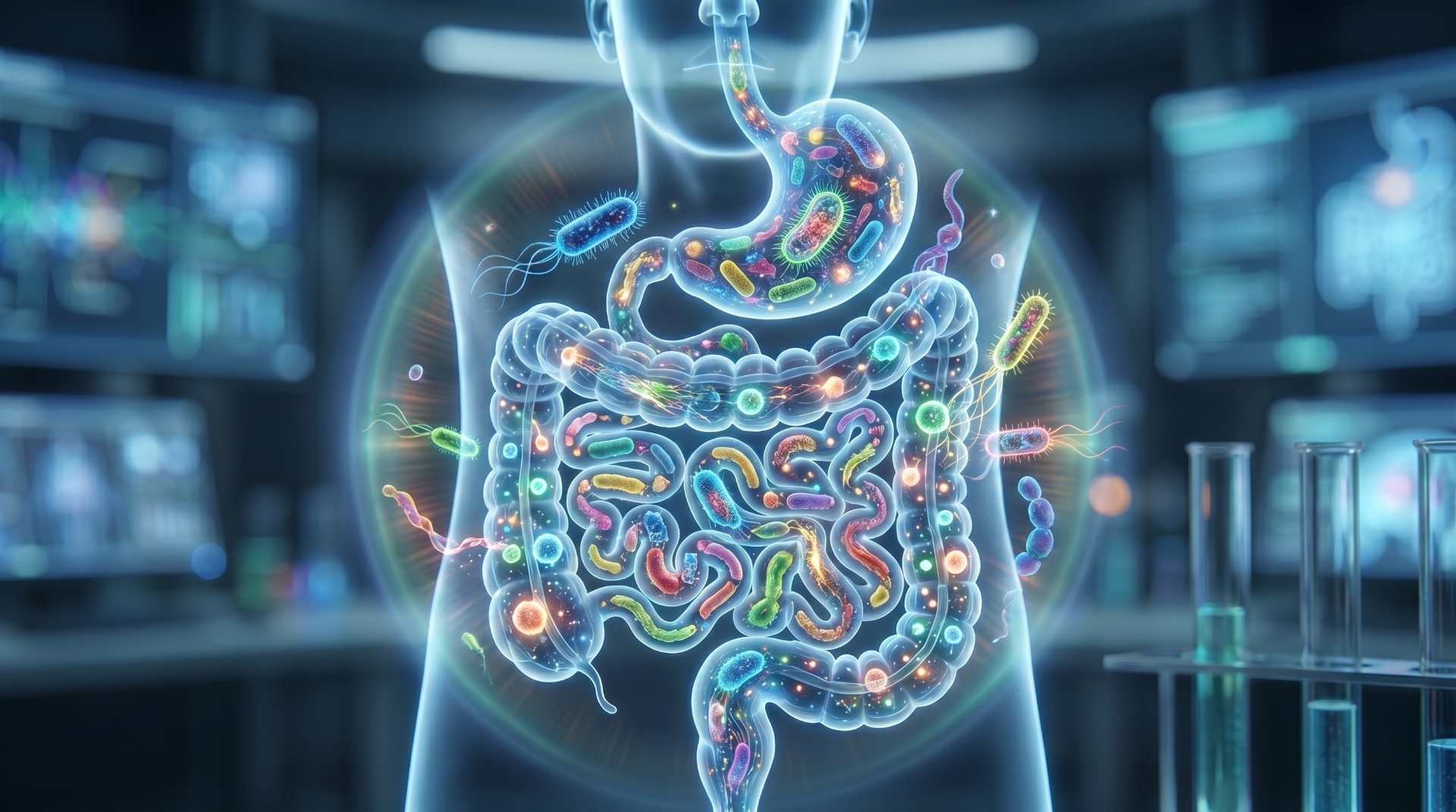
Abstract
If you feel uncomfortably full after only a few bites or struggle with unexplained nausea, your stomach's nervous system may be misfiring. Under the Rome V criteria these issues fall into Gastroduodenal Disorders of Gut-Brain Interaction (DGBIs) - conditions affecting the stomach and duodenum without demonstrable structural disease [1, 2].
The stomach's two major jobs
Your stomach has to do two things well: stretch to accommodate food (accommodation) and grind that food down to pump it into the intestines (emptying) [2]. In gastroduodenal DGBIs, the fine coordination between nerves, muscles and brain fails [1].
Key conditions
- Functional dyspepsia (FD) - the giant of this category, split into two subtypes [2]:
- Postprandial distress syndrome (PDS): uncomfortable fullness or early satiety after normal meals.
- Epigastric pain syndrome (EPS): burning or aching pain in the upper stomach area, not necessarily tied to eating.
- Chronic nausea and vomiting syndrome: persistent nausea or vomiting without infection, ulcer or mechanical blockage [2].
- Cyclic vomiting syndrome (CVS): sudden, unpredictable, intense vomiting attacks with completely symptom-free periods in between [2].
Work-up
The modern approach is a positive diagnosis under Rome V - not endless exclusion testing [1]. Oral gastroscopy can show peptic ulcer and visible reflux damage, and allows biopsy. A normal gastroscopy does not exclude reflux disease, and Helicobacter pylori requires a dedicated test such as a breath test, stool antigen or biopsy-based testing. Alarm features (weight loss, bleeding, onset over 55) always warrant further work-up [1].
Treatment
Because the root cause sits at the intersection of motility and brain signalling, management typically combines [2]:
- Dietary adjustments (smaller, more frequent, lower-fat meals).
- Prokinetic drugs that help the stomach empty.
- Acid suppression (PPIs) in the EPS subtype.
- Neuromodulators (e.g. mirtazapine, low-dose TCAs) to dampen visceral hypersensitivity.
Work-up at Kirurgen.dk
We investigate stomach symptoms with oral or nasal gastroscopy, Helicobacter pylori breath test and functional work-up. Continue the DGBI series: Oesophageal DGBIs, Bowel DGBIs, Centrally mediated pain.
References
- Corsetti M, Shin A, Lacy BE, Cash BD, Simrén M, et al. Bowel Disorders. Gastroenterology 2026;170(6):1261-1282. DOI: 10.1053/j.gastro.2026.02.003. PubMed - verified Rome V source document. The chapter is the Rome V text on bowel disorders and is used here as documentation of the Rome V framework itself. The domain-specific criteria are in reference 2.
- Stanghellini V, Chan FK, Hasler WL et al. Gastroduodenal Disorders. Rome IV/V chapter on functional dyspepsia (PDS/EPS), chronic nausea and cyclic vomiting syndrome. Gastroenterology - consensus article.
More on this topic at Kirurgen.dk
Category: Gut–brain axis disorders