
Sports and exercise with varicose veins
Written and medically reviewed by Bahir Hadi, specialist in surgery, PhD
Published: 1 September 2026
Sport and Physical Activity with Varicose Veins: What You Can Do and What You Should Avoid
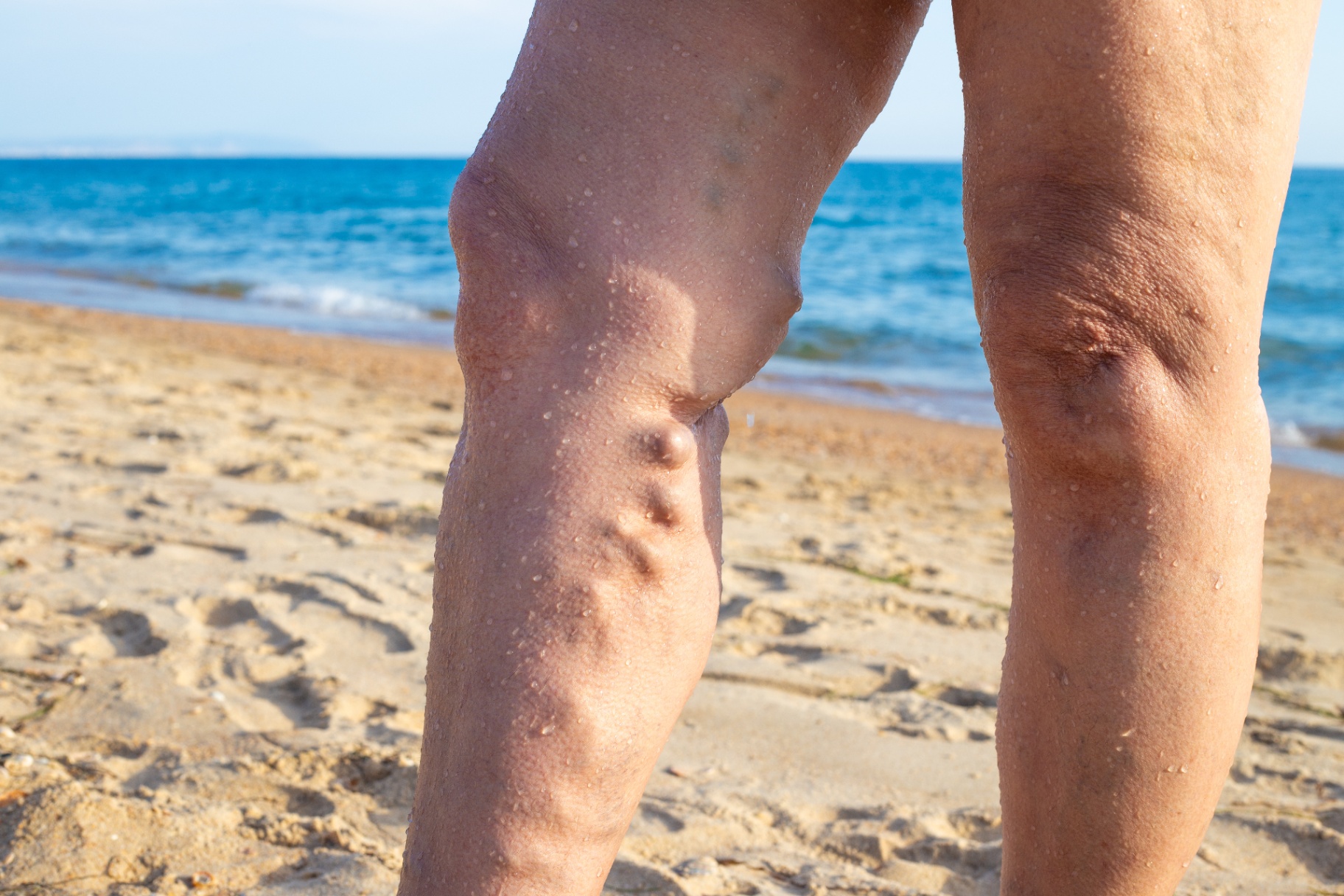
Many patients with varicose veins (varices) are unsure whether they can continue to run, do strength training, or cycle long distances. The short answer is: ordinary activity is generally good for you - but the evidence in venous disease is thin, and some activities need more thought than others.
Why is exercise beneficial for the leg veins?
The blood in the legs returns to the heart through three mechanisms:
- The venous valve system - small valves that prevent blood from flowing backwards
- The calf muscle pump - contraction of the calf muscles "pumps" the blood upwards
- Negative pressure in the chest cavity during inhalation
In varicose veins, the valve system is faulty, causing blood to flow backwards (reflux). This increases the pressure in the superficial veins and causes symptoms such as heaviness, swelling, and visible, twisted veins.
When the calf muscle pump is activated, venous pressure in the leg falls, and some people find their symptoms ease. Population studies find an association between low physical activity and more pronounced chronic venous disease, but they are observational and cannot show that exercise in itself prevents varicose veins [1,2]. A 2023 Cochrane review of five randomised trials with 146 participants with non-ulcerated chronic venous disease concluded that the evidence is insufficient to assess the benefits and harms of physical exercise [12]. Activity is therefore sensible advice for general health, not a documented prevention or treatment of venous disease.
Forms of activity that often work well with varicose veins
Often well tolerated:
- Walking - activates the calf muscle pump. There is no documented minimum duration; amount, pace and frequency are adapted to your function, your symptoms and any other illness [3]
- Cycling - easy on the joints and activates the calf muscles without impact stress
- Swimming - movement activates the leg muscles and the body is unloaded in the water. The effect on venous disease itself has not been studied
- Yoga and Pilates - strength and mobility training that many find comfortable. This is general exercise advice, not documented venous treatment
- Rowing and cross-trainer - smooth, dynamic loading of the leg muscles [4]
Sports where you should be cautious
These activities are not forbidden, but they can worsen symptoms if overdone or performed without care:
- Long-distance running on hard surfaces: There is no evidence that running worsens varicose veins. Some people notice more heaviness after long runs, and softer surfaces and good shoes can then help. Studies of compression stockings in runners concern performance and recovery in healthy athletes, and those results cannot be transferred to venous disease [5,6].
- Heavy lifting (weightlifting, CrossFit, kettlebells): The Valsalva manoeuvre (straining while holding your breath) increases intra-abdominal pressure [7]. What that means for varicose veins in the longer term is not settled. If you notice heaviness or discomfort in your legs during heavy lifting, talk to us about how best to structure your training.
- Static activities (prolonged standing yoga poses, holding planks for long periods, stationary strength exercises): These lack dynamic muscle pumping action.
Practical advice for exercise
- Compression during exercise is not general advice in varicose veins. Whether you should use a compression stocking, and if so which class and when, is decided individually (ESVS 2022, recommendation 24) [13]
- Elevate your legs if it eases heaviness. No duration is documented
- Drink enough water during exercise, as you otherwise would
- Vary your workouts if you like. No particular combination of cardio and strength training is documented to be best in venous disease
- Listen to your body: many people with varicose veins notice heavy legs late in the day, but it is not something you simply have to accept. Symptoms that persist, increase or affect only one leg should be assessed, as should pain, swelling or discolouration
Special situations
- After endovenous laser treatment (EVLT), light walking may be possible soon after the procedure, but follow the specific instructions you are given by the clinic. When you can resume exercise, heavy strength training and contact sports depends on the method used, the extent of the procedure, your symptoms, any wounds and your clinician's advice. There is no universal calendar. Whether and for how long you wear a compression stocking is likewise decided individually. ESVS 2022 (recommendation 24) states that the duration of post-intervention compression is decided on an individual basis; the UK NICE guideline CG168 (recommendation 1.3.3) states no more than seven days if compression is offered after an interventional treatment, and that is a British recommendation rather than a universal Danish rule [10,13,14].
- After pregnancy: when you can resume heavy training and high-intensity interval training depends on the delivery, any tears or caesarean section, pelvic floor function and how you feel. Agree it with your midwife, GP or physiotherapist. There is no universal calendar.
- With active skin complications or venous ulcers: avoid swimming pools and hot baths until the wound has completely healed.
When should you contact a doctor?
See a doctor if you experience:
- A tender, red, and hard vein (possible superficial thrombophlebitis)
- Sudden swelling, warmth and pain in the leg - needs an urgent assessment the same day, as it could be a deep vein thrombosis (DVT) [11]
- Skin changes, brownish discolouration, or sores around the ankle
- Pain during exercise that does not go away with rest
Conclusion
You do not have to stop exercising because you have varicose veins. Regular movement is good advice for your general health, and compression is used only after an individual assessment. A 2023 Cochrane review found the evidence insufficient to assess the benefits and harms of physical exercise in non-ulcerated chronic venous disease [12], so exercise should not be seen as a documented treatment or prevention of venous disease. Sport and varicose veins can certainly be combined, as long as you know your own limits. Activity does not replace medical assessment: sudden swelling, warmth or pain in one leg must be assessed urgently for deep vein thrombosis.
References
- van Uden CJ, et al. Gait and calf muscle endurance in patients with chronic venous insufficiency. Clin Rehabil 2005;19(3):339-44.
- Padberg FT, et al. Structured exercise improves calf muscle pump function in chronic venous insufficiency. J Vasc Surg 2004;39(1):79-87.
- Yang D, et al. Calf muscle pump function and effect of walking on venous hemodynamics. Int Angiol 1999;18(1):2-4.
- Williams KJ, et al. The calf muscle pump revisited. J Vasc Surg Venous Lymphat Disord 2014;2(3):329-34.
- Kemmler W, et al. Effect of compression stockings on running performance. J Strength Cond Res 2009;23(1):101-5. PMID: 19057400
- Engel FA, et al. Compression garments and recovery from exercise: a meta-analysis. Br J Sports Med 2016;50(13):820-9.
- Hackett DA, Chow CM. The Valsalva maneuver: its effect on intra-abdominal pressure and safety issues during resistance exercise. J Strength Cond Res 2013;27(8):2338-45.
- Gloviczki P, Lawrence PF, Wasan SM, et al. The 2022 SVS/AVF/AVLS clinical practice guidelines for the management of varicose veins of the lower extremities. Part I. Duplex scanning and treatment of superficial truncal reflux. J Vasc Surg Venous Lymphat Disord 2023;11(2):231-261.e6. DOI: 10.1016/j.jvsv.2022.09.004. PubMed
- Heit JA. Epidemiology of venous thromboembolism. Nat Rev Cardiol 2015;12(8):464-74.
- Araujo DN, Ribeiro CT, Maciel AC, Bruno SS, Fregonezi GA, Dias FA. Physical exercise for the treatment of non-ulcerated chronic venous insufficiency. Cochrane Database Syst Rev. 2023;6(6):CD010637. DOI: 10.1002/14651858.CD010637.pub3. Cochrane Library
- De Maeseneer MG, Kakkos SK, Aherne T, et al. European Society for Vascular Surgery (ESVS) 2022 Clinical Practice Guidelines on the Management of Chronic Venous Disease of the Lower Limbs. Eur J Vasc Endovasc Surg. 2022;63(2):184-267. DOI: 10.1016/j.ejvs.2021.12.024. Guideline
- National Institute for Health and Care Excellence. Varicose veins: diagnosis and management (CG168). Recommendation 1.3.3. NICE
More on this topic at Kirurgen.dk
Category: Varicose veins