
Nocturnal calf cramps
Written and medically reviewed by Bahir Hadi, specialist in surgery, PhD
Nocturnal Calf Cramps: When Are They Caused by Varicose Veins?
Nocturnal leg cramps occur in adults and become more frequent with age [1]. Cramps can be benign, but when the cramps are accompanied by heavy legs, swelling, or visible veins, they can be a sign of chronic venous insufficiency and underlying varicose veins.
What is a calf cramp?
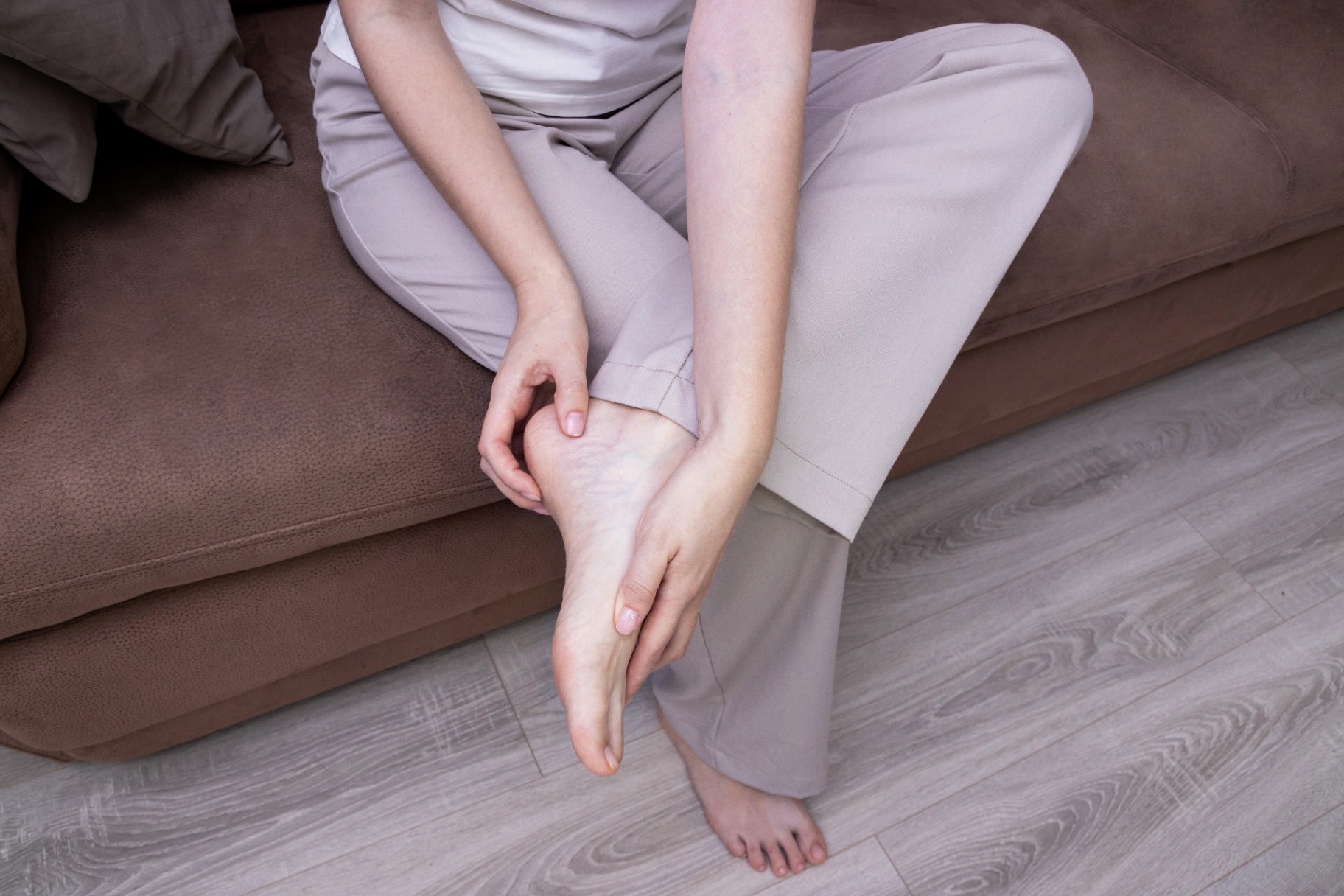
A calf cramp is a sudden, involuntary and painful contraction of the calf muscles, typically the gastrocnemius or soleus muscle. The episode typically lasts from a few seconds to up to 10 minutes and can leave the muscle feeling tender for a period afterwards [2].
Why do varicose veins cause cramps?
With varicose veins, the valves in the veins do not function properly, causing blood to flow backwards and pool in the legs (venous reflux). This leads to:
- Increased venous pressure in the calf
- Lack of oxygen in the muscles at night, when the muscles are no longer actively pumping blood back
- Local electrolyte imbalances in the muscle tissue
- Micro-inflammation around the dilated veins
In cross-sectional surveys, people with chronic venous insufficiency report nocturnal calf cramps more often than the general population, but nocturnal cramps are described as associated with vascular disease, but the studies are small and cannot show causation [1].
Other causes of nocturnal cramps
It is important to rule out other causes before treatment:
- Dehydration and electrolyte imbalances (especially magnesium, potassium, calcium)
- Medication: statins, diuretics, beta-blockers, beta-2-agonists
- Pregnancy, particularly late in pregnancy
- Diabetes and peripheral neuropathy
- Lower back conditions with nerve root compression
- Hypothyroidism
- Peripheral arterial disease
A thorough medical history, clinical examination, and sometimes blood tests will usually clarify the cause [1,2].
When should you see your GP?
Contact your GP if you experience:
- Cramps several times a week for more than a month
- Swelling, brownish discolouration, or eczema around the ankles
- Visible, winding veins on the thigh or calf
- Heavy, tired legs at the end of the day
- Ulceration in the ankle area
- Sudden, one-sided pain (suspicion of deep vein thrombosis)
If a venous cause is suspected, a duplex ultrasound of the leg veins is performed. It is used to confirm anatomy and reflux and to plan treatment in relevant patients. Cramps are non-specific, and finding reflux does not prove that the cramps come from the veins [3].
What helps with nocturnal cramps?
For an acute attack:
- Stretch the calf by pulling the top of your foot up towards your knee
- Stand up and take a few steps
- Massage the muscle
Prevention:
- Daily exercise - walking, cycling or swimming activates the calf muscle pump [4]
- Stretching exercises before bedtime (3 × 30-second calf stretches) can reduce the frequency and severity of nocturnal cramps in older adults [5]
- Elevate your legs for 15-20 minutes daily, above heart level
- Graduated compression stockings (Class II, 23-32 mmHg) for venous insufficiency [6]
- Sufficient fluid intake - at least 1.5-2 litres daily
- Avoid static positions - alternate between standing and sitting
Treatment of underlying varicose veins: If the cramps are related to venous reflux, many people notice that their leg symptoms improve after endovenous laser treatment (EVLT) of the incompetent trunk vein. The effect on nocturnal cramps specifically has not been reported separately, so it cannot be put into a figure [7].
Treatment at Kirurgen.dk
We offer investigation with Doppler ultrasound and endovenous laser treatment (EVLT) after a GP referral. Questions about referral, cover and price are clarified with the clinic or your GP before treatment; see contact. Also read our articles on heavy, tired legs and swollen legs and ankles.
References
- Allen RE, Kirby KA. Nocturnal leg cramps. Am Fam Physician 2012;86(4):350-5.
- Hallegraeff J, de Greef M, Krijnen W, van der Schans C. Criteria in diagnosing nocturnal leg cramps: a systematic review. BMC Fam Pract 2017;18(1):29. PubMed
- Gloviczki P, Lawrence PF, Wasan SM, et al. The 2022 SVS/AVF/AVLS clinical practice guidelines for the management of varicose veins of the lower extremities. Part I. Duplex scanning and treatment of superficial truncal reflux. J Vasc Surg Venous Lymphat Disord 2023;11(2):231-261.e6. DOI: 10.1016/j.jvsv.2022.09.004. PubMed
- Padberg FT Jr, et al. Structured exercise improves calf muscle pump function in chronic venous insufficiency. J Vasc Surg 2004;39(1):79-87.
- Hallegraeff JM, et al. Stretching before sleep reduces the frequency and severity of nocturnal leg cramps in older adults. J Physiother 2012;58(1):17-22.
- Lim CS, Davies AH. Graduated compression stockings. CMAJ 2014;186(10):E391-8.
- Rasmussen LH, et al. Randomized clinical trial comparing endovenous laser ablation, radiofrequency ablation, foam sclerotherapy and surgical stripping for great saphenous varicose veins. Br J Surg 2011;98(8):1079-87. PubMed (1-year results). Five-year follow-up: Lawaetz M, Serup J, Lawaetz B, et al. Comparison of endovenous ablation techniques, foam sclerotherapy and surgical stripping for great saphenous varicose veins. Extended 5-year follow-up of a RCT. Int Angiol 2017;36(3):281-8. PubMed
More on this topic at Kirurgen.dk
Category: Varicose veins