
Heavy, tired legs
Written and medically reviewed by Bahir Hadi, specialist in surgery, PhD
Heavy, tired legs: The most common early sign of varicose veins
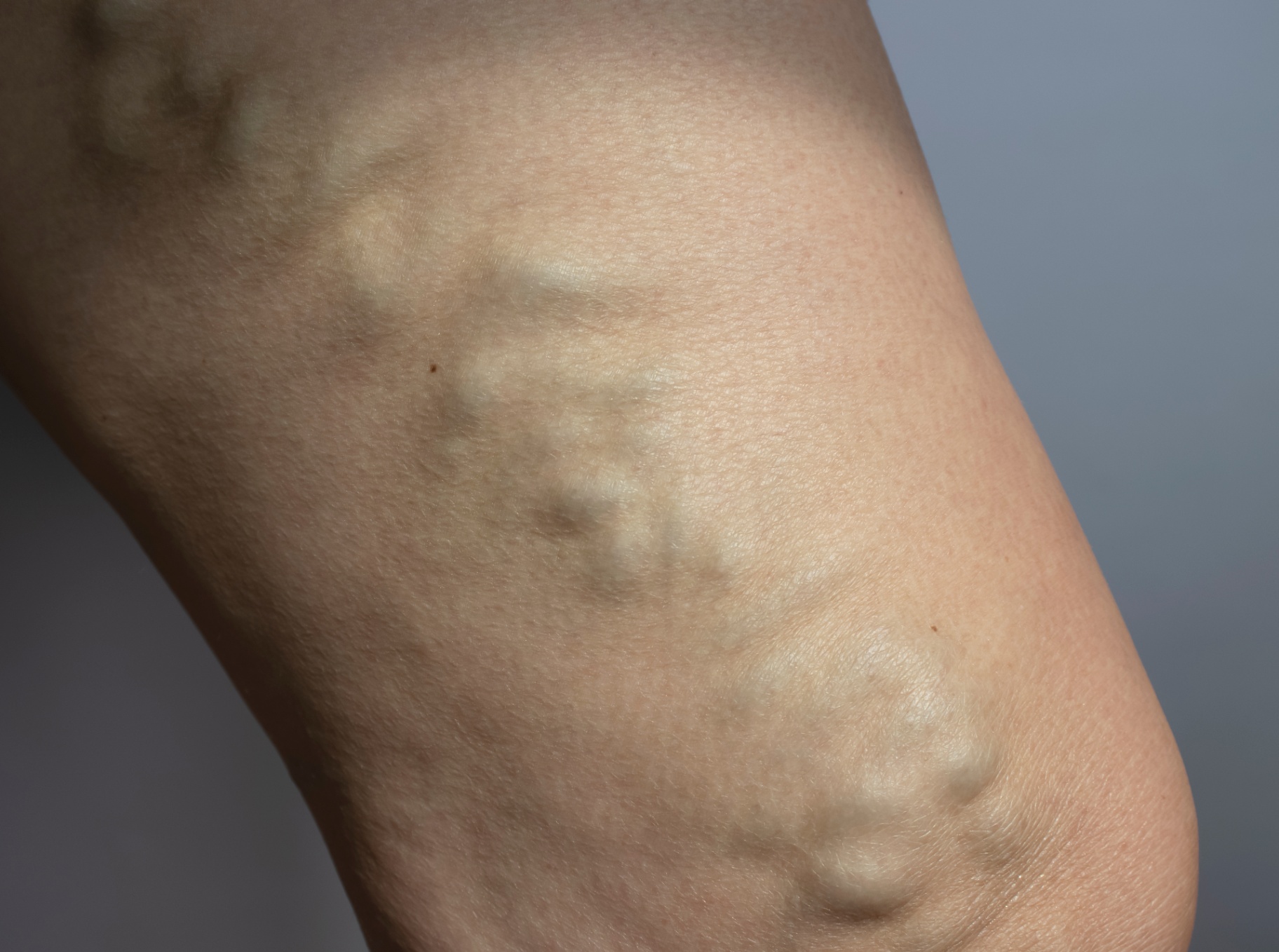
"Heavy legs at the end of the day" is one of the most common symptoms in general practice and one of the subjective signs that can occur in chronic venous insufficiency, including before visible varicose veins appear. In the Edinburgh Vein Study heaviness was common and, in women, associated with visible varicose veins, but agreement between symptoms and findings was weak, so heavy legs can have other causes too [1]. In international data from the Vein Consult Program, where participants were assessed by a doctor and therefore are not a random sample of the population, heaviness in the legs was one of the most frequently reported symptoms [2].
What do you feel?
Classic symptoms of venous origin include:
- Heaviness and tiredness in the legs - especially at the end of the day
- Soreness or a "dull ache" in the calves or thighs
- A burning sensation along a visible vein
- Itching around the ankle
- Swelling that gradually increases during the day
- Relief from walking, elevating the legs, or using compression stockings
- Worsening with prolonged standing/sitting, heat, and menstruation
The symptoms are typically worst in the evening and best in the morning. This often distinguishes them from joint pain and from pain due to reduced arterial blood supply, but the pattern is only a guide, and several causes can coexist [3].
Why do they occur?
When the vein valves fail, blood flows backwards down into the legs (reflux). This causes:
- Increased venous pressure in the lower leg (venous hypertension)
- Stretching of the vein wall and micro-inflammation
- Activation of sensory nerve fibres (C-fibres) - hence the feeling of heaviness
- Fluid leakage into the tissue - swelling
Even before veins become visible, the reflux can be measured with a Doppler ultrasound [4].
What is it not?
Important differential diagnoses:
| Condition | Characteristics |
|---|---|
| Peripheral arterial disease (claudication) | Pain on walking, eased by rest, coldness |
| Lumbar spinal stenosis | Pain on standing/walking, eased by bending forward |
| Osteoarthritis | Load-induced pain in joints, morning stiffness |
| Polyneuropathy | Burning/tingling, often symmetrical, diabetes |
| Lymphoedema | Hard, non-pitting swelling, Stemmer's sign |
| DVT (acute) | Sudden, one-sided, pain, warmth - requires urgent assessment |
Venous heaviness is relieved by elevation and movement - a useful clinical indicator.
When should you see a doctor?
- Daily symptoms for more than 4-6 weeks
- Visible varicose veins or spider veins
- Swelling, itching, or brownish discolouration around the ankle
- Impact on your ability to work or quality of life
- Previous DVT in the same leg
- One-sided or sudden-onset symptoms (requires urgent assessment)
Investigation
Duplex ultrasound is used in the venous assessment to confirm anatomy and reflux and to plan treatment when symptoms and clinical findings point that way. Heaviness and tired legs are non-specific, and other causes are assessed clinically. The examination assesses:
- Reflux in the great and small saphenous veins (v. saphena magna and parva) (>0.5 sec = pathological)
- Reflux in perforator veins (>0.35 sec = pathological)
- Deep venous patency
- Diameter of the trunk veins [5]
Treatment
Conservative - effective for many:
- Graduated compression stockings class I-II (15-32 mmHg) reduce the feeling of heaviness for many people over a few weeks, though the effect varies from person to person [6]
- Elevation of the legs for 15-20 minutes several times a day
- Daily exercise - walking, cycling, or swimming activates the calf muscle pump [7]
- Weight reduction if BMI >25
- Avoid prolonged sitting or standing
- Frequent breaks with heel raises or short walks
Medical:
- Micronised purified flavonoid fraction (diosmin) (venoactive drugs) can reduce swelling and some symptoms in clinical studies, but the evidence is of limited quality, and these products do not replace assessment and treatment of reflux [8]
- Cochrane review: significant effect on heaviness, swelling, and cramps, but limited effect on the veins themselves [9]
Endovenous treatment: For duplex-documented reflux in the truncal veins, endovenous laser therapy (EVLT) is one of the recommended first-choice options, chosen individually:
- a high closure rate of the trunk vein after 5 years. In a Danish randomised trial of 500 patients (580 legs), 6.8 per cent of laser-treated trunk veins had recanalised at 5 years (Kaplan-Meier estimate), while 38.6 per cent of laser-treated legs had developed new visible varicose veins over the same period [10]
- Heaviness, swelling and the impact on everyday life improve for some people, but the effect varies
- Local anaesthetic and an outpatient setting; when you can go home depends on the procedure and your condition
- Faster return to work than traditional stripping [11]
Treatment at Kirurgen.dk
We offer investigation with Doppler ultrasound and endovenous laser therapy (EVLT) after a GP referral. Questions about referral, cover and price are clarified with the clinic or your GP before treatment; see contact. Read also about swollen legs and ankles, leg cramps and restless legs.
References
- Bradbury A, et al. What are the symptoms of varicose veins? Edinburgh vein study cross-sectional population survey. BMJ 1999;318(7180):353-6. PMID: 9933194
- Rabe E, et al. Epidemiology of chronic venous disorders in geographically diverse populations: results from the Vein Consult Program. Int Angiol 2012;31(2):105-15.
- Eklöf B, et al. Revision of the CEAP classification for chronic venous disorders: consensus statement. J Vasc Surg 2004;40(6):1248-52.
- Labropoulos N, et al. Definition of venous reflux in lower-extremity veins. J Vasc Surg 2003;38(4):793-8.
- Gloviczki P, Lawrence PF, Wasan SM, et al. The 2022 SVS/AVF/AVLS clinical practice guidelines for the management of varicose veins of the lower extremities. Part I. Duplex scanning and treatment of superficial truncal reflux. J Vasc Surg Venous Lymphat Disord 2023;11(2):231-261.e6. DOI: 10.1016/j.jvsv.2022.09.004. PubMed
- Motykie GD, et al. Evaluation of therapeutic compression stockings in the treatment of chronic venous insufficiency. Dermatol Surg 1999;25(2):116-20.
- Padberg FT Jr, et al. Structured exercise improves calf muscle pump function in chronic venous insufficiency. J Vasc Surg 2004;39(1):79-87.
- Kakkos SK, Nicolaides AN. Efficacy of micronized purified flavonoid fraction (Daflon) on improving individual symptoms, signs and quality of life in patients with chronic venous disease: a systematic review and meta-analysis. Int Angiol 2018;37(2):143-54.
- Martinez-Zapata MJ, et al. Phlebotonics for venous insufficiency. Cochrane Database Syst Rev 2020;11:CD003229.
- Rasmussen LH, et al. Randomized clinical trial comparing endovenous laser ablation, radiofrequency ablation, foam sclerotherapy and surgical stripping for great saphenous varicose veins. Br J Surg 2011;98(8):1079-87. PubMed (1-year results). Five-year follow-up: Lawaetz M, Serup J, Lawaetz B, et al. Comparison of endovenous ablation techniques, foam sclerotherapy and surgical stripping for great saphenous varicose veins. Extended 5-year follow-up of a RCT. Int Angiol 2017;36(3):281-8. PubMed
- Hamann SAS, et al. Five-year results of great saphenous vein treatment: a meta-analysis. Eur J Vasc Endovasc Surg 2017;54(6):760-70.
More on this topic at Kirurgen.dk
Category: Varicose veins