
Swollen legs and ankles
Written and medically reviewed by Bahir Hadi, specialist in surgery, PhD
Swollen Legs and Ankles: Causes, Warning Signs, and Treatment
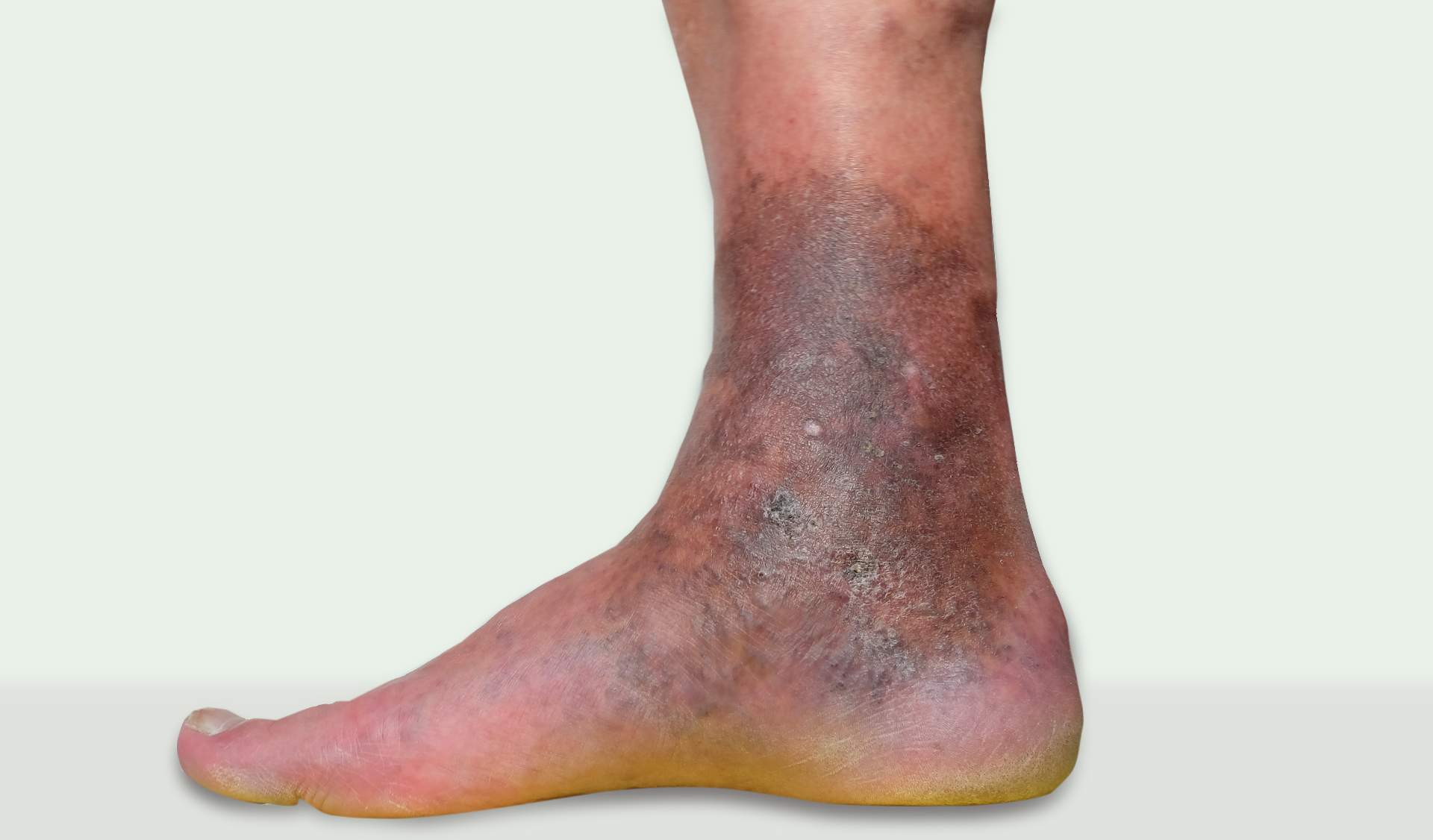
Swelling around the ankles and lower legs (peripheral oedema) is one of the most common symptoms in general practice and can have causes ranging from harmless to serious. When the swelling is symmetrical in both legs and worsens throughout the day, chronic venous insufficiency and varicose veins are among the most common explanations.
How Does Venous Swelling Occur?
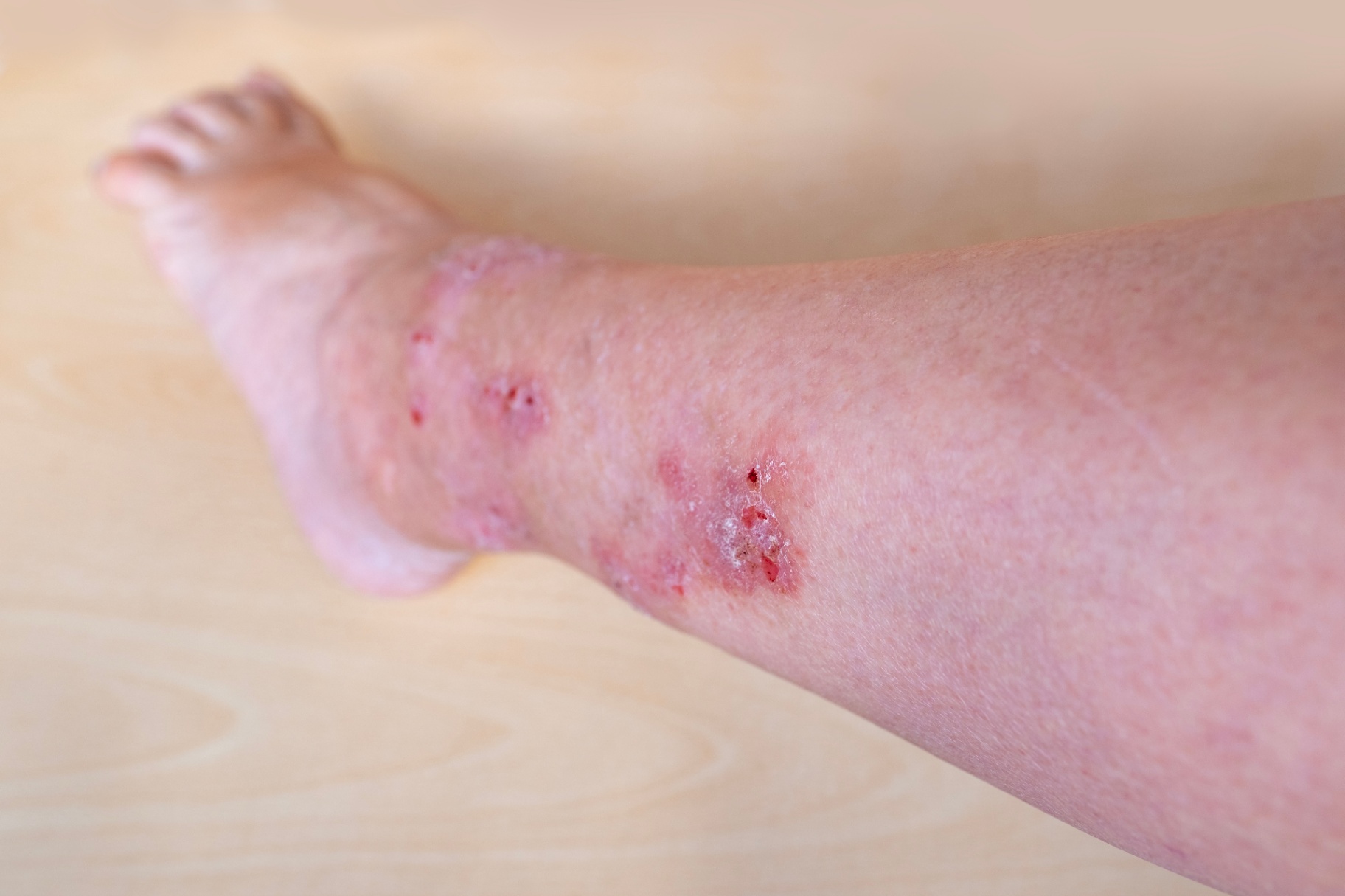
When the valves in the leg veins are leaky, blood flows backwards (reflux). This causes a persistently high pressure in the small veins and capillaries (venous hypertension), which forces fluid out into the surrounding tissue. The results are:
- Swelling that is worst in the evening and best in the morning
- Heavy, aching legs
- 'Indentations' from the top of stockings or socks
- Over time, brownish discolouration (haemosiderin deposition) and skin changes around the ankle (lipodermatosclerosis) [1]
Other Causes of Swollen Legs
It is important to rule out other conditions before starting treatment:
| Cause | Characteristics |
|---|---|
| Heart failure | Bilateral, shortness of breath, weight gain, swelling also extending upwards |
| Kidney failure / nephrotic syndrome | Bilateral, facial swelling, proteinuria |
| Liver disease | Bilateral, ascites, jaundice |
| Lymphoedema | Often unilateral, positive Stemmer's sign, hard swelling |
| Deep vein thrombosis (DVT) | Acute, unilateral, painful, warm - requires urgent investigation |
| Drug-induced | Calcium channel blockers, NSAIDs, gabapentin, steroids |
| Hypothyroidism | Myxoedema - non-pitting |
A thorough clinical examination, supplemented by blood tests and possibly an ultrasound scan, usually clarifies the cause [2].
When Should You Seek Urgent Medical Attention?
Contact your GP or go to A&E immediately if you have:
- Sudden, one-sided swelling with pain or warmth (suspicion of DVT)
- Shortness of breath or chest pain (suspicion of pulmonary embolism)
- Swelling after a long period of immobility, such as a flight or car journey
- Ulceration (sore formation) around the ankle
- Worsening swelling despite elevation and compression
Suspected DVT must be investigated urgently, the same day. The work-up is guided by a clinical probability assessment and combines a D-dimer test with a compression ultrasound scan [3].
Staging of Venous Insufficiency (CEAP)
| Class | Clinical Finding |
|---|---|
| C0 | No visible signs |
| C1 | Spider veins / thread veins |
| C2 | Visible varicose veins |
| C3 | Oedema (swelling) |
| C4 | Skin changes (pigmentation, eczema, lipodermatosclerosis) |
| C5 | Healed venous ulcer |
| C6 | Active venous ulcer |
The CEAP classification is used internationally to grade the disease and guide treatment choices [2,5].
Investigation
If a venous cause is suspected, a duplex ultrasound of the leg veins is used. The scan is non-invasive. How it feels, and whether pressure or discomfort is noticed, varies from person to person. It assesses:
- Valve function in each vein
- Reflux duration (>0.5 seconds in superficial veins is pathological)
- Diameter of the trunk veins (great and small saphenous veins)
- Any deep venous obstruction
Duplex ultrasound is used in the venous assessment to confirm anatomy and reflux and to plan treatment in relevant patients. Finding reflux does not by itself show that your particular symptoms come from the veins [4].
Treatment of Venous Swelling
Conservative:
- Graduated compression stockings in Class II (about 23-32 mmHg under the European classification) are used to reduce swelling with daily use. The effect builds gradually, depends on wearing the stocking consistently, and no fixed time interval is established [5]
- Elevation of the legs for 15-20 minutes, 3-4 times a day
- Daily exercise - walk for at least 30 minutes
- Weight reduction if you are overweight - every extra kilogram increases venous pressure
Endovenous treatment: If reflux is confirmed in the truncal veins, endovenous laser treatment (EVLT) is one of the endovenous options used instead of open surgery [4]. The choice between methods is individual. A large randomised trial showed that EVLT provides:
- a high closure rate of the trunk vein after 5 years. In a Danish randomised trial of 500 patients (580 legs), 6.8 per cent of laser-treated trunk veins had recanalised at 5 years (Kaplan-Meier estimate), while 38.6 per cent of laser-treated legs had developed new visible varicose veins over the same period [6]
- Swelling and symptoms improve for some people, but the effect varies
- A faster return to work than traditional vein stripping [7]
Treatment at Kirurgen.dk
We offer investigation with Doppler ultrasound and Endovenous Laser Treatment (EVLT). Read also about calf cramps and heavy, tired legs.
References
- Eklöf B, et al. Revision of the CEAP classification for chronic venous disorders: consensus statement. J Vasc Surg 2004;40(6):1248-52.
- Ely JW, Osheroff JA, Chambliss ML, Ebell MH. Approach to leg edema of unclear etiology. J Am Board Fam Med 2006;19(2):148-60.
- Bates SM, Jaeschke R, Stevens SM, et al. Diagnosis of DVT: Antithrombotic Therapy and Prevention of Thrombosis, 9th ed: American College of Chest Physicians Evidence-Based Clinical Practice Guidelines. Chest 2012;141(2 Suppl):e351S-e418S. PubMed
- Gloviczki P, Lawrence PF, Wasan SM, et al. The 2022 SVS/AVF/AVLS clinical practice guidelines for the management of varicose veins of the lower extremities. Part I. Duplex scanning and treatment of superficial truncal reflux. J Vasc Surg Venous Lymphat Disord 2023;11(2):231-261.e6. DOI: 10.1016/j.jvsv.2022.09.004. PubMed
- Partsch H, Flour M, Smith PC, et al. Indications for compression therapy in venous and lymphatic disease: consensus based on experimental data and scientific evidence. Int Angiol 2008;27(3):193-219. PubMed
- Rasmussen LH, et al. Randomized clinical trial comparing endovenous laser ablation, radiofrequency ablation, foam sclerotherapy and surgical stripping for great saphenous varicose veins. Br J Surg 2011;98(8):1079-87. PubMed (1-year results). Five-year follow-up: Lawaetz M, Serup J, Lawaetz B, et al. Comparison of endovenous ablation techniques, foam sclerotherapy and surgical stripping for great saphenous varicose veins. Extended 5-year follow-up of a RCT. Int Angiol 2017;36(3):281-8. PubMed
- Hamann SAS, et al. Five-year results of great saphenous vein treatment: a meta-analysis. Eur J Vasc Endovasc Surg 2017;54(6):760-70.
More on this topic at Kirurgen.dk
Category: Varicose veins