
Crohn's Disease
Written and medically reviewed by Bahir Hadi, specialist in surgery, PhD
Crohn's Disease: Everything on symptoms, intestinal examination, and modern treatment
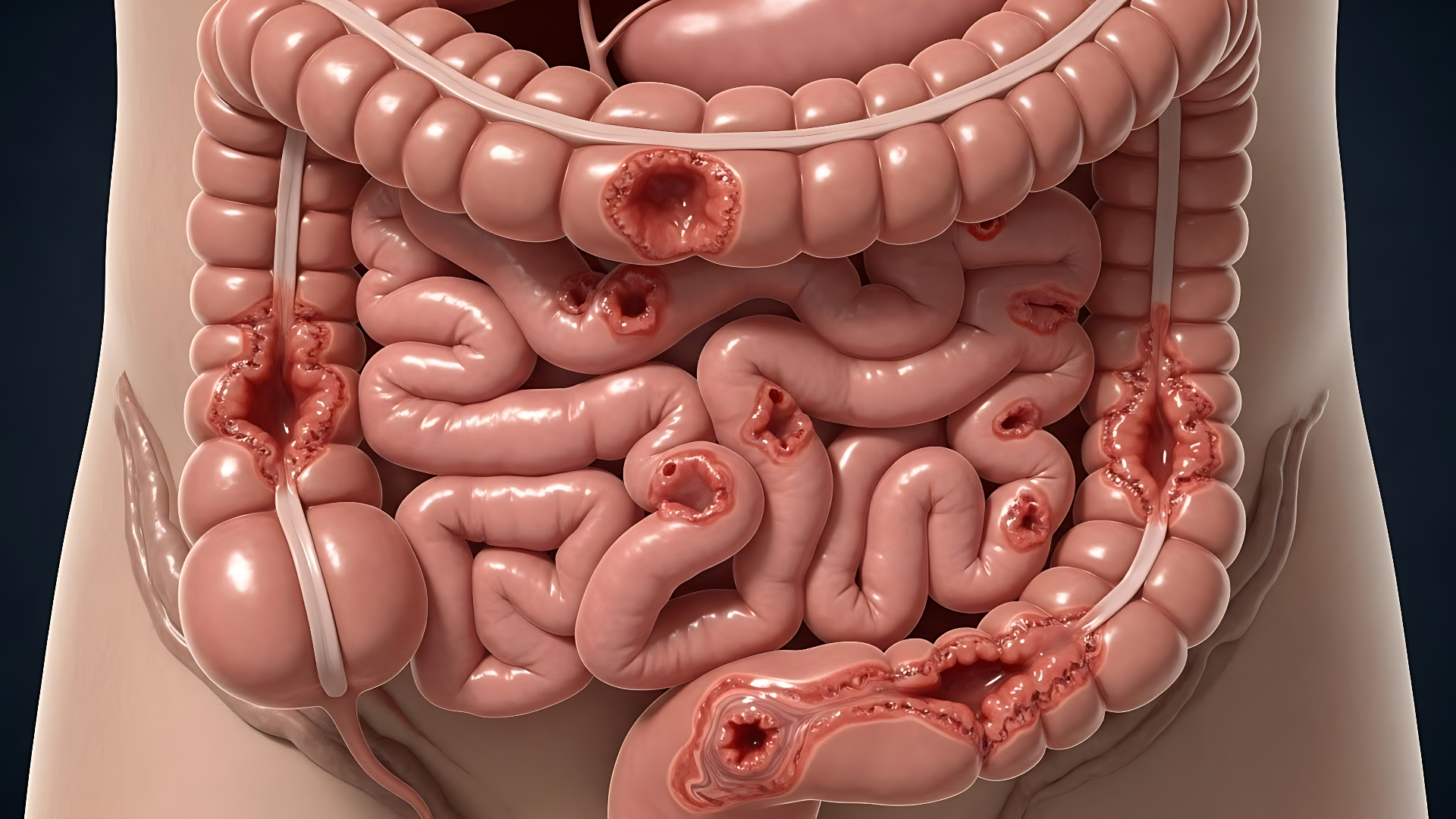
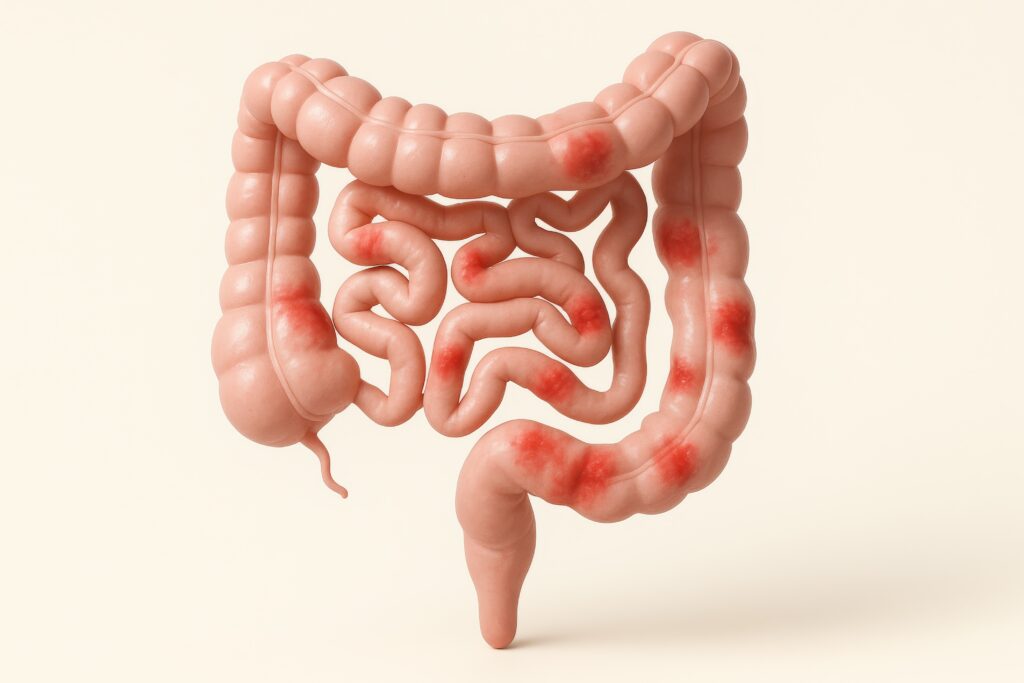
Are you experiencing recurrent abdominal pain, weight loss, or perhaps rectal bleeding? These can be signs of Crohn's Disease. Unlike ulcerative colitis, this disease can affect the entire digestive tract, making a thorough intestinal examination and early diagnosis vital to avoid complications such as fistulas or strictures.
In this post, we take a closer look at how life with Crohn's is managed in Denmark and why a colonoscopy is usually the central examination in the diagnostic work-up.
What is Crohn's Disease?
Crohn's disease is a chronic inflammatory bowel disease (IBD) that can cause inflammation in all layers of the intestinal wall. While colitis only affects the large intestine (colon), Crohn's can be found anywhere from the oral cavity to the rectum - though most commonly at the junction between the small and large intestine (the terminal ileum).
Typical symptoms include:
- Pain (often in the lower right side of the abdomen).
- Diarrhoea (sometimes with rectal bleeding).
- Fatigue and unexplained weight loss.
- Fever during periods of flare-ups.
Scientific focus: Crohn's patients have an increased risk of strictures (narrowing) due to transmural inflammation (inflammation through all tissue layers). Early biological intervention is key to altering the natural course of the disease.
Source: Torres et al., Lancet, 2017
The Diagnosis: More than just one intestinal examination
When Crohn's is suspected, a colonoscopy with biopsy is usually the central examination, but since the disease can also hide in the small intestine, Danish hospitals often supplement this with other examinations:
- Colonoscopy: A visual examination of the large intestine and the final part of the small intestine.
- MR or CT scanning: Often used to assess the small intestine and check for abscesses or fistulas.
- Capsule endoscopy: A small pill containing a camera that is swallowed to film the small intestine.
Why are biopsies important?
During a colonoscopy, small tissue samples are taken. In the case of Crohn's disease, the pathologist looks for "granulomas" (small clusters of cells), which are found in only some patients. Their presence supports the diagnosis, but their absence does not rule out Crohn's disease.
Treatment Strategy in Denmark
The goal of treatment in Denmark is "mucosal healing" (healing of the intestinal lining). Treatment is tailored to the individual. The steps below are a simplified overview; in moderate to severe disease, or when there are risk factors for a complicated course, biological therapy is often started early rather than working through the steps one at a time:
Step 1: Acute treatment (Corticosteroids)
Flare-ups are treated with corticosteroids, either as tablets or as a locally acting budesonide preparation. The choice of preparation, dose and duration is decided by the treating gastroenterologist and is not stated here. Systemic corticosteroids are not maintenance therapy.
Step 2: Maintenance (Immunomodulators)
To prevent new outbreaks, Thiopurines (Imurel / Azathioprine) are often used. Unlike ulcerative colitis, 5-ASA (Pentasa) often has a limited effect in Crohn's.
Step 3: Biological medicine (Frontline treatment)
In Denmark today, biological treatment is initiated early in cases of moderate to severe Crohn's to avoid surgery.
| Type | Examples (Denmark) | Specific for Crohn's |
|---|---|---|
| TNF inhibitors | Infliximab (Remsima), Adalimumab (Humira) | Well-documented treatment for moderate to severe disease, often effective against fistulas. |
| IL inhibitors | Ustekinumab (Stelara) | Blocks IL-12/23. Good for those where TNF inhibitors are ineffective. |
| Integrin inhibitors | Vedolizumab (Entyvio) | Gut-selective mechanism of action. The side-effect profile is assessed individually by the treating department. |
| Small molecules | Upadacitinib (Rinvoq) | Newer tablet treatment (JAK inhibitor) approved for Crohn's. |
Scientific focus: Studies show that combination therapy (e.g., Infliximab + Azathioprine) is more effective at achieving complete mucosal healing than monotherapy.
Source: Colombel et al., NEJM (SONIC study)
Life with Crohn's and Follow-up
Even if you are receiving treatment, ongoing monitoring is necessary. In Denmark, we use:
- Calprotectin (stool sample): An easy way to measure inflammation without a full intestinal examination.
- Blood tests: To check for iron deficiency and vitamin status (especially B12).
An important piece of advice: Smoking is the biggest risk factor for the worsening of Crohn's disease. Stopping smoking reduces the risk of flares, surgery and the need to escalate medication, and it is one of the most important steps you can take yourself, alongside medical treatment.
See also
Inflammatory bowel disease - overview · Bile acid malabsorption in ileal disease
More on this topic at Kirurgen.dk
Category: Gastrointestinal