
Swallowing Difficulties
Written and medically reviewed by Bahir Hadi, specialist in surgery, PhD
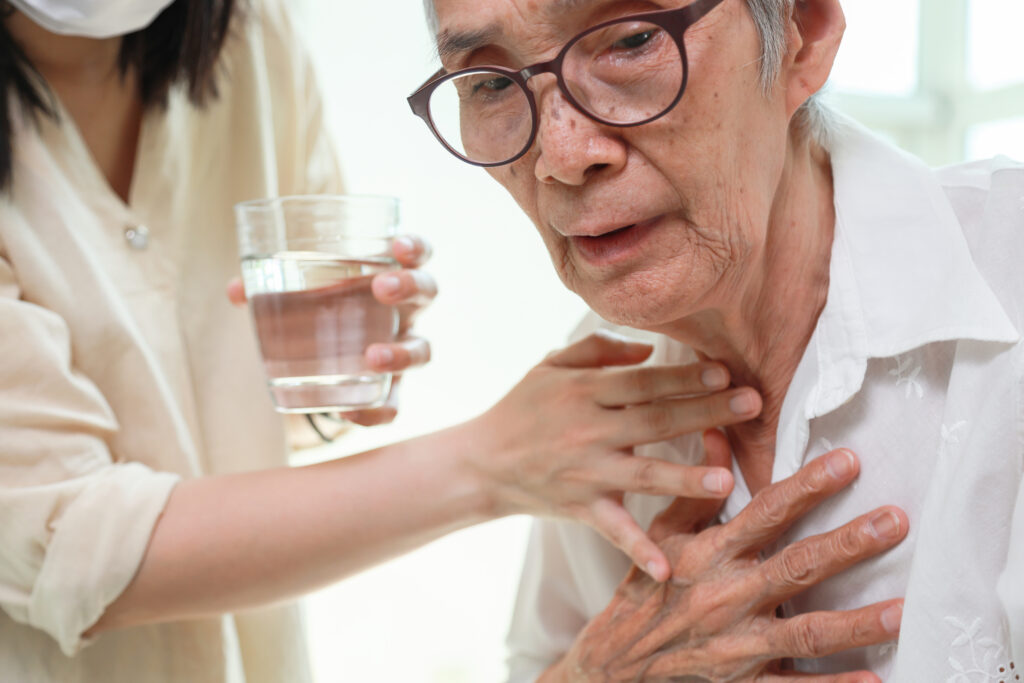
Difficulty Swallowing
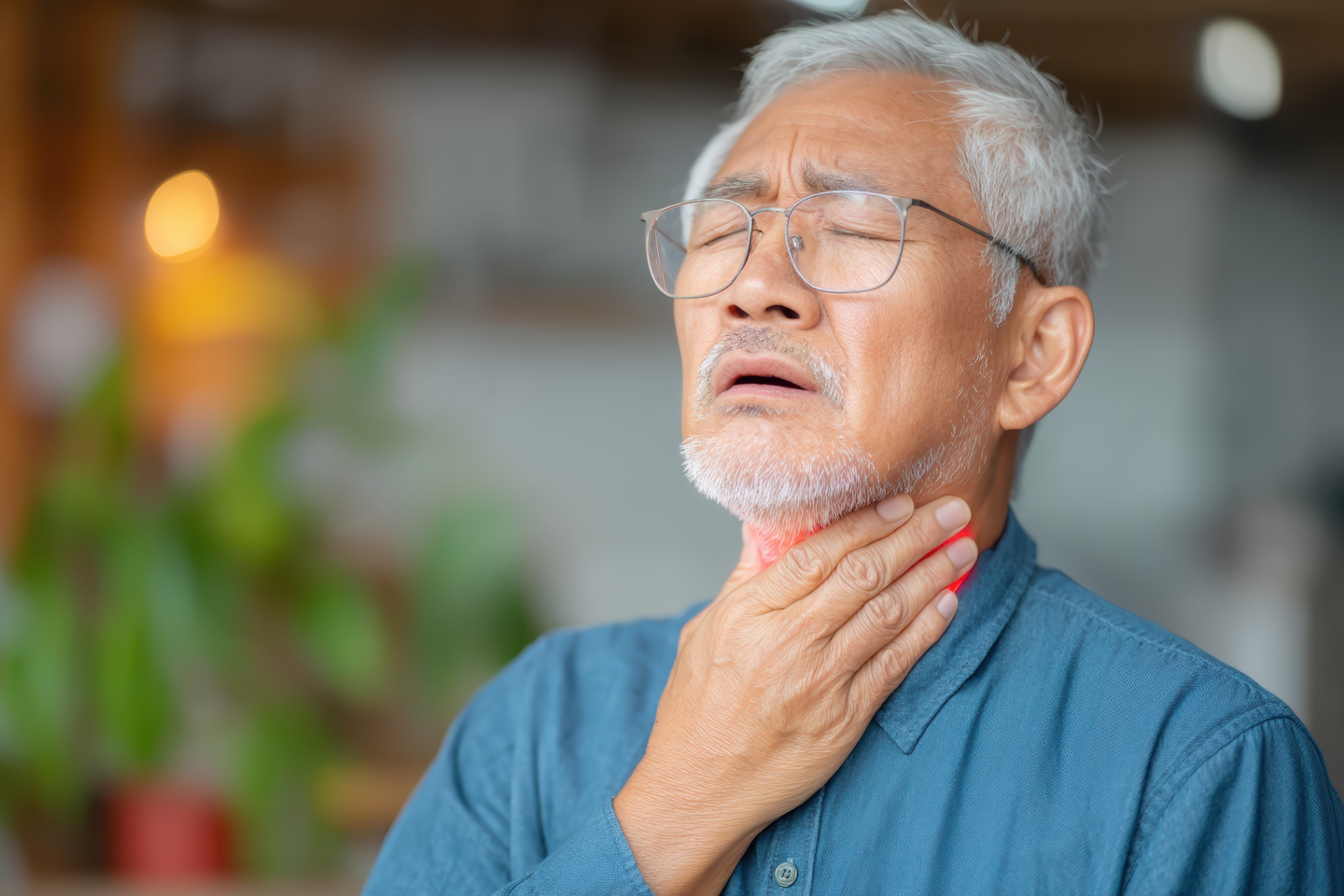
Do you have trouble swallowing? Understand Swallowing Difficulties (Dysphagia) and the Surgical Aspects
Difficulty swallowing, medically known as dysphagia, is a condition that affects thousands of people and has a major impact on quality of life. It is not a disease in itself, but a symptom of an underlying cause.
At Kirurgen.dk, we focus on how swallowing difficulties arise, why precise diagnosis is essential, and when surgical intervention may be the solution.
What is Dysphagia?
Dysphagia is a collective term for difficulty chewing, swallowing food and drink, or when the transport of food through the oesophagus is impaired. The swallowing process is complex and involves more than 50 muscles and several nerves in the mouth, throat, and oesophagus.
The three phases of swallowing:
- Oral phase: Food is chewed and mixed with saliva into a bolus (food ball).
- Pharyngeal phase (the throat): The swallow reflex is triggered, the vocal cords close, and the windpipe (trachea) is sealed to prevent food or liquid from entering the lungs (aspiration).
- Oesophageal phase (the food pipe): Muscle contractions (peristalsis) send the food down into the stomach.
Difficulty in one or more of these phases can lead to dysphagia.
Why is Dysphagia Serious?
Untreated or long-term difficulty swallowing can have serious consequences:
- Malnutrition and weight loss: The patient does not receive sufficient calories and nutrients.
- Dehydration: Inadequate fluid intake.
- Aspiration pneumonia: Food or liquid enters the airways and causes a serious lung infection.
- Reduced quality of life: Meals are often associated with social gathering, and difficulties here can lead to isolation and anxiety.
Causes and Surgical Relevance
The causes of dysphagia are diverse and can be divided into neurological, structural, and functional problems.
| Category | Examples of causes with surgical relevance |
|---|---|
| Structural (Mechanical) | Cancer of the mouth, pharynx, larynx or oesophagus, benign narrowings (strictures), pharyngeal diverticula (e.g., Zenker's diverticulum), oesophagitis (inflammation of the oesophagus). |
| Neurological | Sequelae following surgery on the neck/throat, which may have affected the nerves (e.g., recurrent nerve palsy/vocal cord paralysis). |
| Functional | Achalasia (a rare condition where the sphincter to the stomach does not open correctly), oesophageal motility disorders. |
Note: Dysphagia can also occur as a temporary complication after a surgical procedure in the throat and neck area (e.g., thyroid surgery), where swelling or muscle involvement can cause swallowing problems.
When is it urgent?
Call 112 immediately if breathing is affected: the person cannot breathe normally, cannot cough or speak, turns blue around the lips or face, is losing consciousness or shows other signs of choking.
Call the acute medical helpline straight away if food is stuck in the oesophagus, or you cannot swallow liquids or your own saliva, but breathing is normal. In the Capital Region of Denmark call 1813; elsewhere use the local acute helpline or out-of-hours doctor. This needs urgent hospital assessment and must not wait for your GP or a planned appointment at the specialist clinic.
With a partial obstruction, where liquids and saliva can still be swallowed, prompt medical assessment is still needed. A food bolus that stays stuck must not be left until the next day without a doctor deciding.
Clinically, a complete oesophageal obstruction, where saliva cannot be swallowed, requires emergent endoscopic treatment, while other impacted oesophageal food boluses require urgent treatment [7]. For that reason the clinic cannot promise a specific time for endoscopy - the urgency is set at the acute assessment.
Chest pain with breathlessness or pain radiating to the arm, neck or jaw must not automatically be blamed on the oesophagus. Call 112 - it may be the heart, and that has to be ruled out first.
Contact a doctor promptly (within a few days) for progressive swallowing difficulty, dysphagia for solids developing over weeks, unexplained weight loss, anaemia or repeated episodes of food getting stuck.
Difficulty swallowing is a symptom that should as a rule be assessed by a doctor. Whether gastroscopy or another examination is relevant depends on the character and duration of the symptoms and on the overall assessment.
Oropharyngeal or oesophageal dysphagia?
The two forms are investigated differently:
- Oropharyngeal dysphagia arises in the mouth and throat. Swallowing is hard to initiate, you cough or choke, food comes back through the nose, or your voice sounds wet after drinking. The cause is most often neurological or muscular.
- Oesophageal dysphagia is felt lower down, as food sticking behind the breastbone seconds after swallowing. Here we consider stricture, a ring, a motility disorder, eosinophilic oesophagitis or a tumour.
Diagnostics: Precision is Crucial
Since dysphagia can be caused by both benign and serious conditions (including cancer), rapid and precise diagnosis is crucial. As surgeons, we often utilize the following examinations:
- Endoscopic examinations: These are two different tests. In FEES (fibreoptic endoscopic evaluation of swallowing) a thin scope is passed through the nose into the throat while you swallow food and drink, and the test assesses the swallow itself in the throat. In gastroscopy the scope is passed through the mouth into the oesophagus and stomach; it shows the lining and allows biopsies, but it does not measure swallowing function.
- Contrast X-ray (Barium Swallow): The patient swallows a contrast liquid while X-rays are taken. This visualises how food moves through the throat and oesophagus and can reveal narrowings, diverticula, or motility disorders.
- Manometry: Measures the pressure and muscle movements in the oesophagus. Essential when suspecting Achalasia or other motility disorders.
These tests are complementary, not competing: gastroscopy inspects the lining and takes biopsies, the contrast study shows movement and any narrowing, manometry measures function, and FEES assesses the swallow itself in the throat. Which ones are used depends on whether the problem is oropharyngeal or oesophageal.
In oesophageal dysphagia, biopsies are taken from both the upper and lower oesophagus, even when the lining looks normal. Eosinophilic oesophagitis can be present despite a relatively normal endoscopic appearance and is only found on biopsy.
Surgical Treatment Options
In many cases, dysphagia is treated with speech therapy, physiotherapy/occupational therapy, and dietary adjustments. However, when the cause is structural or mechanical, surgery may be relevant:
| Condition | Surgical Intervention/Treatment Example | Purpose |
|---|---|---|
| Achalasia | Heller's Myotomy (or POEM) | Cutting the muscle fibres in the lower oesophageal sphincter to allow food to pass into the stomach. |
| Zenker's Diverticulum | Diverticulectomy or Endoscopic Stapling | Removal/opening of the pouch (diverticulum) in the throat where food accumulates, causing swallowing difficulty and regurgitation. |
| Narrowing (Stricture) | Balloon Dilatation | Dilation of the oesophagus with a balloon during endoscopy (treatment often has to be repeated, and whether surgery becomes relevant is assessed individually). |
| Cancer | Oesophagectomy or other resection procedures | Removal of tumour tissue in the oesophagus, throat, or mouth, often followed by reconstruction. |
What Can You Do Yourself?
While waiting for diagnosis or as a supplement to treatment, there are steps that can make the swallowing process easier and safer:
- Consistency: Adapt food and drink. Often, creamy, uniform consistencies (purees, mashes, thickened liquids) are easiest to swallow.
- Eating technique: Sit upright (preferably at 90 degrees) during meals and remain sitting for at least 20-30 minutes afterwards. Swallow consciously and avoid talking with food in your mouth.
- Oral hygiene: Good oral hygiene is vital to reduce the risk of pneumonia, as oral bacteria can otherwise be aspirated.
📞 Do you suspect you have Swallowing Difficulties?
If you experience long-term difficulty swallowing, pain when swallowing, unexplained weight loss, or repetitive pneumonia, you should always contact your doctor.
Reference List: Swallowing Difficulties (Dysphagia)
1. Definition and Consequences
Definition and Importance of Swallowing Phases (Oral, Pharyngeal, Oesophageal):
Source: Speyer, R. (2016). Effects of dysphagia on quality of life, functional status, and healthcare costs in the elderly: A systematic review. Dysphagia, 31(1), 1-11.
Supports: The definition of dysphagia and its division into the three phases. The source also highlights the consequences, including reduced quality of life and functional status.
Serious Consequences of Untreated Dysphagia (Aspiration Pneumonia, Malnutrition):
Source: Altman, K. W., Terrell, J. E., & Hogikyan, N. D. (2009). The effect of voice and swallowing disorders on quality of life. The Laryngoscope, 119(4), 779-784.
Supports: The claim that untreated dysphagia leads to malnutrition, dehydration, and increased risk of aspiration pneumonia.
2. Causes and Diagnostics
Classification of Causes (Structural/Obstructive, Motility/Functional) and Diagnostics:
Source: Clave, P., & Shaker, R. (2015). Dysphagia: diagnosis and management. The American Journal of Gastroenterology, 110(2), 209-224.
Supports: The division of causes (neurological, structural, and functional). The source also reviews the most important diagnostics, including Endoscopy, Contrast X-ray (Barium Swallow), and Manometry.
Manometry and Its Value in Motility Disorders (Achalasia):
Source: Kahrilas, P. J. (2015). Esophageal motility disorders in terms of the Chicago Classification. Gastroenterology & Hepatology, 11(10), 675-682.
Supports: The value of Manometry as the essential test to diagnose motility disorders such as Achalasia.
3. Surgical Treatments
Achalasia: Treatment with Heller's Myotomy and POEM:
Source: Cichoz-Lach, H., & Partyka, R. (2020). Achalasia-diagnostic and therapeutic dilemma. Clinical and Experimental Medical Letters, 61(1), 1-7.
Supports: The surgical treatment options for Achalasia, including Heller's Myotomy and the endoscopic method POEM (Peroral Endoscopic Myotomy).
Zenker's Diverticulum: Indication for Surgical Removal/Endoscopic Stapling:
Source: Kim, J., Kim, M., & Kim, H. Y. (2021). Endoscopic treatment of Zenker's diverticulum: an update. World Journal of Gastroenterology, 27(18), 2137-2147.
Supports: The indication for surgical or endoscopic treatment of Zenker's Diverticulum.
Impacted food bolus: urgency of endoscopy:
Source: Birk, M., Bauerfeind, P., Deprez, P. H., et al. (2016). Removal of foreign bodies in the upper gastrointestinal tract in adults: European Society of Gastrointestinal Endoscopy (ESGE) Clinical Guideline. Endoscopy, 48(5), 489–496.
Supports: The distinction between complete oesophageal obstruction (emergent endoscopy) and other impacted oesophageal boluses (urgent endoscopy).
See also
More on this topic at Kirurgen.dk
Category: Gastrointestinal