
Nasal vs. Oral Gastroscopy
Written and medically reviewed by Bahir Hadi, specialist in surgery, PhD
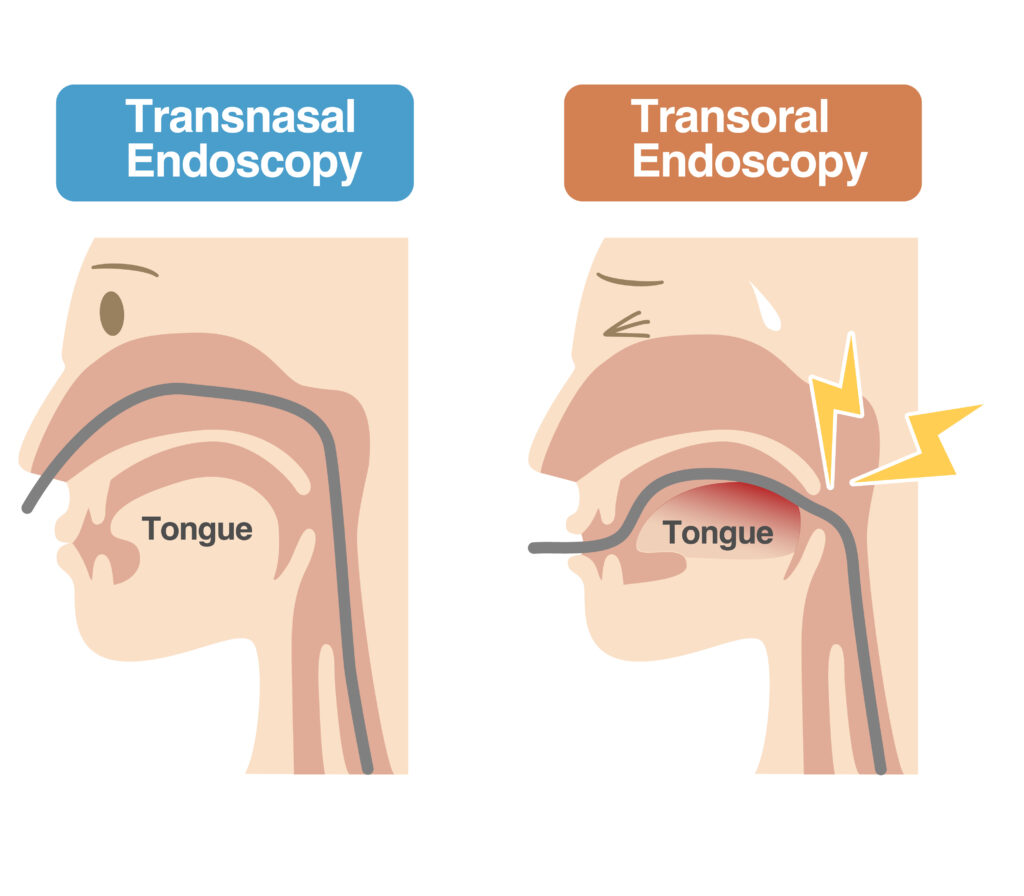
Gastroscopy: nasal and oral methods - differences and when they are used
What is a Gastroscopy?
A Gastroscopy is an endoscopic examination of the oesophagus, stomach, and duodenum, used to diagnose the cause of gastrointestinal symptoms such as abdominal pain, difficulty swallowing, or reflux.
The examination is performed using a flexible, thin endoscope (gastroscope). At Kirurgen.dk, we primarily offer two methods:
- Oral Gastroscopy (TOE): The scope is inserted through the mouth.
- Nasal Gastroscopy (TNE): The scope is inserted through the nose.
This blog post compares the two methods so you know what the difference is before you discuss your examination with the doctor.
Nasal Gastroscopy: Procedure and tolerance
Nasal gastroscopy (TNE) is used as an alternative to the traditional method. Some people find it easier to tolerate, but tolerance and suitability vary from person to person and are assessed individually.
- Ultra-thin Scope: The endoscope is significantly thinner (only approx. 4-6 mm), equivalent to a thin straw.
- Minimal Gag Reflex: The scope avoids touching the tongue and the sensitive areas of the throat, minimising discomfort and the sensation of vomiting (gag reflex).
- Unobstructed Breathing and Communication: You can breathe normally through your mouth and can often speak and answer the doctor's questions during the examination.
- After the examination: When you may eat and drink again, and how you get home, follow the specific instruction you are given. It depends among other things on whether local anaesthetic was used in the throat and whether you were given sedation.
- Typically used for: Diagnostic examinations where standard tissue samples (biopsies) need to be taken.
Oral Gastroscopy: the method used for many therapeutic interventions
Oral Gastroscopy (TOE) is the classic standard method. Although it is associated with more discomfort, it is often necessary for technical reasons.
- Larger Scope: The endoscope is thicker (approx. 8-10 mm), equivalent to a pinky finger.
- Larger Working Channel: The primary advantage is that the thicker scope has a larger internal working channel. This channel is crucial for the insertion of larger surgical instruments.
- Therapeutic interventions: Oral gastroscopy may be necessary or preferred when the doctor expects to perform more complex interventions. These may include:
- Removal of large polyps.
- Stopping severe bleeding in the stomach.
- Dilation of narrowing (strictures) in the oesophagus.
- Better Image Quality: Although the gap is narrowing, the larger scope often provides a wider field of view and higher image quality for detailed inspection.
- Typically used for: Examinations where major interventions and treatment are expected to be necessary.
Overview: differences between the two methods
| Aspect | Oral Gastroscopy (TOE) | Nasal Gastroscopy (TNE) |
|---|---|---|
| Scope Size | Approx. 10 mm (Larger) | Approx. 4-6 mm (Ultra-thin) |
| Gag Reflex | High risk | Low risk |
| Speech/Breathing | Speaking not possible, breathing may feel strained | Speaking possible, unobstructed breathing |
| Need for Sedation | Often necessary | Less often necessary |
| Therapeutic Interventions | Yes, preferred method (larger polyps, bleeding) | No, limited to diagnostics and small biopsies |
Remember: The two methods complement each other. The method is chosen together with your doctor, based on your symptoms, your anatomy and what the examination needs to clarify.
References
- On patient acceptance and safety in transnasal vs. oral gastroscopy (2008):
- Title: Unsedated transnasal versus transoral sedated upper gastrointestinal endoscopy: A one-series prospective study on safety and patient acceptability.
- Journal: Digestive and Liver Disease, May 2008.
- On patient tolerance in unsedated transnasal vs. conventional oral endoscopy (2014):
- Title: Unsedated transnasal versus conventional oral endoscopy in endoscopy naïve patients.
- Journal: Acta Gastroenterologica Belgica, June 2014.
- On clinical findings and national guidelines for gastroscopy (2011):
- Title: Clinical findings confirm national guidelines regarding primary gastroscopy for upper gastrointestinal symptoms.
- Journal: Danish Medical Journal, 1 May 2011.
More on this topic at Kirurgen.dk
Category: Endoscopy