
Bloating and abdominal distension
Written and medically reviewed by Bahir Hadi, specialist in surgery, PhD
Bloating and abdominal distension: causes, work-up and treatment
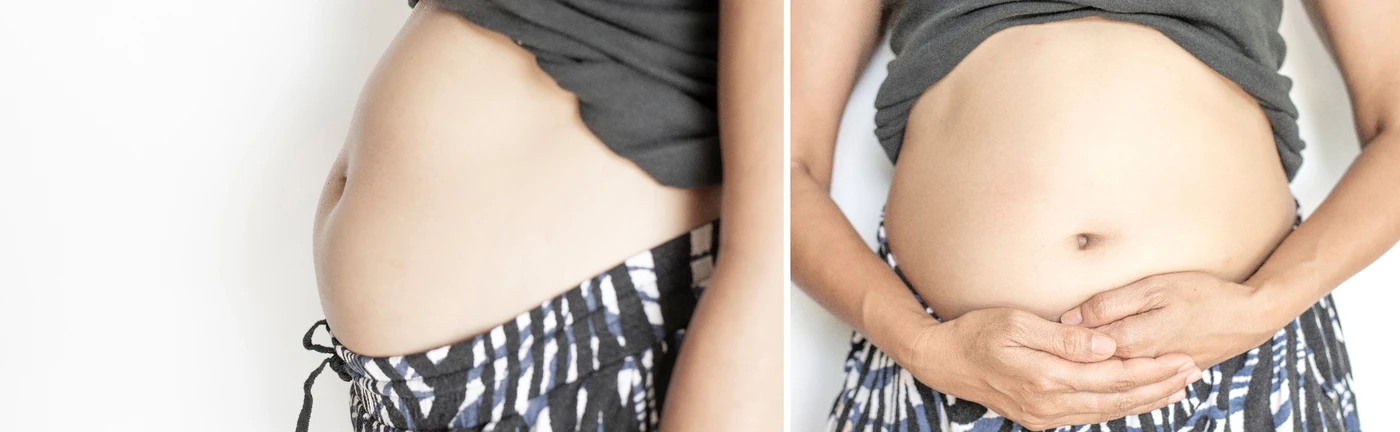
Bloating is among the most frequently reported gastrointestinal symptoms in adults [1]. Bloating may be functional (no demonstrable disease) or organic (with an underlying cause requiring treatment).
What does "bloating" actually mean?
The term covers two distinct phenomena that are often confused, and the distinction matters clinically:
- Bloating (subjective sensation): the feeling of a tight or full abdomen, often without any visible or measurable change in girth. Can fluctuate markedly through the day.
- Distension (objective abdominal distension): an actual, measurable or visible increase in abdominal girth, which can be documented on examination or imaging.
The two often occur together but can also occur separately - a person can feel bloated without objective distension, and vice versa. Both may arise from several causes, including food intolerance, a prior infection that disturbed the gut microbiota, disordered visceral sensation, or delayed intestinal transit [1].
Frequent and less frequent causes
There is no well-documented, generalisable percentage breakdown of causes of bloating - proportions vary considerably between study populations, methods and clinical settings. The list below is therefore unranked and reflects clinical patterns that can guide the work-up rather than a fixed hierarchy:
- Irritable bowel syndrome (IBS): bloating combined with altered bowel habit and abdominal pain related to defecation.
- Functional bloating: bloating as the dominant or sole symptom, without meeting the other IBS criteria.
- SIBO: may be considered when bloating clearly worsens after meals, especially with known predisposing factors (prior GI surgery, impaired motility, structural changes) - it is not a routine explanation for bloating in general. EndoCap describes when a breath test may be relevant.
- Lactose or fructose intolerance: symptoms clearly linked to specific foods.
- Constipation: infrequent, hard stools, sensation of incomplete evacuation.
- Coeliac disease: gluten-related, often with weight loss, iron deficiency or other signs of malabsorption.
- Gastroparesis: early satiety, nausea, often in patients with known diabetes.
- Pelvic floor dysfunction: distension that worsens with sitting or standing, often with difficulty coordinating defecation.
- Medication side effect: certain analgesics, iron supplements and other drugs can cause bloating or constipation.
- Gynaecological or other abdominal pathology: should be considered for persistent, uniform distension, particularly in women, assessed clinically regardless of a fixed age.
Red flags requiring prompt investigation:
- Visible rectal bleeding
- Unexplained weight loss
- Anaemia
- Persistent vomiting
- Fever
- New-onset or progressive symptoms, including nocturnal symptoms
- Significantly impaired general condition
- Family history of colorectal cancer
- New, persistent abdominal distension in women, where a gynaecological cause should be considered based on overall clinical assessment
Pathophysiology - why does it happen?
Several mechanisms may occur alone or in combination:
- Increased gas production - bacterial fermentation of carbohydrates (especially FODMAPs) in the colon or, in SIBO, in the small bowel.
- Delayed gas transit - reduced motility, often in IBS-C or diabetes.
- Visceral hypersensitivity - normal gas perceived as uncomfortable - classic in IBS [2].
- Abdomino-phrenic dyssynergy - the diaphragm descends while the abdominal wall relaxes, pushing the belly out and producing objective distension without an increased gas volume.
Work-up
First-line (GP):
- History: diet, bowel habit, weight, medication, gynaecological status.
- Blood tests: haemoglobin, CRP, TSH, coeliac antibodies (anti-tTG IgA together with total IgA, taken while eating gluten), ferritin.
- Faecal calprotectin if diarrhoea is present. A low value makes active inflammatory bowel disease less likely in a relevant low-risk group, but it does not exclude microscopic colitis, coeliac disease, bile acid diarrhoea, medication-induced diarrhoea or neoplasia. A raised value is non-specific and can be seen with infection and NSAID use, among other causes.
- Urine hCG in women of reproductive age.
Second-line (specialist), guided by clinical context and any red flags:
- Colonoscopy for red flags, positive calprotectin or clinical suspicion of organic bowel disease.
- Gastroscopy for concurrent dyspepsia, vomiting or iron deficiency.
- SIBO breath test may be considered when there is independent clinical suspicion of SIBO, for example clear postprandial bloating in patients with known predisposing factors. It is not automatically indicated for bloating in general and has notable limitations in validity.
- Pelvic ultrasound/MRI for clinical suspicion of a gynaecological cause, based on an individual assessment of symptoms, age, family history and examination findings - not a fixed age cut-off.
Treatment
Diet - low-FODMAP diet:
Low-FODMAP is a structured, time-limited intervention in three phases: reduction (typically a few weeks) → systematic reintroduction → personalised long-term diet. The restrictive phase should not continue indefinitely. Tolerance varies considerably between patients and between individual FODMAP groups. The diet should be carried out with support from a dietitian with gastroenterology experience, particularly in cases of underweight, eating disorder, nutritional risk, pregnancy or children. Low-FODMAP is not a treatment for SIBO and is not a documented method of "restoring the gut flora".
Other measures, to discuss with your GP or specialist:
- Simethicone - a defoaming agent that may ease gas-related symptoms in some people.
- Enteric-coated peppermint oil - has shown antispasmodic effect in IBS studies.
- Probiotics are not a documented standard treatment for bloating. Effect is strain- and product-specific, and no single strain can be generally recommended for this purpose.
- For IBS-C with prominent bloating, a doctor may, after individual assessment, consider prescription medication that affects motility and fluid secretion. This decision is made by the treating physician and is not a general recommendation for everyone with bloating.
Lifestyle:
- Eat slowly, avoid chewing gum and carbonated drinks.
- Reduce refined carbohydrates and sugar alcohols (sorbitol, xylitol) if these worsen symptoms.
- Regular physical activity can improve bowel function in some people.
- Diaphragmatic breathing training can be tried if abdomino-phrenic dyssynergy is suspected.
When to see a specialist
Contact your GP or Kirurgen.dk if:
- Bloating persists for more than a few weeks despite dietary changes
- Symptoms worsen or wake you at night
- Weight loss, rectal bleeding, fever or anaemia
- New-onset or persistent abdominal distension, at any age, that concerns you
Further work-up
Which examinations are relevant in long-standing bloating depends on the symptom pattern, age, test results and an overall medical assessment. Depending on the suspicion, colonoscopy, gastroscopy, screening for coeliac disease or testing for small intestinal bacterial overgrowth may be part of it. When constipation is the dominant problem, chronic constipation is considered as a possible explanation.
What may be relevant?
Bloating occurs in several different conditions, and there is no single explanation that fits everyone.
Irritable bowel syndrome (IBS) · SIBO · Low-FODMAP diet
References
- Lacy BE, Cangemi D, Vazquez-Roque M. Management of chronic abdominal distension and bloating. Clin Gastroenterol Hepatol 2021;19(2):219-31.
- Moshiree B, Heidelbaugh JJ, Sayuk GS. AGA Clinical Practice Update on Evaluation and Management of Belching, Abdominal Bloating, and Distension. Gastroenterology 2023;165(3):791-800.
- Halmos EP, Power VA, Shepherd SJ, Gibson PR, Muir JG. A diet low in FODMAPs reduces symptoms of irritable bowel syndrome. Gastroenterology 2014;146(1):67-75.
More on this topic at Kirurgen.dk
Category: Gastrointestinal