
Microscopic colitis: the overlooked cause of chronic watery diarrhoea
Written and medically reviewed by Bahir Hadi, specialist in surgery, PhD
Published: 15 August 2026
Microscopic colitis: An overlooked cause of chronic diarrhoea
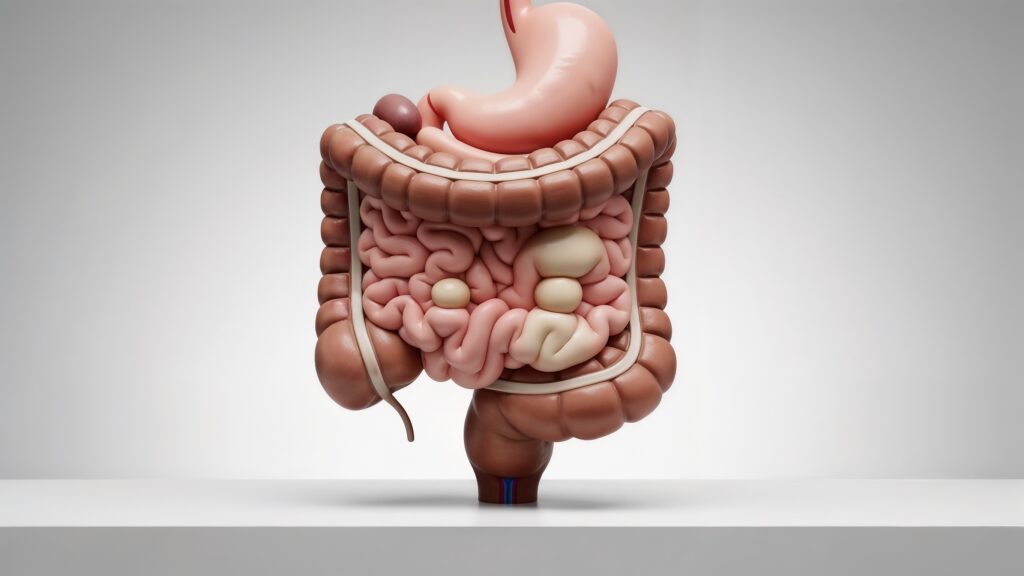
Do you suffer from persistent, watery diarrhoea that affects your daily life? Many patients with these symptoms are mistakenly told they have irritable bowel syndrome (IBS). However, behind the frequent bathroom visits may lie a condition called microscopic colitis.
The diagnosis rests on a clinical assessment together with biopsies from the colon, because the condition cannot be seen with the naked eye. You can read more about the examination under colonoscopy.
What is microscopic colitis?
Microscopic colitis is a chronic inflammatory condition of the large intestine (colon). The unique aspect of this disease is that the lining of the bowel often looks normal or near normal during a colonoscopy, and a macroscopically normal mucosa does not exclude the condition. The inflammation is hidden within the tissue itself and can only be detected by taking small tissue samples (biopsies), which are subsequently examined under a microscope.
The disease is divided into two types:
- Collagenous colitis: A thickened layer of connective tissue (collagen) is seen beneath the mucous membrane.
- Lymphocytic colitis: An accumulation of white blood cells (lymphocytes) is found in the lining of the bowel.
Both types tend to cause similar symptoms, chiefly chronic watery and usually non-bloody diarrhoea. Onset and severity vary from person to person.
Symptoms you should react to
The primary sign of microscopic colitis is chronic, watery and usually non-bloody diarrhoea. Some people describe a fairly sudden onset, others a gradual one. Other typical symptoms include:
- An urgency to pass stool that is difficult to control.
- The need for toilet visits during the night.
- Abdominal pain, bloating, and fatigue.
- Unintentional weight loss in severe cases.
If you experience these symptoms over a prolonged period, you should have a thorough bowel examination performed to determine the cause.
Diagnosis requires a colonoscopy
Since the inflammation cannot be seen directly, the diagnosis rests on histology from a colonoscopy. During a colonoscopy, we insert a flexible scope through the colon. Even when the mucous membrane looks normal, we take biopsies from at least the right and left colon, where practicable in separately labelled containers, as recommended by the European guideline. Faecal calprotectin is not useful for excluding or monitoring microscopic colitis, so a normal value does not remove the need for biopsies when suspicion persists.
This bowel examination is not only important for detecting microscopic colitis but also for ruling out other causes of diarrhoea, such as:
- Polyps or early stages of cancer.
- Crohn's disease or ulcerative colitis.
- Intestinal infections.
The diagnosis requires a clinical assessment together with biopsies from the colon. You can read about the procedure itself under colonoscopy.
Treatment and advice
Once the diagnosis is made, several treatment options can be considered:
- Medical treatment: A locally acting corticosteroid (budesonide) is often used to reduce the inflammation, and many people see their diarrhoea improve. Dose and duration are set individually by the treating doctor.
- Medication review: Certain medicines, including NSAIDs and some proton pump inhibitors, are associated with an increased risk of microscopic colitis. Where there is a clear time relationship between starting a medicine and the symptoms, your doctor may consider a medication review. Never stop prescribed medication on your own.
- Psyllium husk/calcium: A fibre or calcium supplement agreed with your doctor can help some people manage loose stools.
- Diet: No specific diet is documented as a standard treatment for microscopic colitis. Individual dietary adjustments can be discussed with your doctor or a dietitian, based on your symptoms and your nutritional needs.
Scientific references (PubMed format)
- Miehlke S, Guagnozzi D, Zabana Y, Tontini GE, et al. European guidelines on microscopic colitis: United European Gastroenterology and European Microscopic Colitis Group statements and recommendations. United European Gastroenterol J. 2021;9(1):13-37. PMID: 33619914
- Nielsen OH, Fernandez-Banares F, Sato T, Pardi DS. Microscopic colitis: etiopathology, diagnosis, and rational management. Elife. 2022;11:e79397. PMID: 35913459
- Guagnozzi D, Lucendo AJ. Advances in knowledge on microscopic colitis: from bench to bedside. Rev Esp Enferm Dig. 2015;107(2):98-108. PMID: 25659391
- Peery AF, Khalili H, Munch A, Pardi DS. Update on the Epidemiology and Management of Microscopic Colitis. Clin Gastroenterol Hepatol. 2025;23(7):1091-1101. PMID: 39270919
See also
Inflammatory bowel disease - overview · Bile acid malabsorption