
Anorectal pain: 5 typical causes and what helps
Written and medically reviewed by Bahir Hadi, specialist in surgery, PhD
Causes of anorectal pain
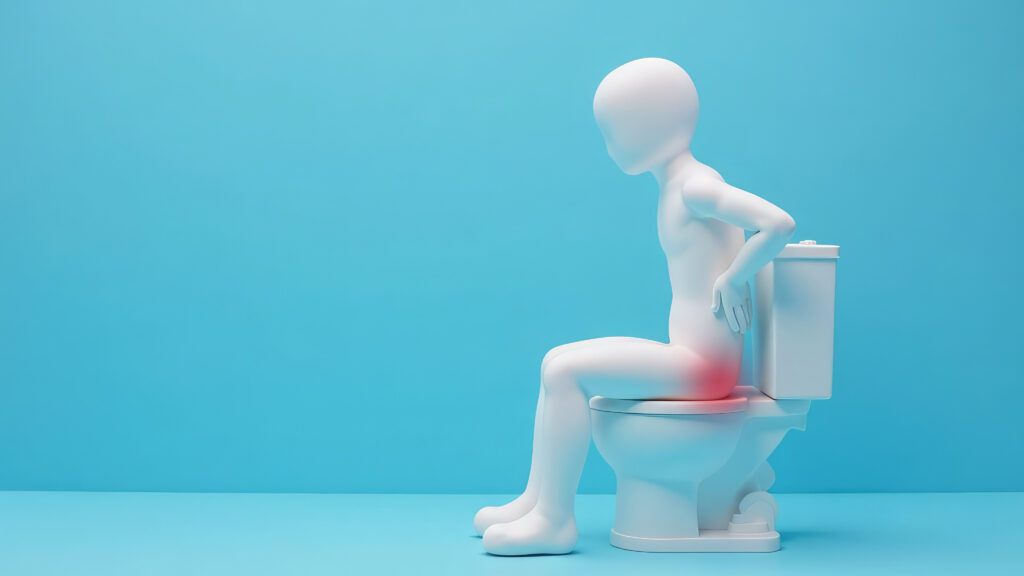 chronic pain at the anus
There are many different causes of pain in the rectal region. It is important to distinguish between them, as the treatment for nerve pain is very different from the treatment for a tear or a haemorrhoid.
1. Anal Fissure (Tears at the anus)
An anal fissure is a small sore or tear in the lining of the anal opening itself.
- Symptoms: Characterised by sharp, "glass-like" pains during bowel movements and a subsequent burning sensation that can last for hours.
- Why does it hurt? The pain is often caused by the internal sphincter muscle going into a cramp (spasm), which prevents the tear from healing.
- Anal fissures often heal on their own with soft stools and plenty of fluids. Ointment with a local anaesthetic or muscle-relaxing effect is considered if the tear does not heal or becomes chronic.
2. Haemorrhoids and Perianal Thrombosis
Haemorrhoids are swollen blood vessels that can be located both internally and externally.
- Symptoms: Typically irritation and fresh bleeding. If a small blood clot forms in an external haemorrhoid (a thrombosis), a sudden, hard, and very tender lump appears.
- Clinical sign: The pain is constant and worsens with touch or pressure.
3. Levator Ani Syndrome
This is a functional muscular pain where the pelvic floor muscles are hypertonic (overly tense).
- Symptoms: A dull, aching pain or a sensation of heaviness in the pelvic floor. Patients often describe it as "sitting on a ball".
- Clinical sign: The pain is often independent of bowel movements but can worsen after sitting for long periods.
4. Proctalgia Fugax
A harmless but very frightening condition involving sudden cramps.
- Symptoms: Intense, short-lived attacks of pain (seconds to minutes) that often occur at night and wake the patient.
- Clinical sign: There is no pain or symptoms between attacks.
5. Pudendal Neuralgia
The cause here is nerve pain in the pelvis, specifically irritation of the pudendal nerve.
- Symptoms: Burning, electric, or tingling pain in the perineum and rectum.
- Clinical sign: The pain is typically relieved when standing up or sitting on a toilet seat (where there is no direct pressure on the nerve).
6. Perianal Abscess and Fistula
An inflammatory condition (abscess) near the anal opening.
- Symptoms: Throbbing, constant pain accompanied by redness, swelling, and possibly fever.
- Clinical sign: Often requires urgent surgical assessment to drain the infection.
How do we distinguish clinically between the causes?
To provide you with the correct treatment, we perform a systematic examination:
- Visual inspection: Here we look for external signs of an anal fissure, haemorrhoids, or signs of inflammation.
- Digital palpation: The doctor gently feels the area with a finger. This is crucial for distinguishing between muscular pain (Levator Ani) and structural problems such as lumps or scar tissue.
- Anoscopy: An examination with a short instrument, which allows us to view the lining of the anal canal and the lowest part of the rectum directly.
When should you have a colonoscopy?
Even though the pain is often located locally at the opening, a full bowel examination may be necessary in certain cases. We recommend a colonoscopy if:
- You experience unexplained bleeding (beyond fresh blood on the paper).
- There is a change in bowel habits (e.g., alternating bowel movements).
- There is a suspicion of chronic inflammatory bowel disease (Crohn's disease or ulcerative colitis).
- You are at the age where screening for polyps and tissue changes is recommended.
| Condition | Primary Symptom | Examination |
|---|---|---|
| Anal Fissure | Sharp pain during bowel movements | Inspection / Anoscopy |
| Haemorrhoids | Bleeding and pressure | Inspection / Anoscopy |
| Levator Ani | Dull, aching pain | Digital palpation |
| Pudendal Neuralgia | Burning nerve pain | Clinical test / Nerve block |
| Abscess | Throbbing pain and fever | Clinical assessment |
References (PubMed)
- Rao SS, Bharucha AE, Chiarioni G, Felt-Bersma R, et al. Functional Anorectal Disorders. Gastroenterology. 2016;150(6):1430-42. PMID: 27144630_
- Boland PA, Kelly ME, Donlon NE, Bolger JC, et al. Management options for chronic anal fissure: a systematic review of randomised controlled trials. Int J Colorectal Dis. 2020;35(10):1807-1815. PMID: 32712929_
- Labat JJ, Riant T, Robert R, Amarenco G, Lefaucheur JP, Rigaud J. Diagnostic criteria for pudendal neuralgia by pudendal nerve entrapment (Nantes criteria). Neurourol Urodyn. 2008;27(4):306-10. PMID: 17828787_
More on this topic at Kirurgen.dk
Category: Anal surgery