
Diverticulosis
Written and medically reviewed by Bahir Hadi, specialist in surgery, PhD
Diverticular disease: From harmless pouches to painful inflammation
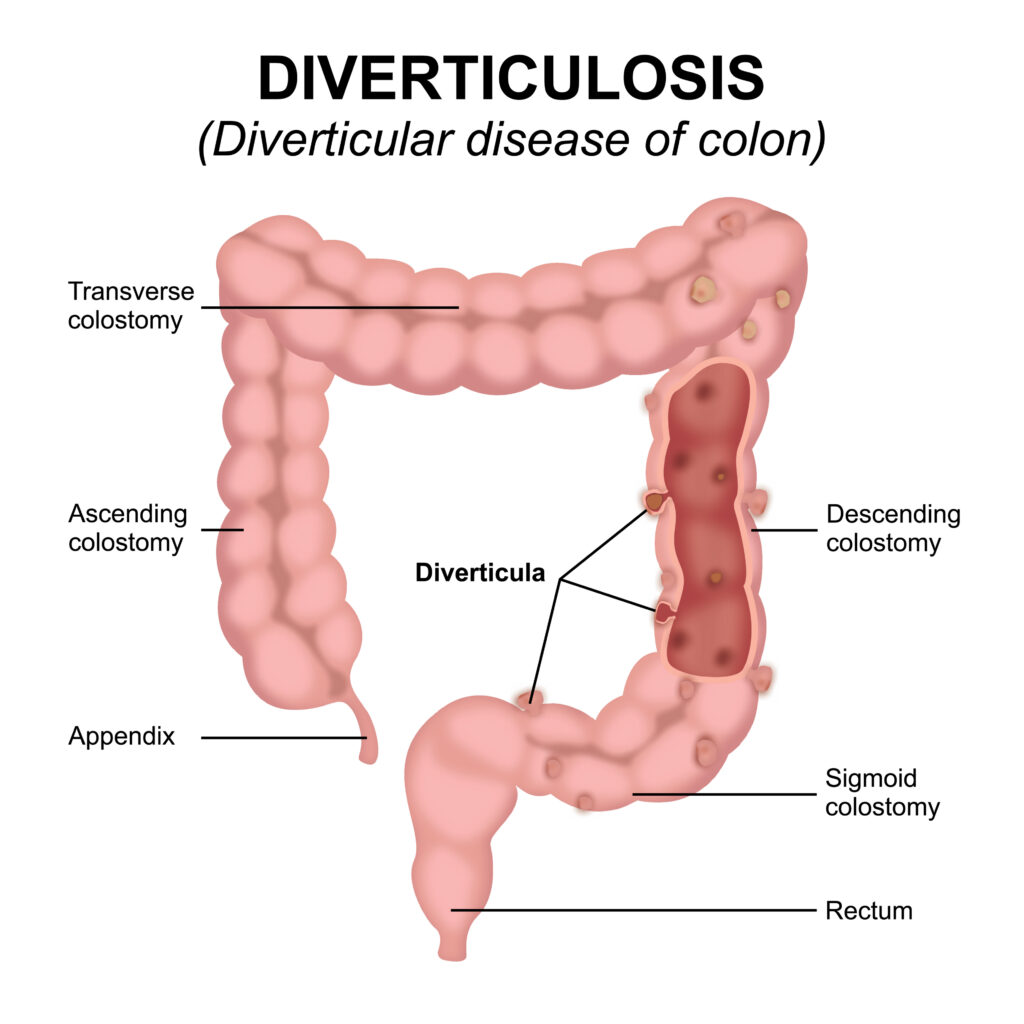
Do you experience recurring abdominal pain, or are you concerned about your bowel health? Diverticula (pouches in the large intestine) are a very common condition, especially with age. While many people live with them without any issues, they can develop into a painful and potentially serious inflammatory state.
In this post, we take a closer look at the difference between diverticulosis and diverticulitis, and why a thorough bowel examination is crucial for the correct diagnosis.
What are diverticulosis and diverticulitis?
It is important to distinguish between the two terms, as they require different management:
- Diverticulosis: The presence of small pouches (diverticula) in the wall of the colon. This is not a disease in itself and often produces no symptoms.
- Diverticulitis: A condition where inflammation or infection occurs in one or more of these pouches. This often requires medical treatment.
Symptoms you should not ignore
Many people only discover their diverticula when they become inflamed. Typical signs of diverticulitis include:
- Severe abdominal pain (most often in the lower left side).
- Changed bowel habits (constipation or diarrhoea).
- Fever and chills.
- Nausea and vomiting.
Why is a bowel examination necessary?
When experiencing persistent abdominal pain or changes in bowel habits, it is vital to obtain a professional assessment. The symptoms of diverticulitis can resemble other conditions, including irritable bowel syndrome (IBS) or, in worse cases, colorectal cancer.
Colonoscopy: examining the lining of the colon
A colonoscopy is the most widely used examination of the colon. During this procedure, a thin, flexible tube with a camera is inserted into the colon.
- Diagnosis: The doctor can visually confirm the presence of diverticula.
- Clarification: The examination is used to look for polyps or cancer as an explanation for the symptoms.
- Precision: If there are signs of chronic irritation, the doctor can take tissue samples (biopsies).
Note: During an acute attack of diverticulitis a colonoscopy is not performed, because the risk of complications is increased. Known diverticula without symptoms are not in themselves a reason for colonoscopy. Whether an endoscopy is needed after an attack has settled depends on the course, see the article on diverticula.
How is it treated?
Treatment depends on the severity:
- Mild diverticulitis: Can often be managed with a light diet and rest.
- Moderate to severe diverticulitis: May require antibiotics or hospitalisation.
- Prevention: A high-fibre diet, adequate fluid intake and exercise are general bowel health advice. The AGA suggests a fibre-rich diet for patients with a history of diverticulitis, but as a conditional recommendation based on very low quality evidence, and the guideline itself notes that no studies have examined whether fibre reduces the risk of new attacks. It is therefore not documented that diet, fluids or exercise prevent new flare-ups.
Summary
Diverticula are common, and most never cause symptoms. If you have persistent abdominal pain, a change in bowel habit or blood in the stool, contact your doctor. Whether a colonoscopy is needed is decided from your symptoms and age, not from the diverticula themselves.
References (PubMed-based format)
- Phan HS, Strate LL. Management of Colonic Diverticular Disease in the Older Adult. Curr Gastroenterol Rep. 2025;27(1):42. PMID: 40542969
- Peery AF, Shaukat A, Strate LL. AGA Clinical Practice Update on Medical Management of Colonic Diverticulitis: Expert Review. Gastroenterology. 2021;160(3):906-911.e1. doi:10.1053/j.gastro.2020.09.059. [PMID: 33279517]
- Ritieni C, Sbarigia C, Scalamonti S, Annibale B. Symptomatic uncomplicated diverticular disease: a critical appraisal. Expert Rev Gastroenterol Hepatol. 2024;18(7):315-323. PMID: 39093005
- Tursi A, Scarpignato C, Strate LL, et al. Colonic diverticular disease. Nature Reviews Disease Primers. 2020;6(1):20. doi:10.1038/s41572-020-0153-5. [PMID: 32218442]
See also
More on this topic at Kirurgen.dk
Category: Gastrointestinal