
Are varicose veins dangerous?
Written and medically reviewed by Bahir Hadi, specialist in surgery, PhD
Are varicose veins dangerous? The short answer - and when you should be concerned
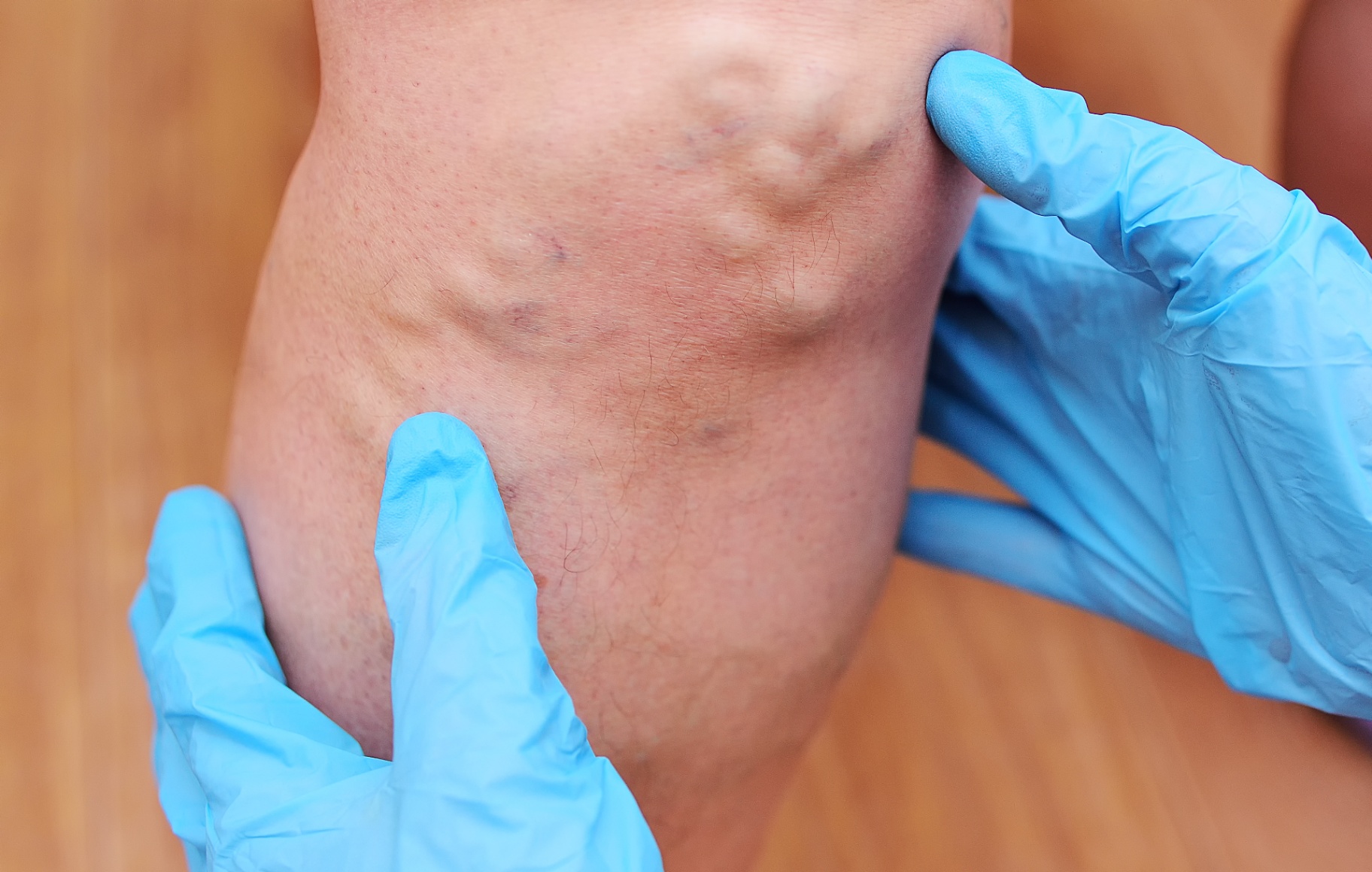
"Are varicose veins dangerous?" is one of the most common questions we hear in the clinic. The short answer is: varicose veins are usually not life-threatening, but they reflect a chronic venous condition that worsens over time in some people. Left untreated it can lead to skin changes, ulcers and, in some cases, bleeding or blood clots, but the course varies from person to person. Here is what you need to know - and when to take action.
The short answer
Varicose veins are a sign of chronic venous insufficiency - the valves in the veins do not close properly, causing blood to flow backwards and bulge the vein out of shape. In itself, this is not an acute condition, and most people live with varicose veins without serious consequences.
However, in a large proportion of patients, the condition progresses if left untreated and can, over a number of years, lead to:
- Chronic skin changes (pigmentation, venous eczema)
- Venous leg ulcers
- Superficial blood clots (thrombophlebitis)
- Bleeding from a ruptured varicose vein
When varicose veins require treatment
International guidelines (SVS/AVF/AVLS 2022) recommend treatment for [1]:
- C2 with symptoms: visible varicose veins + heavy legs, swelling, cramps or itching
- C3: swelling around the ankle
- C4: skin changes (pigmentation, eczema, lipodermatosclerosis)
- C5-C6: healed or active venous leg ulcers
In other words: as soon as symptoms or skin changes appear, you should be assessed with duplex ultrasound. Whether treatment is needed depends on the findings and your symptoms. Treatment relieves symptoms and can heal ulcers faster, but it is not documented that it prevents progression in everyone.
The real risks of untreated varicose veins
1. Venous leg ulcers In UK population surveys, active (open) leg ulcers of any cause are found in around 1.5-3 per 1,000 people, rising to about 20 per 1,000 among people over 80 [2]. The figures cover all active leg ulcers, not only those with a venous cause. These ulcers are slow to heal, recur frequently, and in Denmark cost the health service hundreds of millions. The most important preventive measure is early treatment of the underlying reflux with endovenous laser treatment (EVLT) [3].
2. Superficial thrombophlebitis A tender, red, hard vein can be a sign of phlebitis (thrombophlebitis), a blood clot in a superficial vein. It is often benign, but in series of patients investigated for phlebitis a proportion had a concurrent deep vein thrombosis at diagnosis [4]. That is why the leg is usually scanned.
3. Bleeding Ruptured varicose veins can bleed heavily because the pressure inside them is high. The bleeding usually stops with compression and elevation, but this is an emergency situation that requires medical attention.
4. Worsening over time In the Edinburgh Vein Study, 57.8% of 334 participants with truncal varicose veins or already existing chronic venous insufficiency showed progression over an average of 13.4 years. The study expressed this as 4.3% per year. Among 270 participants who had varicose veins without chronic venous insufficiency at the start, 31.9% developed chronic venous insufficiency during follow-up. The figures cannot be used as a fixed annual individual risk for everyone with CEAP C2 [5]. The figures describe a group over time and cannot predict the course for one person. Treatment can ease symptoms, but observational data like these do not show that treatment stops progression.
When are they NOT dangerous?
- Spider veins (telangiectasias) with no other symptoms
- Small varicose veins with no discomfort or skin changes
- Varicose veins during pregnancy that disappear after childbirth (read about varicose veins during pregnancy)
These cases can be monitored and, if desired, treated cosmetically with sclerotherapy.
Red flags - seek medical help immediately
Call the acute helpline (1813 in the Capital Region of Denmark, otherwise your local out-of-hours service) or go to an emergency department if you experience:
- Sudden, severe swelling in one leg with pain (suspected DVT)
- Acute shortness of breath or chest pain (possible pulmonary embolism - call 112)
- Heavy bleeding from a varicose vein that does not stop with compression
- An open sore on your leg that will not heal
- A red, warm, tender, and hard vein, accompanied by a general feeling of being unwell
What should you do now?
If you have visible varicose veins with symptoms, skin changes, or swelling, you should be assessed with a duplex ultrasound scan. The scan is non-invasive, takes a short time, and shows whether there is underlying reflux that should be assessed with a view to treatment.
At Kirurgen.dk, we provide assessment and treatment after a GP referral. We use endovenous laser treatment (EVLT). Read more about treatment of varicose veins and our prices.
References
- Gloviczki P, Lawrence PF, Wasan SM, et al. The 2022 SVS/AVF/AVLS clinical practice guidelines for the management of varicose veins of the lower extremities. Part I. Duplex scanning and treatment of superficial truncal reflux. J Vasc Surg Venous Lymphat Disord 2023;11(2):231-261.e6. DOI: 10.1016/j.jvsv.2022.09.004. PubMed
- Nelson EA, Adderley U. Venous leg ulcers. BMJ Clin Evid 2016;2016:1902.
- Gohel MS, et al. A randomized trial of early endovenous ablation in venous ulceration (EVRA). N Engl J Med 2018;378(22):2105-14.
- Decousus H, et al. Superficial venous thrombosis and venous thromboembolism: a large, prospective epidemiologic study. Ann Intern Med 2010;152(4):218-24.
- Lee AJ, et al. Progression of varicose veins and chronic venous insufficiency in the general population in the Edinburgh Vein Study. J Vasc Surg Venous Lymphat Disord 2015;3(1):18-26. PMID: 26993676