
Anal itching (pruritus ani)
Written and medically reviewed by Bahir Hadi, specialist in surgery, PhD
Anal itching (pruritus ani): Causes, work-up and treatment
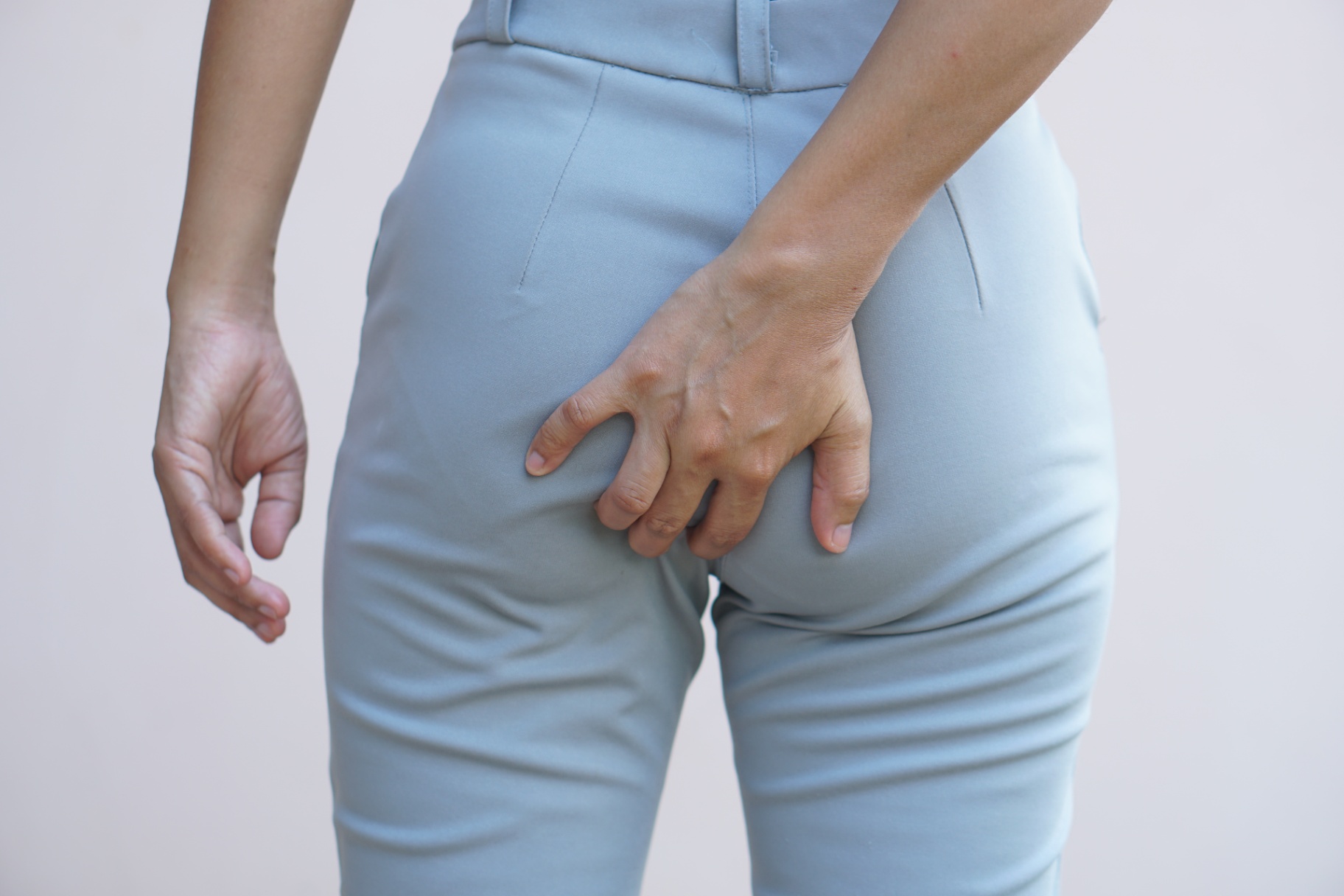
Itching around the anus - pruritus ani - is a common but often under-reported reason for consultation, because the symptom is felt to be embarrassing [1]. How many people actually have it is poorly documented, precisely because many never seek help. In many cases there is a cause that can be treated, and a targeted work-up can clarify what lies behind the symptoms.
What is pruritus ani?
Pruritus ani is intense itching or burning in and around the anus. It is divided into two groups:
- Secondary (the more common form) - caused by a specific condition such as hemorrhoids, anal fissure, anal fistula, eczema, fungal infection or faecal leakage.
- Primary / idiopathic - no clear cause is found, but a vicious circle of itching → scratching → skin irritation → more itching maintains the symptom [2].
The most common causes
| Category | Examples |
|---|---|
| Anorectal disease | Hemorrhoids, anal fissure, anal fistula, rectal prolapse |
| Skin | Contact eczema, lichen sclerosus, psoriasis, lichen sclerosus |
| Infection | Candida, Streptococcus, pinworm (Enterobius), HPV |
| Leakage | Incontinence for gas/stool, mucus from hemorrhoids |
| Diet | Coffee, tea, cola, beer, citrus, spicy food, milk, chocolate [3] |
| Hygiene | Excessive washing, perfumed wet wipes, soap residue |
When should you see a doctor?
Contact your GP or a specialist surgeon if you have:
- Itching for more than 4-6 weeks despite normal hygiene
- Concurrent rectal bleeding (read more)
- Visible lumps, sores or skin changes
- Mucus or unintentional stool in your underwear
- Night-time itching that wakes you (classic for pinworm and lichen sclerosus)
How pruritus ani is worked up
At the clinic we perform:
- History and dietary review - identifies triggering foods and hygiene habits.
- Inspection and digital rectal examination - reveals hemorrhoids, fissure, eczema.
- Anoscopy - an examination with a short instrument that gives a view of roughly the last 5 to 6 cm from the anal verge.
- Colonoscopy if symptoms, alarm features, age, test results and the overall medical assessment support it.
- Skin biopsy if lichen sclerosus or malignancy is suspected.
Treatment
General advice (resolves the problem for many) [4]:
- Change hygiene: Rinse with lukewarm water without soap; dab dry with a soft towel - no wet wipes.
- Cotton underwear, avoid tight clothing and synthetic fabrics.
- Elimination diet for 2 weeks: leave out coffee, tea, cola, citrus, spicy food - reintroduce one at a time.
- Stop scratching - keep nails short, use cotton gloves at night if needed.
Medical treatment:
- Short-term hydrocortisone 1% cream for acute eczema, with duration assessed individually by a doctor [2].
- Antifungal cream should only be used for a verified fungal infection (e.g. candida) and after medical assessment.
- For verified pinworm, the whole household is normally treated at the same time, following current guidance from a doctor or pharmacist. Treatment is repeated in many cases because reinfection is common, but whether and when to repeat it is decided by a doctor or pharmacist. Choice of agent and dosing depend on factors such as age and pregnancy - never stop or start prescribed treatment on your own without agreeing it with your doctor.
Treatment of the underlying surgical cause:
- Hemorrhoids grade I-II: McGivney band ligation in the out-patient clinic.
- Hemorrhoids grade III-IV: surgical treatment.
- Anal fissure: conservative → diltiazem ointment → possibly surgery.
- Anal fistula: surgical fistula treatment.
Treatment at Kirurgen.dk
We assess and treat common anorectal causes of itching - from hemorrhoids and fissures to fistulas - after referral from your GP. Whether a service is covered by the Danish public health insurance depends on the referral, the service and agreement in force and an individual assessment; contact the clinic or your GP if you are unsure. See also our articles on hemorrhoids and anal fissure.
References
- Nasseri YY, Osborne MC. Pruritus ani: diagnosis and treatment. Gastroenterol Clin North Am 2013;42(4):801-13.
- Markell KW, Billingham RP. Pruritus ani: etiology and management. Surg Clin North Am 2010;90(1):125-35.
- Daniel GL, et al. Pruritus ani: causes and concerns. Dis Colon Rectum 1994;37(7):670-4.
- Siddiqi S, Vijay V, Ward M, Mahendran R, Warren S. Pruritus ani. Ann R Coll Surg Engl 2008;90(6):457-63.
More on this topic at Kirurgen.dk
Category: Anal surgery