
Digestion and the gastrointestinal tract
Written and medically reviewed by Bahir Hadi, specialist in surgery, PhD
Content from /en/blog/fordoejelsen/
Digestion: how the gastrointestinal tract works - from mouth to anus
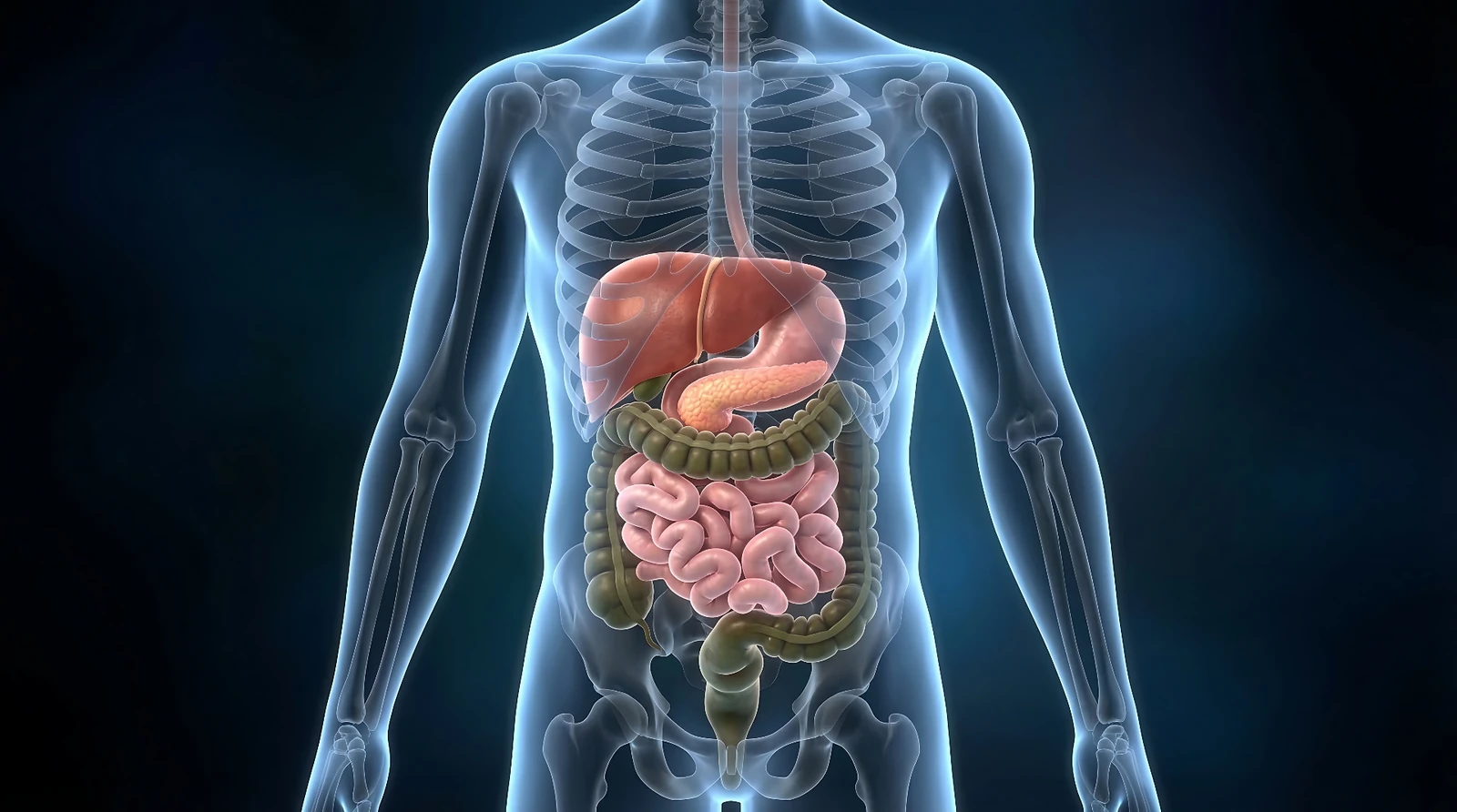
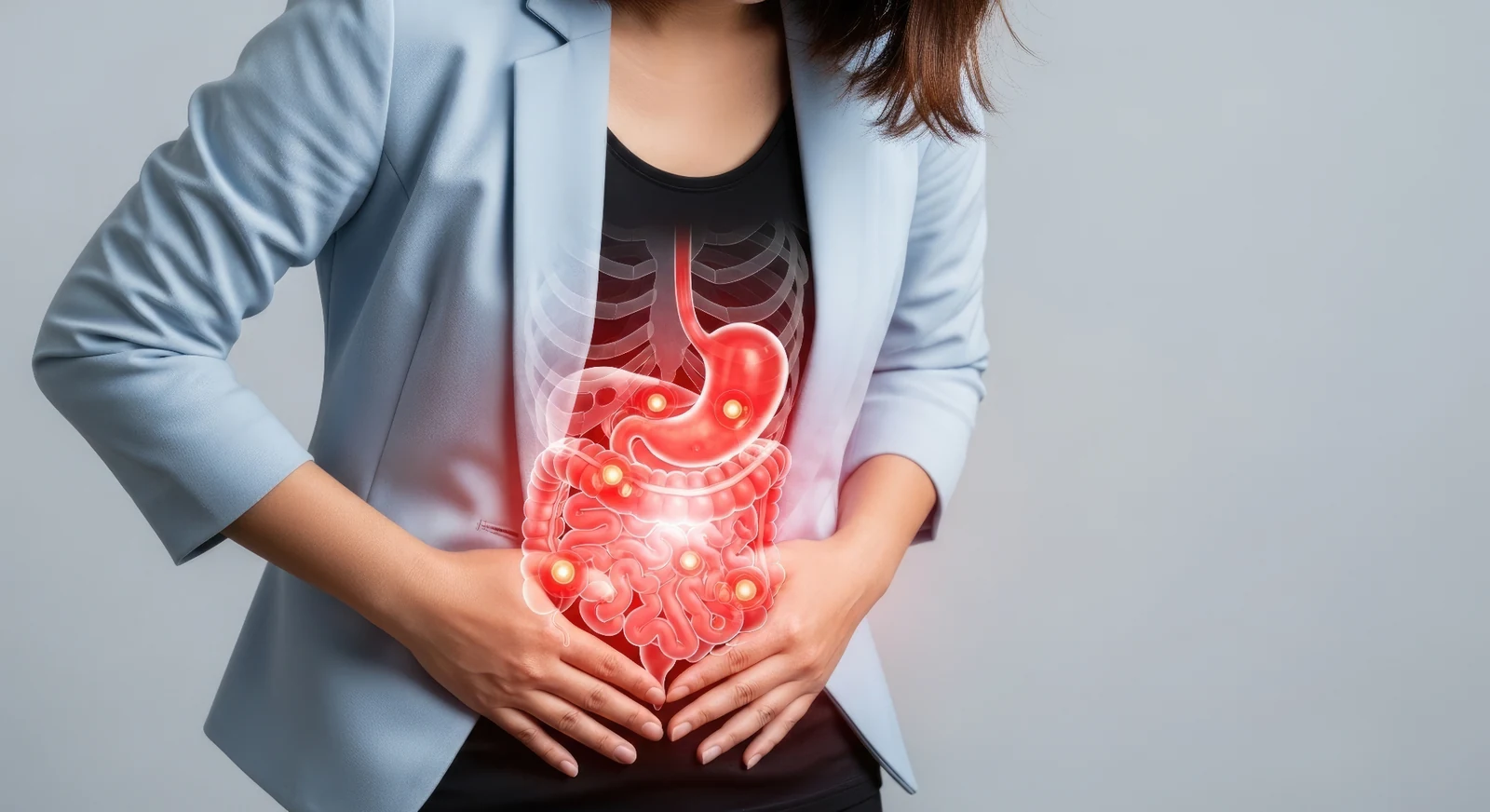
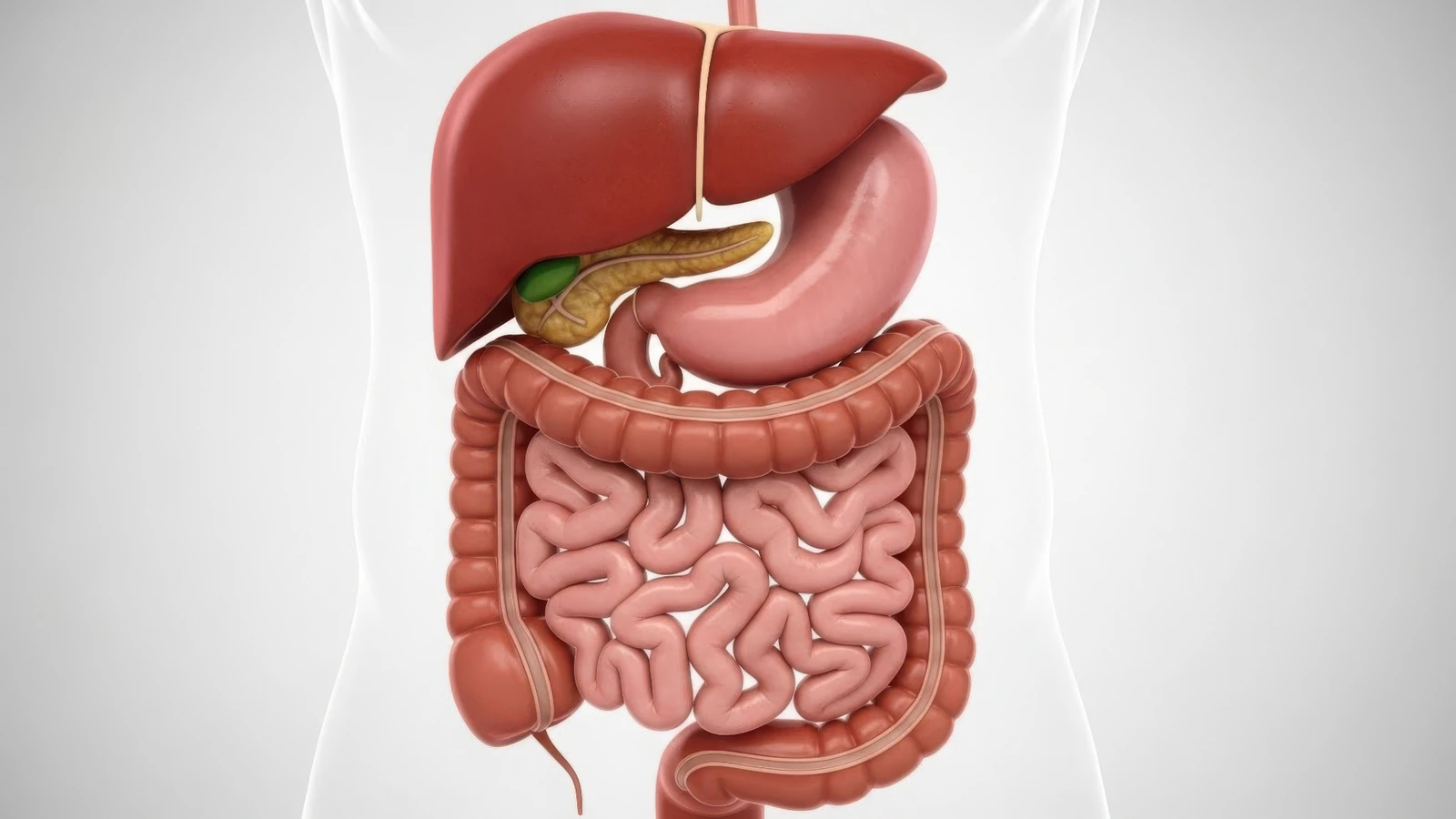
Digestion is the process by which the body breaks down food and drink into smaller molecules that can be absorbed into the blood and used for energy, building blocks or signalling. The gastrointestinal tract is around 8-9 metres long from mouth to anus and hosts a very large number of bacteria - our gut microbiome, whose composition varies considerably between individuals. How long food takes to pass through the tract varies considerably between individuals and is linked to both dietary pattern and gut microbiome composition [1].
The five main sections
| Section | Approximate length | Main function |
|---|---|---|
| Mouth and oesophagus | ~25 cm | Chewing, salivary amylase, transport |
| Stomach | ~25 cm (typically holds 1-4 L) | Acid, pepsin, mechanical breakdown, storage |
| Small intestine (duodenum, jejunum, ileum) | ~6-7 m | Main site of digestion and absorption |
| Large intestine (colon) | ~1.5 m | Water resorption, electrolytes, bacterial fermentation |
| Rectum and anal canal | ~15-20 cm | Storage and evacuation of stool |
These lengths are average values from anatomical studies and vary between individuals.
The four phases of digestion
1. Oral cavity - digestion begins:
- Chewing increases the surface area available for digestive enzymes.
- Salivary amylase starts starch breakdown.
- Lingual lipase contributes to fat digestion, particularly in infants.
- Saliva also contains lysozyme (antibacterial) and IgA.
2. Stomach - acid environment and storage:
- Produces gastric acid in amounts that vary with meal size and composition, creating a strongly acidic environment in the stomach.
- Pepsin breaks down proteins.
- Intrinsic factor is required for B12 absorption in the ileum.
- Gastric emptying typically takes place over a few hours, depending on meal composition (fat delays it).
3. Small intestine - the main stage:
- Duodenum receives bile from the gallbladder and enzymes from the pancreas.
- Jejunum and ileum account for most nutrient absorption, via a surface area that is greatly enlarged by the villi and microvilli lining the intestinal wall.
- Bile acids emulsify fat; lipase, amylase, proteases complete breakdown.
- B12 and bile salts are resorbed predominantly in the terminal ileum.
4. Large intestine - water and bacteria:
- Absorbs most of the remaining water from the intestinal contents.
- The microbiome ferments undigested fibre into short-chain fatty acids (butyrate, propionate, acetate), which are among other things used as an energy source by colonocytes. The composition of the microbiome varies along the colon and between individuals, and cannot be divided into fixed, separate bacterial groups each with a single function.
- Colonic bacteria contribute to the production of certain vitamins, including vitamin K and biotin.
- Stool changes consistency as it passes through the colon, from more liquid near the caecum to more formed near the rectum.
Key accessory organs
| Organ | Contribution |
|---|---|
| Liver | Produces bile, processes substances from the blood coming from the gut (portal vein) |
| Gallbladder | Stores and concentrates bile |
| Pancreas | Produces digestive enzymes + bicarbonate + insulin/glucagon |
The gut-brain axis
The gut contains a large number of nerve cells, organised into what is known as the enteric nervous system. This system is sometimes popularly referred to as the "second brain" - a metaphor for the gut's ability to regulate part of its own function independently of the brain, not a literal description of a separate brain organ. The gut also contains cells that produce serotonin, and research points to interaction between gut and brain (the gut-brain axis), which may help explain why stress can affect symptoms such as IBS, bloating or diarrhoea. The relationship between the gut microbiome and mental health is an active area of research, and associations found in studies should not be interpreted as proven causation [2].
What can go wrong?
| Level | Examples |
|---|---|
| Oesophagus | GERD, eosinophilic oesophagitis, dysphagia |
| Stomach | Peptic ulcer, H. pylori, gastric cancer |
| Small intestine | Coeliac, SIBO, Crohn's, bile acid malabsorption |
| Large intestine | IBD, IBS, polyps, colorectal cancer, diverticula |
| Rectum/anus | Hemorrhoids, anal fissure, anal fistula |
How to keep digestion healthy?
- Fibre intake in line with general dietary guidelines (whole grains, vegetables, legumes)
- Adequate fluid intake adjusted to individual needs and activity level
- Regular physical activity - may support bowel motility
- Limit red and processed meat (WHO recommendation)
- Probiotics may be considered in certain situations, for example after antibiotic treatment, but are not a general standard treatment for IBS
- Stress management - meditation, sleep, routine
- Avoid smoking and excess alcohol
Investigation and treatment at Kirurgen.dk
We investigate the entire GI tract with oral and nasal gastroscopy, colonoscopy and sigmoidoscopy. See also: Peptic ulcer, Bloating, IBD overview, IBS.
References
- Asnicar F, Leeming ER, Dimidi E, et al. Blue poo: impact of gut transit time on the gut microbiome using a novel marker. Gut 2021;70(9):1665-74. DOI: 10.1136/gutjnl-2020-323877. PubMed Intervention study measuring gut transit time with a blue dye marker and linking transit time to gut microbiome composition and diet.
- Mayer EA, Tillisch K, Gupta A. Gut/brain axis and the microbiota. J Clin Invest 2015;125(3):926-38. PubMed
More on this topic at Kirurgen.dk
Category: Gastrointestinal